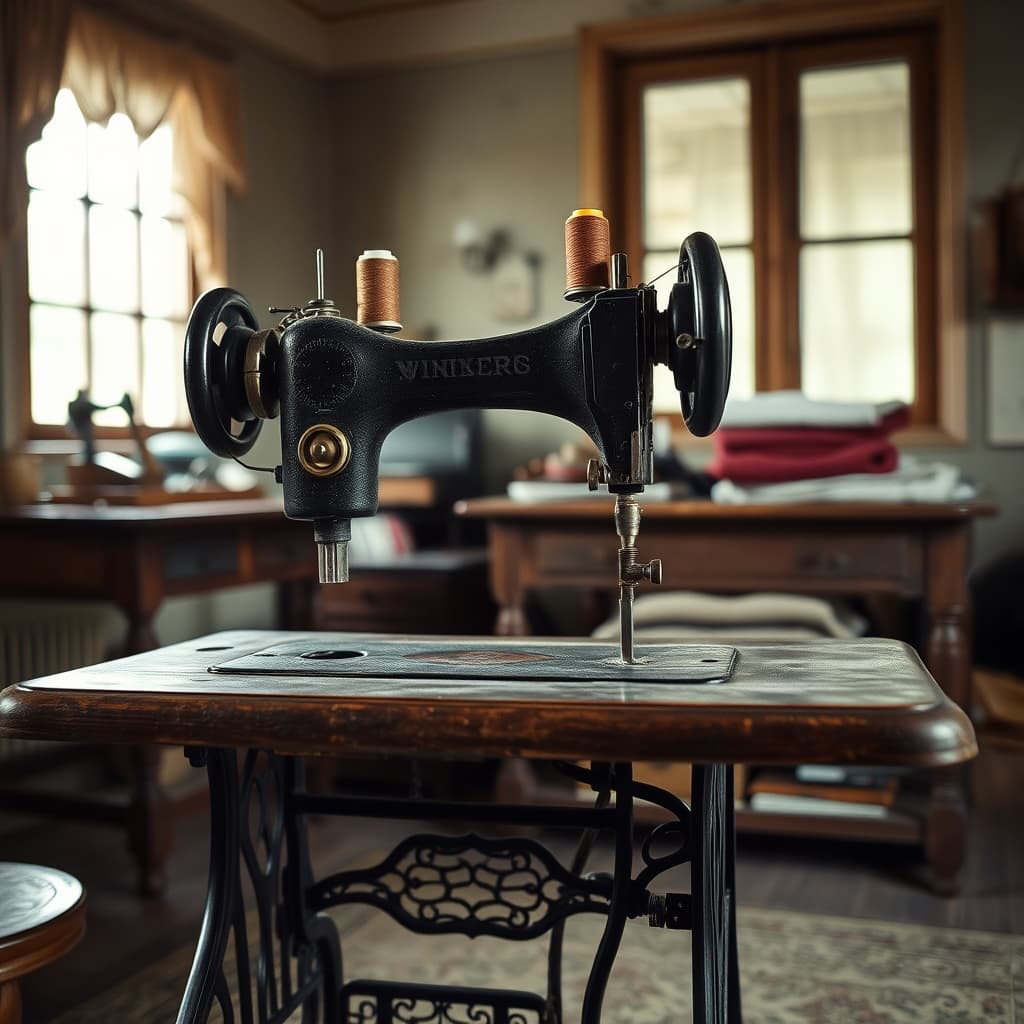
Eski Pano
One of the quietest yet most steadily working corners of an old house was often the place where the sewing machine stood. A wall near the window, a wooden table, drawers holding buttons and needles, pattern marks drawn with tailor's soap; and below all of it, the metal pedal that many children first mistook for part of a toy cabinet until they saw the machine come alive under a practiced foot. On its own, a sewing machine pedal may seem like an ordinary component. Yet when one looks carefully at the domestic rhythm of the past, it becomes an object that carried not only fabric, but time itself forward. It is no accident that collectors pursuing old sewing machines focus so intently on this part. On the pedal they find not only wear, but the shine of everyday labor from another era.
As an object story, the sewing machine pedal is one of the most honest meetings of design and function. Before electric motors became common, household machines were largely foot-operated, which meant that rhythm passed directly from the body into the mechanism. The pedal was therefore more than a piece of hardware. It was the living mediator that translated human tempo into the machine's motion. Hemming skirts, sewing curtains, adjusting collars, preparing dowry pieces, all of these tasks filled rooms with its repetitive beat. The steady tak-tak sound became for many children one of the reassuring background noises of home. Today collectors may admire a machine's brand, ornamental casting, or metalwork, but they also study the pedal's worn surface with particular care, because there they find the clearest proof that the object belonged to life rather than display.
What makes this part shine immediately in the eyes of nostalgia lovers lies not only in how it looks, but in the scenes it calls back. A pedal summons baskets filled with fabric scraps, an aunt measuring cloth with a ruler, a grandmother bending over lace, or the rush of getting holiday clothes finished in time. Children secretly pushed the treadle when the machine was empty just to hear its sound, while adults smiled and warned them not to tangle the thread. The memory of the pedal therefore belongs not only to sewing, but also to household discipline, handcraft, thrift, and care. In old city life, clothes were not quickly discarded. Tears were mended, hems were adjusted, fabric was reused for another purpose. The pedal stands as a concrete form of that continuity.
Part of its attraction in the world of collecting also comes from aesthetic endurance. The weight of cast iron, the curved form of the base, the surface that has dulled in some places and shone in others carry a character rarely found in mass-produced objects today. More importantly, that beauty comes not from decoration alone, but from use. In the dusty corner of an antique shop, the sight of such a pedal can feel like a doorway opening into the past, because it holds both the dignity of craftsmanship and the quiet honor of domestic labor. Nostalgia enthusiasts do not approach it merely because it is old. They approach it because it has been lived with.
The fact that the sewing machine pedal shines so quickly in the eyes of collectors following the traces of the past reminds us how much life one object can carry. It moved more than cloth. It carried small contributions to a household budget, favors done for neighbors, dresses finished before holidays, and the pride of making something at home. If it still warms us when we encounter it today, that is why. Some objects do not merely represent the past. They quietly explain how that past was lived, how work was done, and how care was given.
The Sewing Machine Pedal and the Past Tracked by Collectors: Why Does It Shine at Once in the Eyes of Nostalgia Enthusiasts?