 Eski Pano
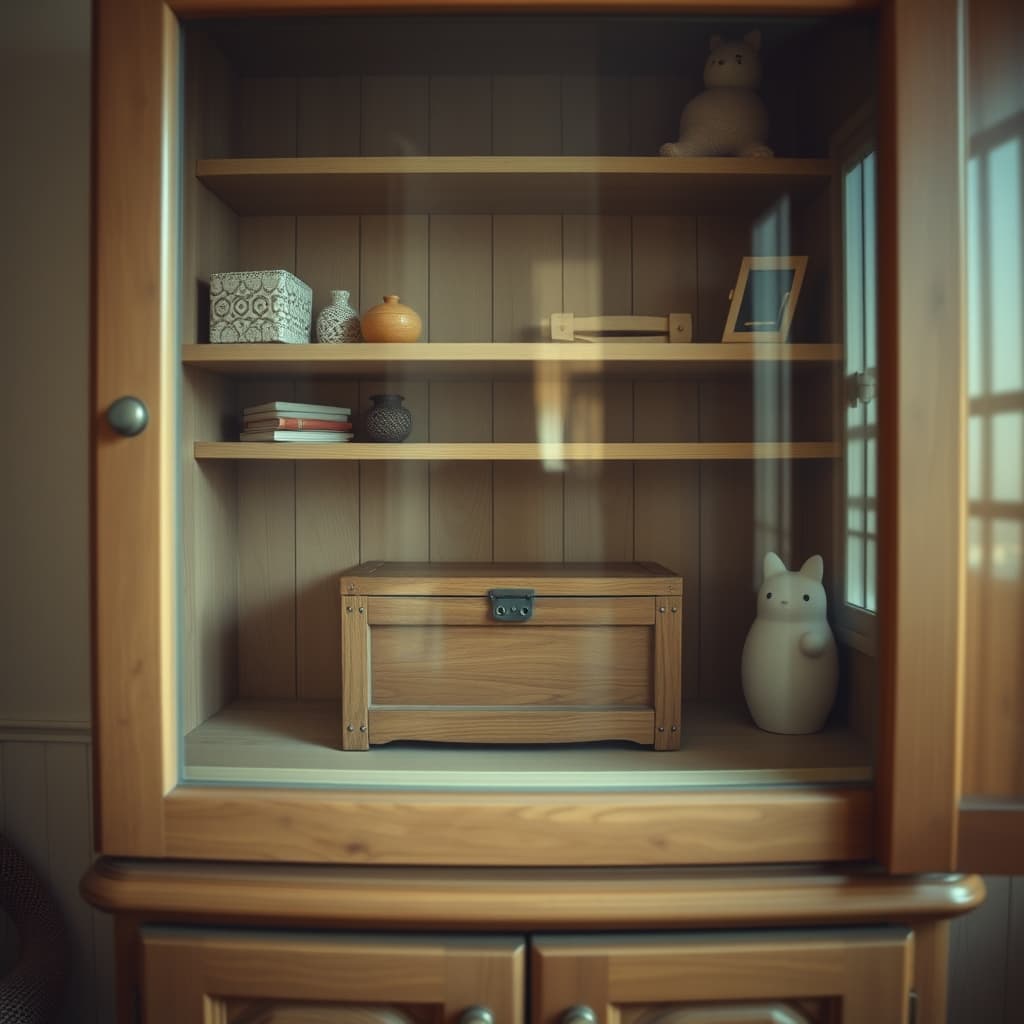
A wooden toy chest in the most visible corner of a living-room cabinet occupied an unusual position. Its form suggested a container that could be opened, but the glass placed it among things to be looked at. The object’s association with play remained while the household’s way of encountering it had changed.
That change can help explain renewed interest in a modest childhood object. A box that once belonged to an activity could later be appreciated for its outline, material or remembered connection. The cabinet did not erase its earlier use. It framed that use as something no longer immediately available.
The Glass Put Looking before Handling
A visitor could notice the chest without reaching it. The cabinet’s door and arrangement separated visual interest from permission to touch. A small wooden container might therefore attract a question precisely because it appeared accessible in shape but protected in position.
The household’s reason for displaying it need not be assumed. Affection, appearance or a wish to keep it separate from current play could each contribute. The fact that it stood behind glass does not itself prove rarity, monetary value or a named family owner.
A chest that fits a display cabinet may also differ considerably from a large floor-standing toy box. Its actual dimensions and the family’s name for it matter. Describing a small toy chest should not quietly give it the use history or construction of a different object.
The Closed Lid Concealed Another View
With the lid closed, the chest presented a compact shape. Its top, sides and visible hardware formed the view from the room. The contents, if any remained, were not necessarily part of what visitors encountered. An empty chest could still carry the same visual association with childhood.
It would be easy to populate it with an imagined collection of toys. That would substitute a pleasing story for information. The chest’s contents and their connection to it require their own evidence; they should not be supplied merely because certain toys belong to the same remembered period.
The closed form can instead be valued on its own terms. A corner, a handle or a surface worn by contact may distinguish this particular box. Those details allow attention to remain with the object without requiring every mark to identify a child or an incident.
A Visitor’s Question Could Change the Conversation
Someone noticing the box might ask why it was there. The answer could bring a family association into a room otherwise arranged for present-day life. The display gave the object a chance to be discussed, even when nobody intended to reopen it.
Different relatives might offer different associations. One remembered the box, another a toy once nearby, and a third the later decision to place it in the cabinet. These are not automatically accounts of the same moment. Keeping them distinct preserves the transition from use to display.
Nor does display establish permission for a child to use an old chest. Looking at the object and returning it to play are different decisions. The cabinet’s boundary can be part of the interpretation rather than an obstacle that a nostalgic account asks visitors to overcome.
The wooden toy chest’s renewed appeal lies partly in this changed relationship. Its familiar form promises an interior, while its position asks for a pause outside it. Behind the glass, childhood is encountered through a small object whose story can be opened in conversation without the lid being opened at all.