 Eski Pano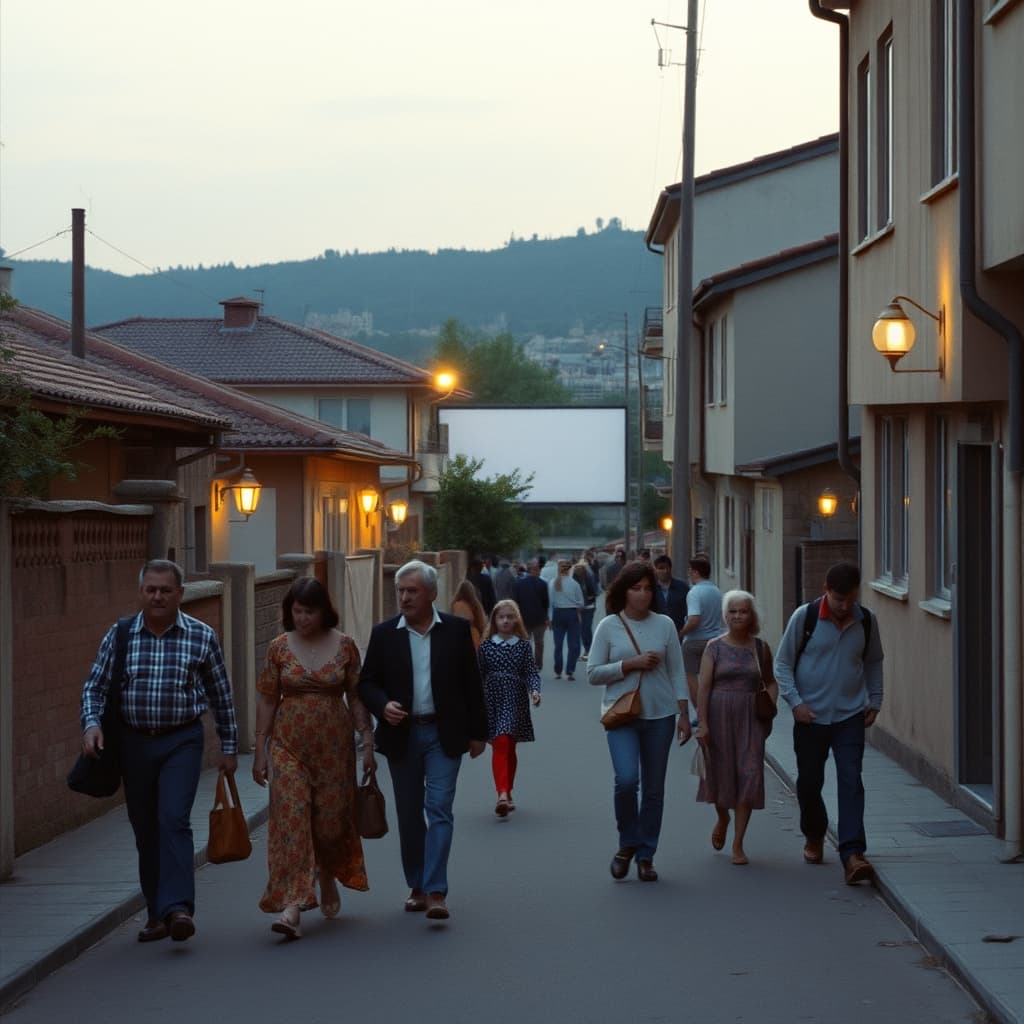
The summer cinema did not finish for everyone at the same instant. The screen went dark, but a film could continue in conversation all the way to the last corner before home. Outside an open-air cinema, people who had faced the same direction for an evening rearranged themselves into walking groups. The route through the neighbourhood became the final part of the programme, with no ticket needed for the discussion.
This was not one uniform experience across every Turkish town or decade. The distance to the cinema, street layout, transport and household expectations all shaped the return. Some people walked only a little before finding a vehicle; others lived near enough to recognise several doorways on the route. Looking closely at these differences makes the remembered street more believable than imagining a whole neighbourhood moving as a single happy crowd.
At the Gate, the Group Changed Shape
The exit was a place to find people again. A person who had sat a few rows away might become a companion for the walk. Families checked who was beside them, friends paused to finish a sentence, and the path narrowed as the audience reached the pavement. The brief wait at the gate linked the shared space of the screening with the smaller obligations of getting home.
Conversation also changed its volume and purpose. A remark that would have disturbed the film could now be repeated freely. Someone reconstructed an ending; another remembered a gesture or challenged a character’s decision. The talk need not have been a polished review to matter. It allowed people to compare what they had noticed while sitting silently, revealing differences inside an apparently common experience.
The Corner Where One Family Turned Away
Each junction reduced the group. A family crossed the road, two friends took a side street, and the remaining walkers adjusted their pace. Goodbyes could happen in stages because the discussion outlasted the shared route. A corner remembered as part of cinema-going may have held no cinematic object at all: only the point where a familiar voice stopped accompanying the walk.
Children could understand the route through these departures. A shopfront, a wall or a pool of lamplight marked how much farther remained. Adults might remember who joined them there; children might remember when they were finally allowed to describe their favourite scene. The same walk therefore produced several maps, organised by relationships, physical landmarks or the patience of the person listening.
Not Every Door Stayed Open to the Evening
The sense of a shared street had limits. Some people had work waiting at home, an early start or a stricter expectation about returning. A slow conversation could be pleasant for one walker and frustrating for another. Uneven pavements, poor lighting or distance could also narrow who could comfortably participate. These conditions belong in the account without requiring the remembered warmth to be dismissed.
Holiday preparations might add another layer of conversation if the visit happened around a celebration: who was expected tomorrow, what remained to be done, which errand had been forgotten. That setting belongs to a particular evening rather than every summer screening. A ticket kept with a family photograph, or a relative’s recollection of visitors arriving the following day, can help distinguish one remembered walk from another.
An oral-history account can begin with a simple drawing. Mark the cinema gate, the first junction and the doorway where the last companion left. Ask what was discussed at each point and where certainty ends. A changed shop name or demolished wall may explain why a familiar walk is difficult to reconstruct today. The resulting map records the evening’s social geography as well as its physical route.
The screen gathered neighbours into an audience; the walk gradually separated that audience into households again. Between those two arrangements, conversation had a little room to travel. Preserving the final corners gives cinema memory an ending beyond the closing scene: one more disagreement about the film, a goodbye across the road, and the last stretch walked with fewer voices.