 Eski Pano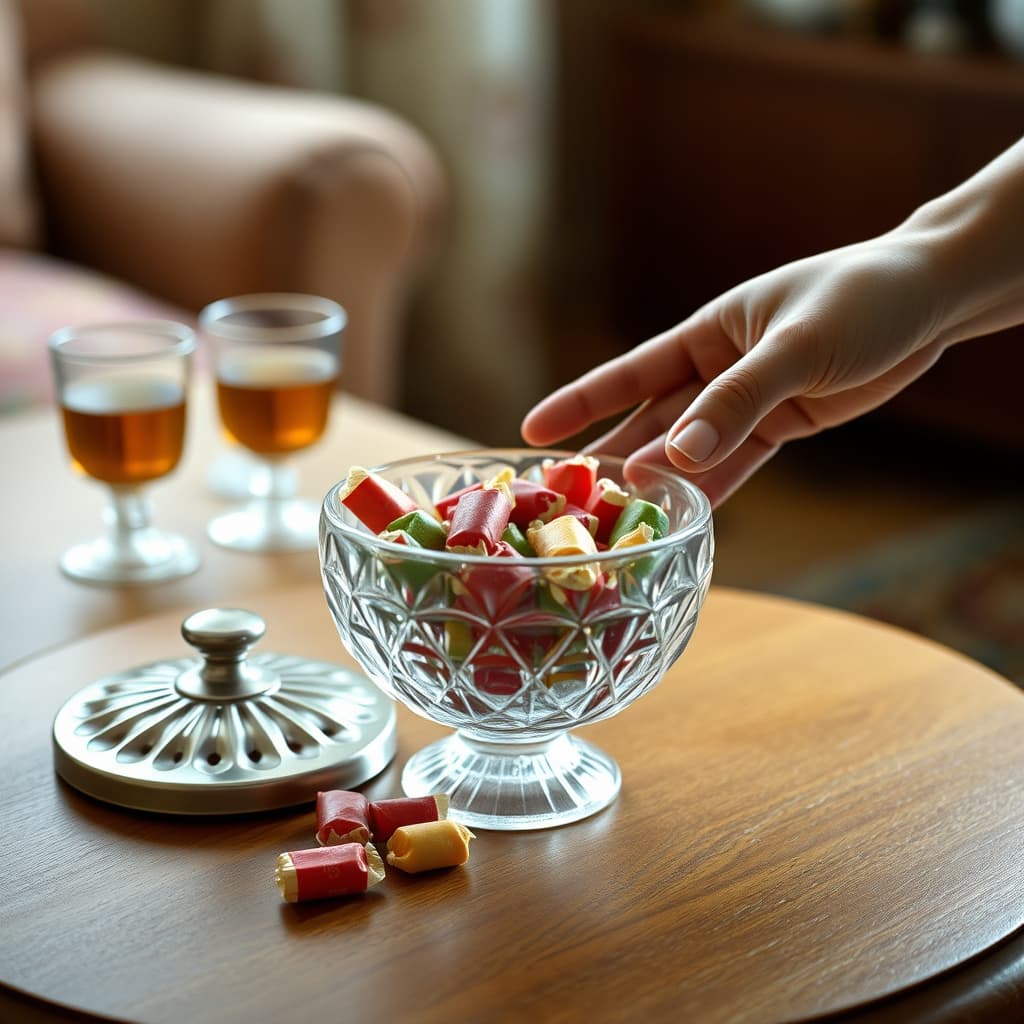
A crystal sweet bowl could spend most of its time behind glass and then become one of the busiest objects in the room. During holiday visits, its lid was lifted, replaced and lifted again. The bowl’s move from cabinet to table changed its role: a possession displayed for looking became an invitation to take something. Following that short journey reveals more about domestic ritual than treating the object only as a valuable heirloom.
In this setting, the English name needs a little care. A bowl called a sugar bowl in a literal translation may have held wrapped sweets rather than loose sugar for tea. Its use matters more than a catalogue label. A household might keep a different container for sugar at breakfast and reserve the heavier, lidded piece for visitors. The contents and the occasion help explain which object a family remembers.
The Lid Made an Invitation Visible
A lid gave the offer a beginning. Someone reached for it, found a place to set it down and moved the open bowl towards a guest. A child watching from nearby could recognise that gesture before understanding the formal language of visiting. Whether the guest took a sweet or politely declined, the lifted lid made a small exchange visible to the whole table.
The shape of the bowl affected that exchange. A wide opening allowed a guest to choose without moving the container very far. A narrow or deep bowl might be tilted or passed closer. The lid’s knob, the weight of the base and the available space between glasses all influenced how people handled it. These ordinary movements belong to the object’s history as much as its pattern or its place of manufacture.
Wrapped Sweets and Reflected Light
Colour arrived through the contents as well as the glass. Wrappers caught the light differently from cut or moulded surfaces, and an almost empty bowl looked unlike a newly filled one. A family photograph may preserve this combination without showing enough detail to identify the maker. Description should remain modest: a faceted bowl, a certain lid shape, a repeated motif. Sparkle alone cannot establish age, composition or financial value.
The term crystal may itself be part of a family’s vocabulary rather than a verified material identification. That does not make the memory worthless. Record what the household called the piece alongside what can actually be observed. An inherited story about a purchase or a wedding gift is useful when its source is named; repeating it as documented provenance without evidence changes the nature of the claim.
A Place Inherited Along with the Bowl
Inheritance can preserve an arrangement as well as an object. The next owner may place the bowl at the same side of a tray or bring it out at the same point in a visit. Another household may choose to use it daily. Neither decision automatically betrays the earlier owner. What is worth recording is the change: who decided where it belonged and whether the familiar gesture of offering sweets continued.
Hospitality also required work outside the visitor’s view. Someone checked the contents, carried the piece carefully, found its lid and returned it after the gathering. A chipped edge or a missing lid can change what is practical. There is no need to keep an uncertain old object in food use to preserve its story; a photograph of its customary position can document the ritual while the piece is displayed differently.
Ask a relative to show where the bowl stood rather than merely describe it as beautiful. The demonstration may reveal a reach across the table, a pause before offering it, or the place reserved for the lid. These gestures explain how an heirloom entered everyday relationships. Its most telling moment may be neither its purchase nor its inheritance, but the instant the cabinet door opened and somebody made room for a guest.