 Eski Pano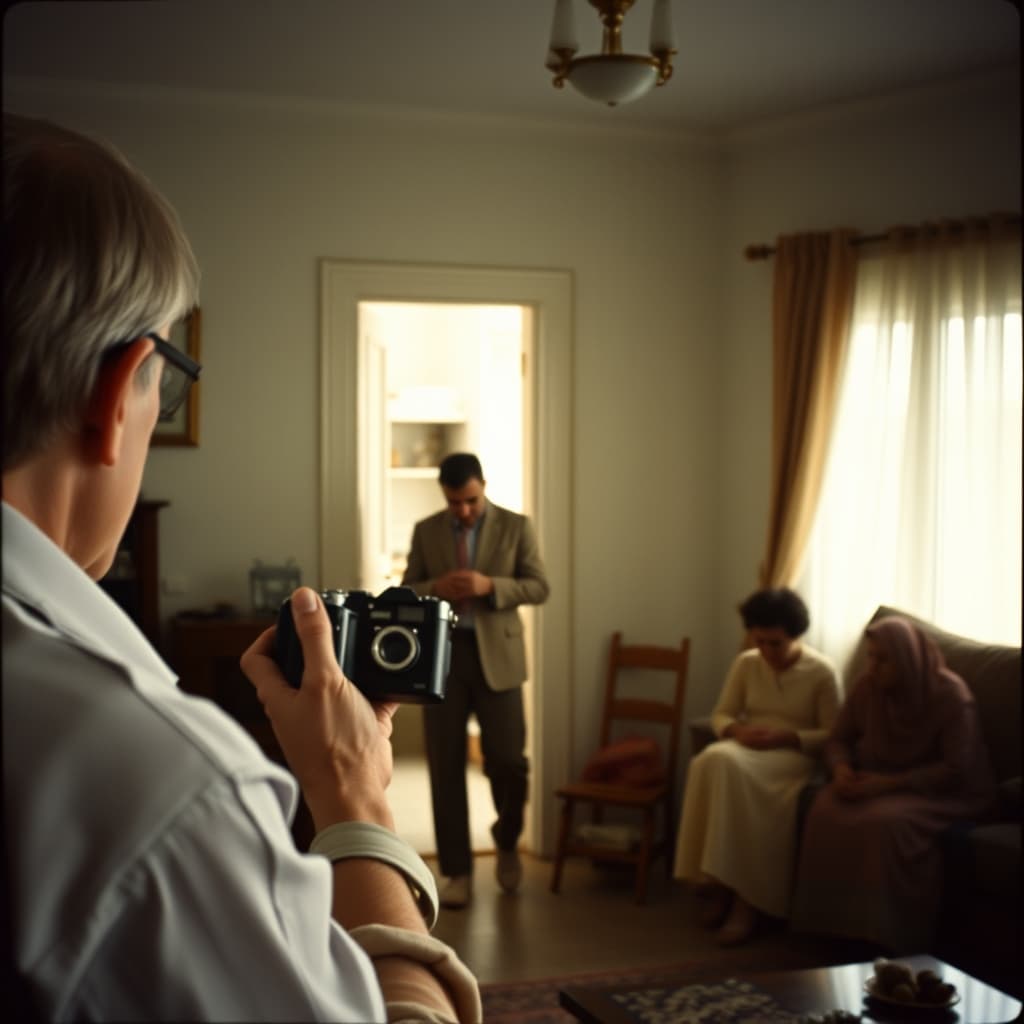
Before a holiday photograph existed, someone had to decide that this moment deserved a frame. The visitors might already be standing near the door, a child might be pulling at a collar, and the person holding the film camera had to bring everyone together once more. The click recorded a scene, but it also recorded a household decision about what was worth keeping. That decision is easily overlooked when we concentrate only on the wait for developed prints.
A film roll had a finite number of exposures, although the number depended on the film and camera. Buying film and paying for processing made photographs part of a household budget. This did not make every exposure solemn or perfectly considered. People still experimented and made mistakes. It did, however, give the remaining frames a presence in the room: was this another picture of the same gathering, or a frame to save for the next visit?
Making Room for Everyone in the Viewfinder
The camera organised bodies as well as images. Adults moved closer, someone stepped away from a bright window, and a small child was lifted into view. Furniture or a doorway supplied a convenient boundary for the group. In the resulting print, that rearrangement can look like the natural position of a family. The photograph rarely shows the requests, interruptions and impatient laughter that made the arrangement possible.
One person often became the household photographer because they knew the controls or owned the camera. Their familiarity made the photograph easier to take and could make their own presence harder to find later. A family album may contain repeated portraits of everyone except its maker. Look for mirrors, shadows, another person’s duplicate print or a change in viewpoint before deciding that an absent face meant an absent relationship.
The Photograph That Used Up the Last Frame
The last available exposure introduced a small negotiation. A formal group, a newly arrived relative and an unexpected moment could compete for it. There was no single family rule. Some households preferred an orderly record of visitors; others valued the unplanned picture. Remembering which frame was chosen tells us something about the purpose of the camera: proof of a visit, a portrait for distant relatives, or a private record of a particular afternoon.
Technical uncertainty shaped the choice too. A room that looked bright to the eye might be difficult for the camera. Movement, focus and the distance between faces could affect the result. Without an immediate screen, the photographer could not confirm every expression. A second exposure was therefore both an extra expense and a practical precaution. The near-duplicate prints that survive may record that calculation rather than a lack of imagination.
Outside the Album, Inside the Envelope
After processing came another selection. The clearest group portrait might enter the album while blurred frames, closed eyes and unfamiliar faces stayed in the paper envelope. That second group can be especially revealing. A cropped edge may show the person serving refreshments; an imperfect frame may preserve a room before everyone tidied themselves into position. Technical failure and historical usefulness are different judgements.
Keep an envelope’s association with its prints when documenting a family collection. Note which identifications are certain and which are guesses. A holiday setting should not become an exact date without supporting evidence. Ask relatives about the person behind the camera, who received copies and whether the album order reflects the day itself or a later rearrangement. Those questions restore decisions that the finished page hides.
A family film roll was neither a complete diary nor an accidental collection. It was a series of choices made by people who could not yet see the outcome. Reading both the polished album page and the rejected frames gives the holiday back some of its movement: the visitor arriving too late for the group, the photographer stepping aside, and the moment someone decided to spend the final picture.