 Eski Pano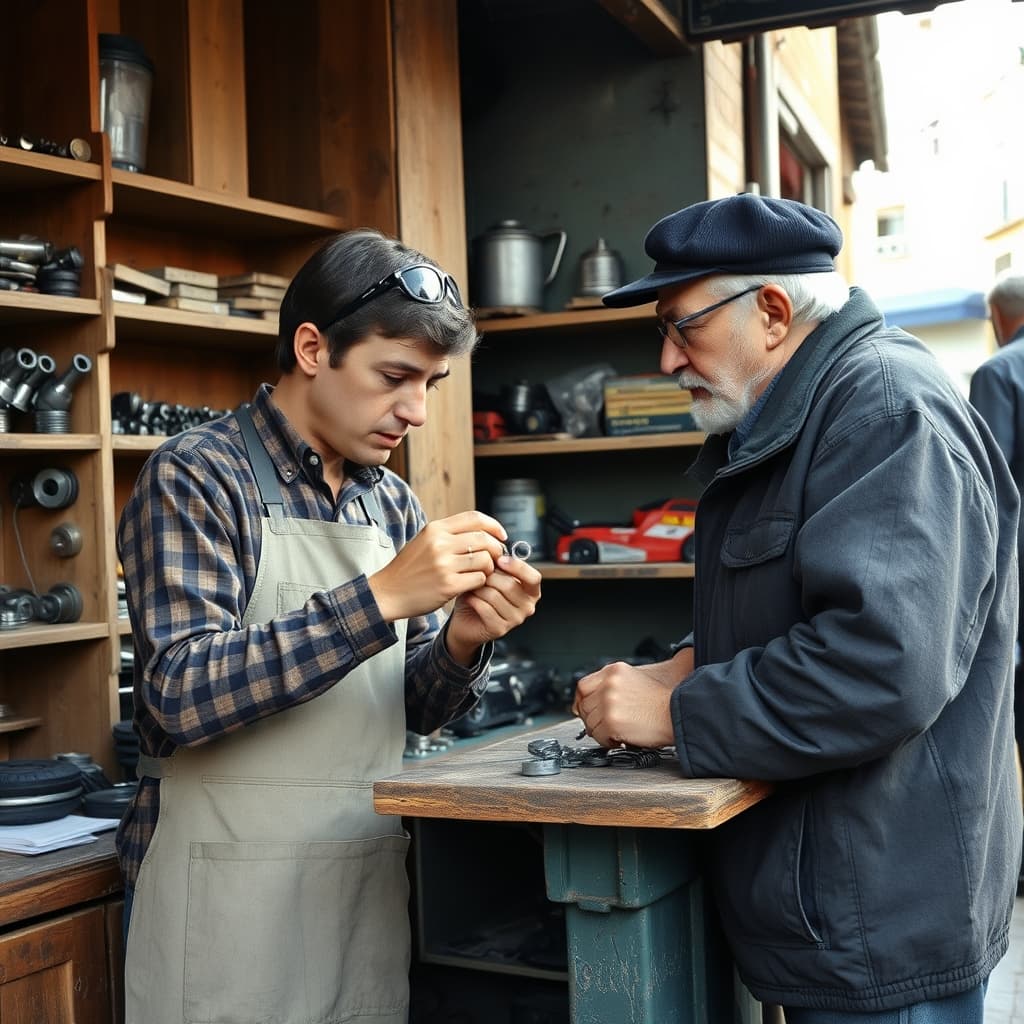
The errand began with an object small enough to disappear into a pocket: a screw, a scrap of fabric, a broken fastening. An apprentice sent to find its replacement had to remember more than the destination. There was the size to match, the question to ask, the change to bring back, and the difference between a useful substitute and something that merely looked right. In a street of workshops, these journeys formed a second classroom outside the shop door.
Apprenticeship took different forms across trades and periods. A tailor’s assistant, a repair-shop learner and a joinery apprentice did not share one curriculum or one experience. Yet following the errands of a working day offers a precise way to understand their place in neighbourhood life. The young person moving between counters connected businesses whose customers might never notice how closely their work depended on one another.
A Sample Carried from Counter to Counter
A sample made an instruction portable. Fabric could be held beside a proposed thread; a fastening could be compared for shape; a piece of timber might show the finish a workshop wanted. The errand still required judgement. Colour changed under different light, apparently matching parts could differ in dimensions, and a supplier might ask a question the apprentice had not anticipated. Returning to ask again was part of learning, even when it felt embarrassing.
Knowing where to go mattered as much as knowing what to buy. One counter stocked small quantities, another kept unusual sizes, and another could suggest who might have a missing piece. This was a practical map organised by capability rather than street numbers. Over time, a learner could remember the sound of a particular workshop, the shelf behind a counter, or the doorway where deliveries temporarily blocked the pavement.
The Return Journey Was Part of the Lesson
Back at the bench, the purchase was tested against the work. If it fitted, the instruction became more intelligible; if it failed, the difference acquired a name. An errand could connect a word heard in passing with a material held in the hand. The best teaching explained that connection. Simply sending someone out repeatedly, without explanation or a chance to practise the trade, offered movement without much education.
A receipt, a verbal message or a little change also placed the apprentice inside the street’s network of trust. These responsibilities were modest in monetary terms but visible to several adults. Reliability could gradually earn a learner more complicated tasks. It could also leave a young person caught between instructions from people with unequal authority, especially when a delivery was late or a price had changed.
Who Was Still Working When the Shutters Fell
The street remembered apprentices through their repeated appearances: opening a door, collecting a parcel, sweeping near the threshold. Those images should not conceal the conditions behind them. Long hours, humiliating correction and endless menial work could sit beside patient teaching. A useful account asks what skill was actually taught, whether schooling and rest were possible, and how the learner described the relationship. Affection for a former master is evidence of one experience, not proof that every arrangement was fair.
To preserve this culture, ask for a route rather than a general verdict about the old days. Which shop received the first visit? What was carried? Which instruction was hardest to remember? A former apprentice may recall an item by its local name or draw a doorway that no longer exists. These details give the account a shape that a broad celebration of craftsmanship cannot supply.
When a workshop closes, its bench may survive while this working map disappears. Remembering the apprentice’s route reconnects the remaining object with the people who supplied, explained and eventually used it. The scrap in a pocket was not yet skilled work. The lesson lay in returning with the right thing and understanding, at last, why it was right.