 Eski Pano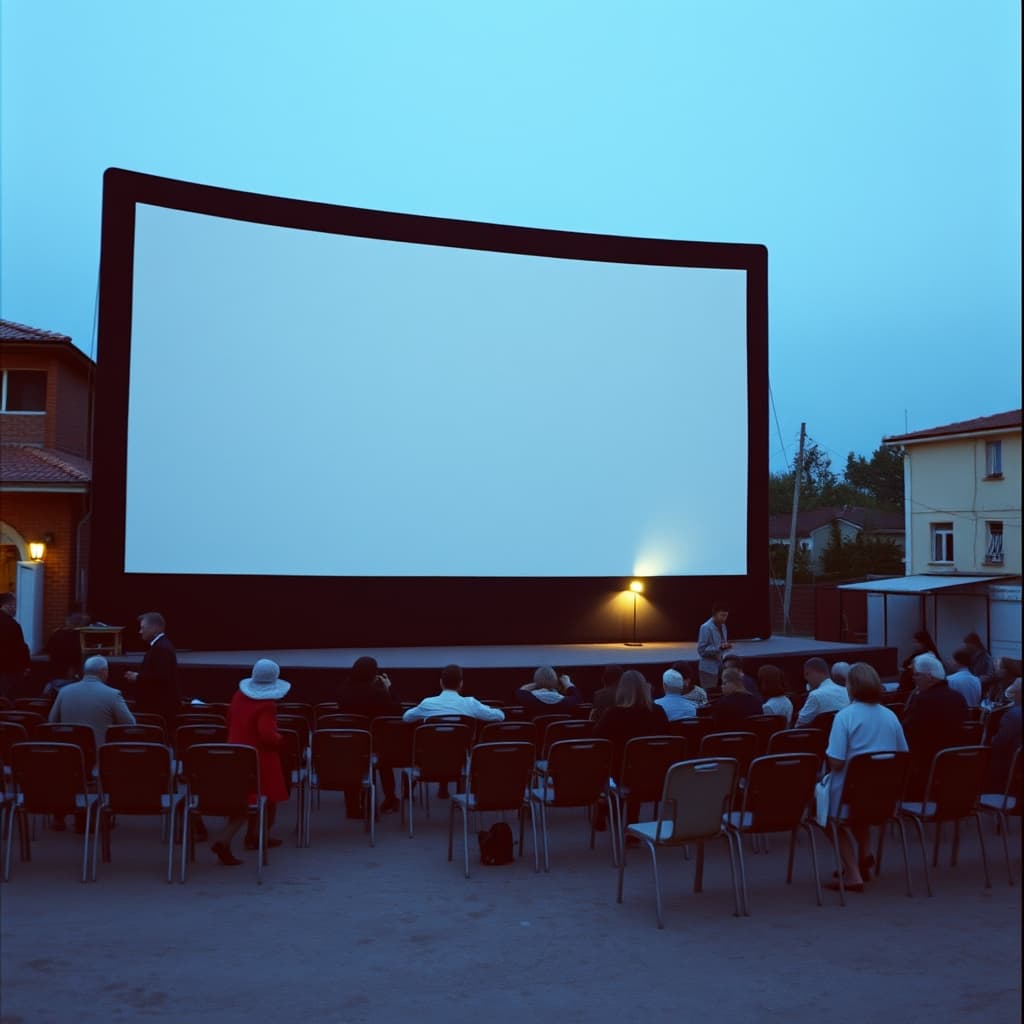
Before a summer cinema showed its first clear picture, the audience could still see the place as a courtyard. The screen looked like a pale surface against the wall. Chairs, an aisle, a speaker and the projection position were ordinary objects rather than parts of an illusion. As the sky darkened, attention gradually moved from the people nearby to the rectangle ahead. Those waiting minutes belong to the history of the evening as much as the film.
The arrangement varied between venues and periods. A garden cinema with permanent seating worked differently from a temporary screen in a yard. There was no universal opening hour, ticket system or audience routine. The useful detail is the transition itself: a public space had to become dark enough for projection while remaining navigable for the people entering it.
Twilight Was Part of the Programme
A printed starting time could not describe every change in the sky. Cloud, surrounding lamps and the direction of the screen affected how the first image appeared. A picture that looked pale at the beginning might become easier to read as ambient light fell. That difference should not automatically be remembered as a defective projector. The audience was watching a screen inside a changing environment.
Waiting also had a social rhythm. People could identify neighbours, settle a child, compare seats or finish a conversation while faces remained visible. When the picture gained contrast, the same gestures became interruptions. The shift from greeting to watching was negotiated by the crowd, rather than achieved by darkness alone.
Choosing a Chair Meant Choosing a View
A seat offered more than distance from the screen. A wall could shelter it from wind; a tree could interrupt the sightline; an aisle could make leaving easier. Children and shorter viewers encountered different obstructions from adults. Memory of the preferred row may therefore describe practical knowledge about the venue, not merely a sentimental attachment to one chair.
The ground mattered too. Uneven paving, loose soil or a chair that rocked could turn a promising place into an uncomfortable one. Moving a seat changed the space available to others. These small corrections reveal how audiences helped assemble the viewing arrangement, while also showing why clear aisles and accessible routes were necessary.
The Screen Had a Daytime Face
In daylight, folds, patches and marks could be visible. During projection, some disappeared into the image and others remained noticeable in bright scenes. A surviving photograph taken before the show may reveal the screen more clearly than an atmospheric night view. Both deserve preservation, because one records the construction and the other its performance.
The phrase “a screen beneath the sky” captures the experience, but the screen still needed supports, a stable surface and preparation. Workers checked it while others arrived. Their adjustments belong in the account: a corner secured, a chair moved, a light redirected. Specific tasks explain the transformation better than treating the courtyard as if it became a cinema by itself.
Remember the Light That Stayed On
Complete darkness was neither always possible nor desirable. Entrance lights, nearby windows and routes to facilities could remain visible. They sometimes weakened the picture but helped people move. Residents outside the venue also had their own evening lives; their windows were part of the surroundings rather than defects in a perfect cinematic scene.
To document these minutes, ask where spectators waited, which parts of the yard remained lit and when conversation changed. A ticket, plan or dated photograph can anchor testimony. A later reconstruction should identify its modern choices, particularly lighting and seating, instead of presenting them as an exact recovery of a remembered night.
The summer cinema began twice: first when people gathered in a recognisable yard, then when a picture became strong enough to hold their attention. Preserving that interval keeps the venue connected to its neighbourhood. It also explains a forgotten pleasure of outdoor filmgoing: watching familiar walls and chairs recede while the sky supplied the last adjustment to the evening.