 Eski Pano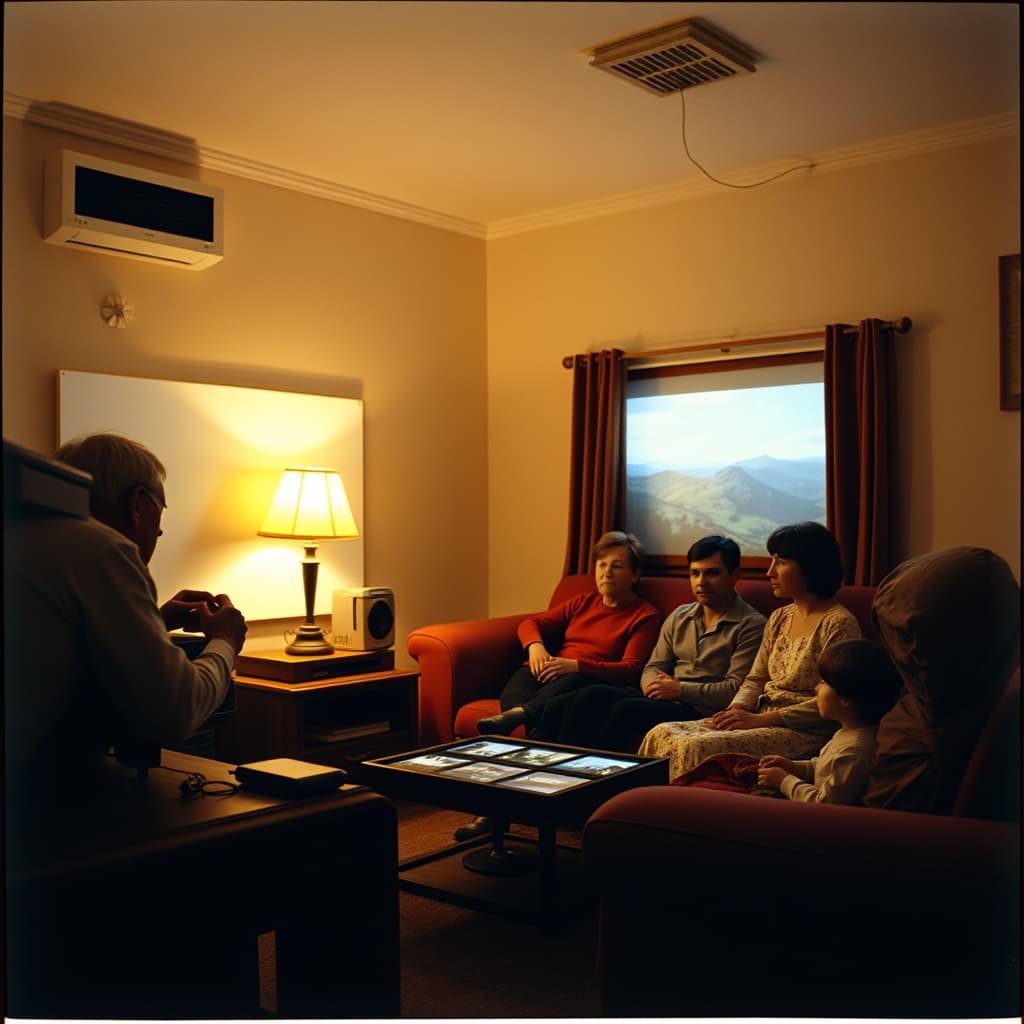
A family slide show was measured by more than the number of photographs in its tray. Some images passed quickly; others stayed on the wall while someone named a person, explained a journey or disagreed about the year. Between pictures, the projector’s change and the brief loss of an image gave the room a pause. The machine controlled the succession, but the people around it controlled much of the pace.
Different projectors used different loading and advance systems. A manual holder, straight magazine or circular tray did not create exactly the same experience. The common cultural detail is the interruption of continuous viewing. Each still image offered time to inspect a face or background before another action replaced it.
A Focus Adjustment Invited the Room to Look
An image arriving out of focus drew attention to the act of projection. The operator adjusted while viewers judged whether lettering, faces or distant buildings had become clearer. Screen distance, the transparency mount and the optical system affected the result; a single complaint about blur did not identify the cause.
The adjustment made the audience aware that visibility depended on someone’s work. A child might point toward the corner that remained unclear; an adult might ask for the image to stay longer. These exchanges are worth recording because they show the family participating in the display, rather than merely receiving finished photographs.
The Operator Could Hold or Hurry the Story
Keeping a slide in place allowed detail to accumulate in conversation. Advancing cut the discussion short or rescued the room from repetition. The person closest to the control therefore had a form of editorial authority, which could be generous, impatient or contested. Family ownership of the pictures did not mean that every voice had equal time.
Requests to go back changed the sequence. A previous image might contain an overlooked person or settle a comparison. Such returns explain why the order of a remembered evening may differ from the order in the surviving tray. An archive should keep the physical sequence and the account of how it was shown as separate, connected records.
A Dark Room Still Needed Practical Light
Someone had to read a tray note, locate a dropped mount or reach the switch. A small light might briefly reveal chairs and faces, bringing the room back into view. Curtains, a table lamp and the projection surface were active parts of the arrangement. Darkness served the image, while selective light served the people handling it.
The projector also occupied space. Leads, vents, a stable support and a clear route around the machine mattered. In a room remembered as warm or close to a stove, its actual placement should be established instead of inferred from the atmosphere. Heat sources and obstructed ventilation are poor companions for film and electrical equipment.
The Unexpected Slide Altered the Mood
A reversed, misplaced or surprising picture could interrupt a prepared story. A landscape might follow a portrait at the wrong moment, or a familiar face might prompt a new recollection. These moments revealed the collection as something handled and arranged. They were not necessarily failures; they could give another viewer an opportunity to speak.
There were limits to that openness. A person pictured might dislike an image or the commentary attached to it. Recording family narration requires permission, and publication needs a separate decision. The intimate pace of a sitting-room show cannot be assumed appropriate for a public online audience.
Preserve the Duration as Well as the Order
Where a genuine recording survives, it can reveal which frames prompted long discussion and which passed silently. Without one, an interview can ask about pauses, repeated pictures and who used the control. Do not invent exact timings from general recollection. Notes on mounts and trays provide firmer evidence about intended order than about elapsed time.
The projector’s remembered excitement belonged to this mixture of mechanical succession and human delay. A still photograph became an occasion to wait for recognition, a correction or a clearer image. Keeping the pauses in the account explains why a family show was more than a luminous album: its story was assembled in the time people spent together between one click and the next.