 Eski Pano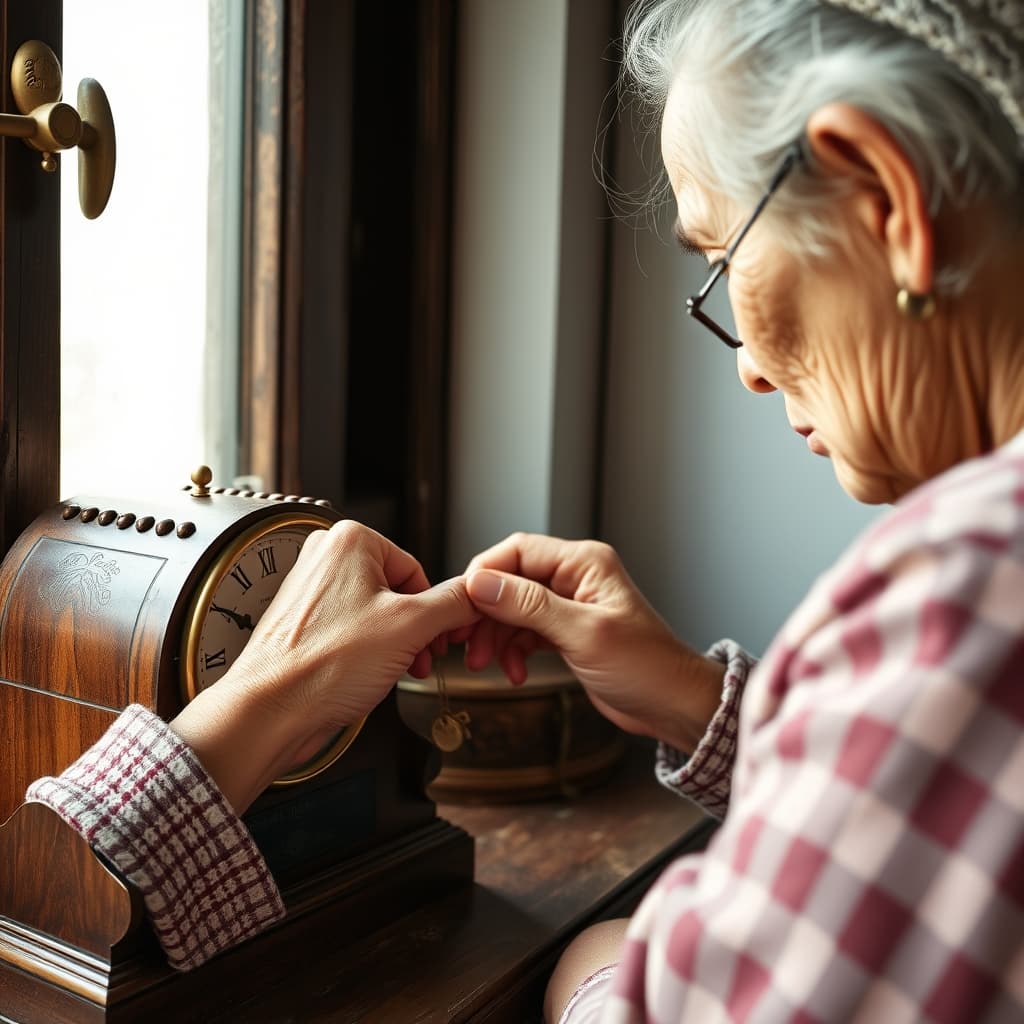
The clock in grandmother’s familiar corner might be large enough to organise the room, yet the object that kept it going could fit in a palm. Its winding key had a place of its own: a drawer, a hook, a nearby box or another location remembered by the household. Looking for that small object reveals the practical care behind a clock often described as always running.
Not every mechanical clock uses the same key or method. Some have built-in winding controls, while others require a separate key that fits a particular arbor. A family account should establish the actual object before assigning a routine. The familiar word “winding” can conceal quite different mechanisms, intervals and responsibilities.
The Key Had to Be Findable
Keeping a key near the clock reduced the chance of forgetting where it was. Keeping it out of easy reach could also express a household rule about who was allowed to use it. The remembered storage place therefore tells us about access as well as convenience. It should be recorded through testimony or photographs rather than inferred from a drawer containing other old metal objects.
A key found with a clock is not automatically its original key. Size, shape, wear and fit require examination. Later replacements belong to the object’s history, provided they are described honestly. Forcing an uncertain key or using pliers can damage the mechanism; fit is a practical requirement that appearance alone cannot settle.
Winding Was a Responsibility Someone Learned
A younger family member might watch before being trusted with the task. The instruction could include where to stand, how to hold the case and when to stop. Exact gestures varied with the clock and should be documented from a reliable account. A recollection of learning conveys a relationship, but it should not become a universal maintenance guide.
The key made responsibility transferable. If the usual keeper was away, someone needed to know the schedule and the storage place. A stopped clock could reveal that this knowledge had remained with one person. Recording who wound it names the labour that kept the apparently unchanging corner active.
Wear Links Hand and Mechanism
Polished edges on the key, scratches around an opening and a worn patch on the case can suggest repeated contact. They do not prove how often the clock was wound or who did it. Photographs under even light and angled light help record the marks before cleaning changes them.
The key and clock should remain associated in the catalogue, even if stored separately for security. A labelled enclosure can connect them without attaching adhesive to historic surfaces. Dimensions, material, markings and any replacement date make the small part as identifiable as the larger case.
The Key Did Not Solve Every Silence
When a clock stopped, winding was not necessarily the answer. Wear, dirt, position or an internal fault could be involved. Repeated attempts to force the control can worsen damage. A qualified clockmaker can establish the appropriate treatment, while the household account records what people actually did and believed at the time.
Silence also changed the room’s character. A visitor might notice the absence of a familiar tick before seeing that the hands had stopped. That observation connects maintenance to listening. It should remain distinct from an assumption that the clock had always been accurate or that every resident enjoyed its sound.
Inheritance Should Include the Instructions and the Doubts
Passing on a clock ideally includes its key, service records, photographs of its former position and the names of those who cared for it. If the family does not know the winding interval or correct setup, the gap should be stated. An heirloom does not arrive with complete knowledge merely because it has remained in one corner for years.
The key’s importance lies in its modest scale. It joined hand, routine and mechanism through a repeated act that was easy for others to overlook. Preserving it with the clock gives the family story a specific centre: someone knew where the key was, remembered when it was needed and taught another person how that corner of the house was kept alive.