 Eski Pano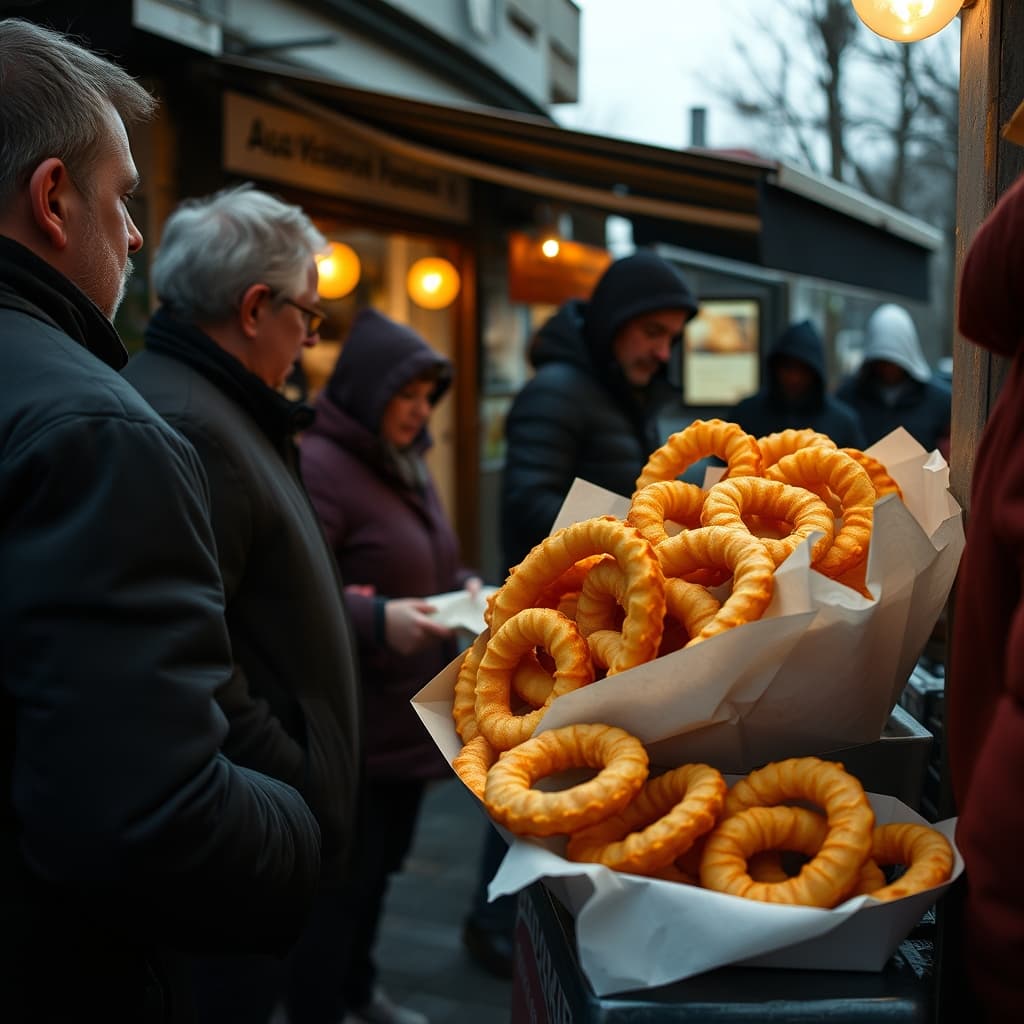
Halka tatlı is often remembered through a contrast: ridged, fried edges giving way to a syrup-soaked interior. That contrast is not fixed at the moment the sweet leaves the oil. Weather, syrup, resting time, packaging and the distance to the first bite continue to change it. During seasonal transitions, those variables become especially noticeable on the street.
Recipes and names vary, and halka tatlı belongs to a wider family of fried syrup sweets. This is not a claim for one origin or one ideal formula. The useful cultural question is how customers and makers judged a particular batch as it moved from fryer to tray, through cool or humid air, and perhaps onward to a family table.
Crispness Had a Clock
Freshly fried ridges offer structure, but syrup begins redistributing moisture as soon as the sweet is soaked. A maker balances dough, frying and syrup according to an established method; the customer experiences the result at a particular minute. A piece eaten beside the stall may differ from one carried home and opened after tea is poured.
That difference does not automatically mean one is better. Some people value a pronounced crisp shell, while others prefer a softer, fully soaked texture. An oral history should record the words used by the speaker instead of translating every preference into a single technical standard.
Autumn Air Changed the Journey to the Table
A cool evening can make hot syrup and frying aroma feel more immediate, while damp conditions may soften exposed surfaces more quickly. Wind, dust and street exposure also affect serving practice. Exact effects depend on recipe, temperature, humidity, packaging and time, so memory should not be converted into a universal weather rule.
Seasonal change also altered the customer’s behaviour. People might eat standing nearby, carry a parcel on the walk home or add it to a gathering already planned indoors. The meaning came partly from this transition between street temperature and household warmth, not from a calendar date invented after the fact.
Wrapping Protected and Trapped
Paper, tray, box or other packaging influenced ventilation and syrup leakage. Closing a hot portion tightly could retain steam; an open tray offered less protection from the environment. Historical packaging should be described from photographs, objects or testimony rather than recreated with materials that do not meet current food-contact requirements.
The underside of a parcel often tells the practical story: syrup stains, absorbed oil and deformation show why vendors and customers handled it carefully. Today, suitable food-grade packaging, clean utensils and separation between payment and ready-to-eat food remain essential. Nostalgic presentation does not excuse unsafe handling.
The Queue Was Part of the Timing
A busy stall could mean rapid turnover, but queue length alone never proves hygiene or quality. Waiting allowed customers to watch colour, pace and handling, and to decide whether to eat immediately. It also exposed workers to heat, repetitive motion and public scrutiny. The archive should name labour as clearly as pleasure.
A vendor’s sensory judgement may include the behaviour of the dough, the sound of frying, colour and the way syrup coats the ridges. These observations are skilled practice, not a substitute for temperature control, clean equipment, allergen information and compliance with current rules. Hot oil requires trained handling and appropriate fire safety.
Record the First Bite with Its Conditions
A useful food-memory interview asks where the sweet was eaten, how long it travelled, what held it, whether it was warm and which texture the speaker preferred. If a family version existed, record how it differed without assuming that the street recipe simply moved unchanged into the kitchen.
Photographs should show the serving context without asking people to handle hot oil for the camera. Recipe notebooks, vendor tools, packaging, permits and testimony can be linked while protecting commercial and personal information. Old food itself should not be tasted as an archive object.
Halka tatlı gains meaning during seasonal change because its texture makes time perceptible. The ridges do not preserve one perfect instant; they soften as the portion waits, travels and reaches the table. Remembering that short journey keeps the sweet connected to street skill and home anticipation while explaining why two sincere memories of the same batch can describe a different first bite.