 Eski Pano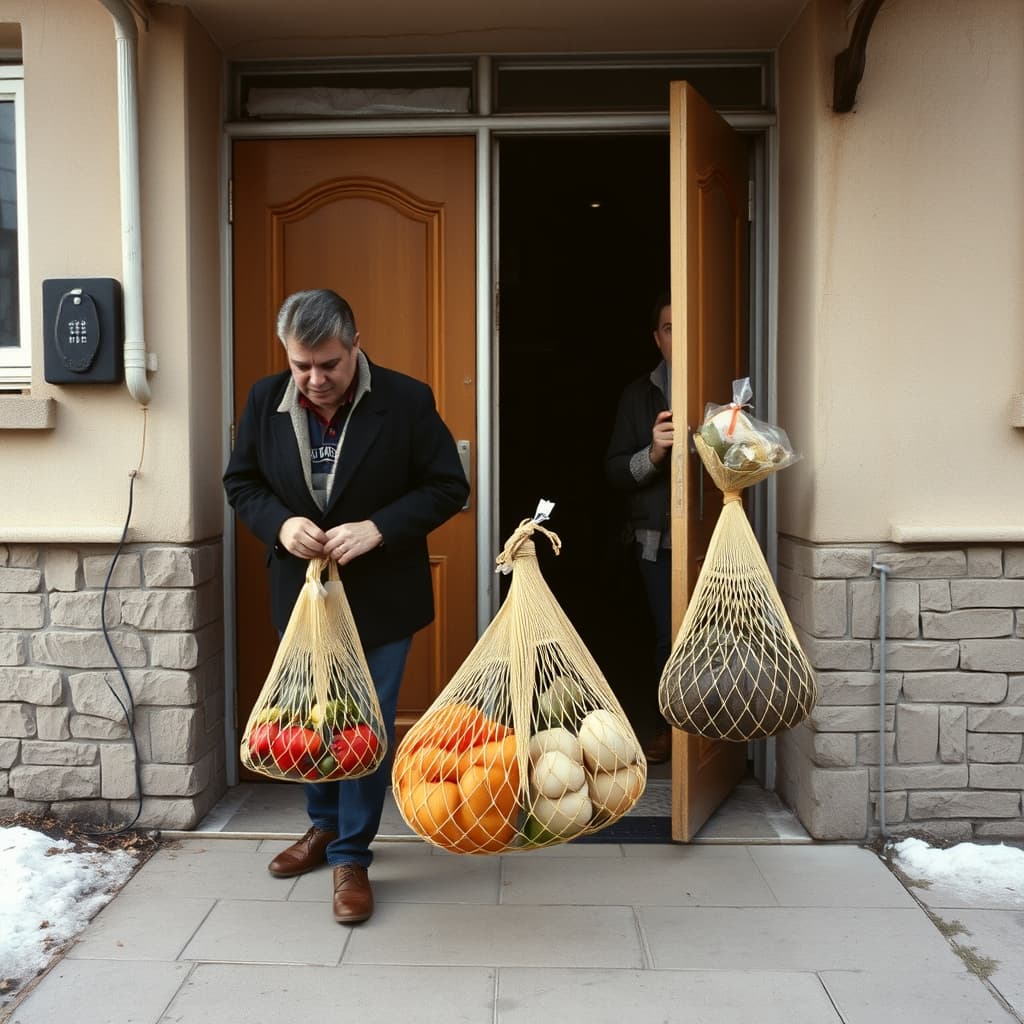
A string market net changed character as soon as it was filled. Folded, it occupied little space; on the return journey, its mesh stretched around fruit, greens and wrapped goods, revealing weight and shape to everyone nearby. The bag did not create neighbourhood warmth by itself, but it made domestic work visible in a way that could invite recognition, advice or a practical offer of help.
Market journeys differed by household, income, town, transport and season. Not everyone walked, used the same kind of bag or felt comfortable having purchases exposed. A net could be economical and reusable while also pressing handles into the hand, offering little protection from weather and requiring careful separation of foods. Its memory contains convenience and effort together.
The Load Announced Itself Before a Word Was Spoken
A bulging net showed that the carrier’s pace and balance might change. Long vegetables projected through the mesh; round produce shifted; a loaf or paper parcel needed protection. A neighbour did not need to know the contents exactly to see that a doorway, stair or crossing would be harder with both hands occupied.
Visibility could prompt a brief exchange: a warning about a torn cord, an offer to hold a door, or a question about market quality. It could also invite unwanted judgement about spending and household life. The same openness that supported familiarity reduced privacy, so warmth should not be assumed from every glance.
Weight Was Redistributed Along the Route
Carriers changed hands, shortened the handles, rested the bag on a low wall or divided goods between two nets. These gestures made the route manageable but could bruise produce or strain fingers. A child asked to carry a light bag participated in the task; assigning unsafe weight or responsibility should not be romanticised as character building.
Stairs were a decisive part of the journey in buildings without a lift. The final distance from entrance to kitchen could require more effort than the level walk. A neighbour carrying one bag for a flight or watching a door for a moment offered concrete help, not an abstract symbol of community.
The Mesh Turned Shopping into a Street-Level Conversation
Because contents were partly visible, people could exchange information about what was abundant, expensive or suitable for that day. Such remarks might help, but memory should not transform casual advice into verified price history. Receipts, market records and dated advertisements are needed for precise economic claims.
The bag also connected several sellers in one load. Market produce, bread and a wrapped purchase from a fixed shop could travel together. Safe handling still required separation, especially for raw, leaking or temperature-sensitive food. Reuse works best with washing, inner containers where needed and repair or retirement of damaged cords.
Gated Blocks Changed Encounters, Not Human Capacity
Modern residential sites often move the route through car parks, security points, lifts and private corridors. Delivery services may bring goods directly to a door. These arrangements reduce some chance encounters and physical carrying, but they do not prove that present-day residents lack generosity. Help now may be organised through messages, reception staff, shared trolleys or scheduled deliveries.
Older streets were not automatically welcoming either. Crowding, unsafe crossings, inaccessible stairs and intrusive attention could make the walk difficult. A fair comparison asks which encounters disappeared, which risks were reduced and what new forms of mutual support emerged, rather than using the market net as evidence of moral decline.
Map the Journey from Stall to Storage
An oral-history record can follow the route step by step: which bag was taken, how purchases were arranged, where the carrier rested, who opened the building door and how food was stored on arrival. A surviving net should be measured, photographed empty and supported when displayed full; loading it with heavy produce can stretch historic fibres permanently.
The filled market net remains warm in memory because it showed a household returning through shared space. Its weight made labour visible, and visibility sometimes produced a hand on a door or a bag carried upstairs. The useful lesson is not that one type of housing guarantees neighbourliness. It is that routes and objects create different opportunities to notice when another person needs practical help.