 Eski Pano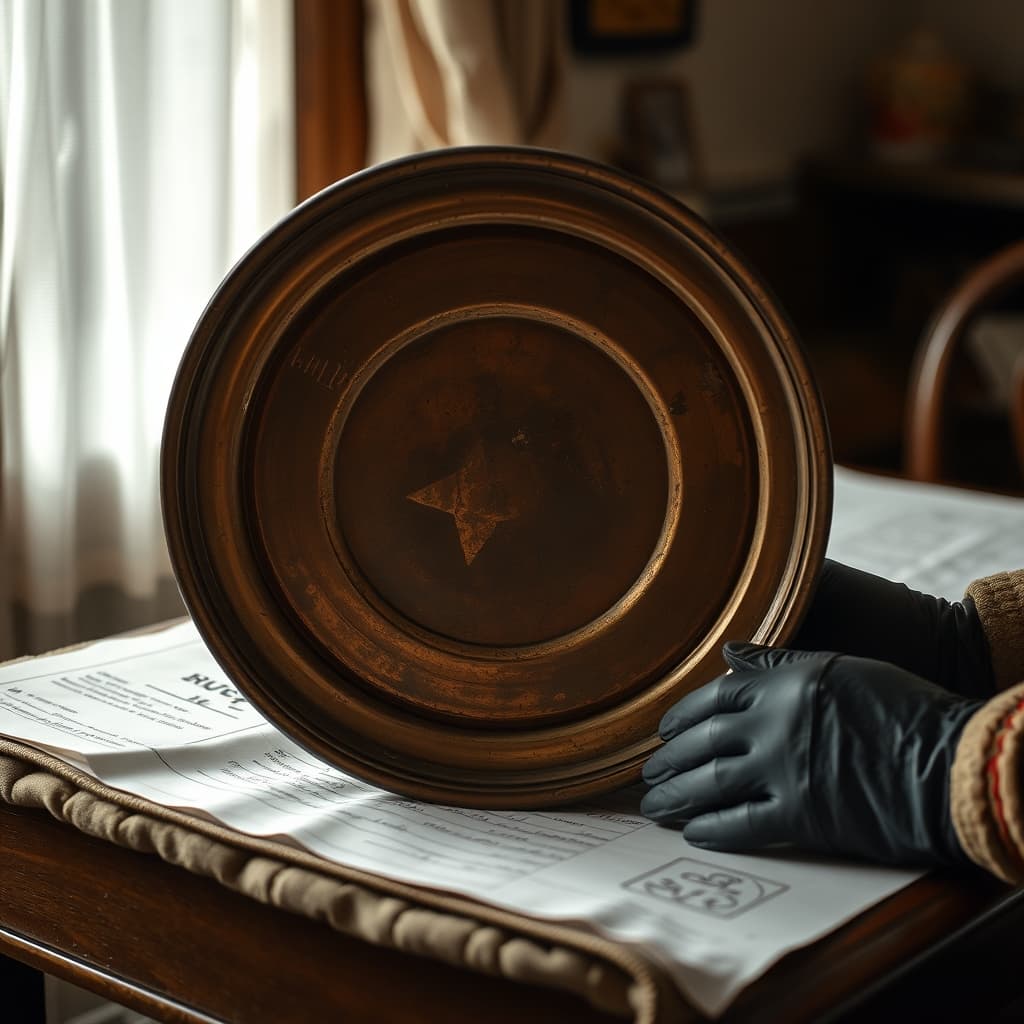
The polished interior of a copper sahan usually receives the first admiring glance, but the underside may hold the more complicated record. Heat discolouration, flattened areas, scratches from stacking, old repair lines and residues can show that the vessel encountered several kitchens and storage habits. None of these marks tells a complete story alone; together they direct better questions about use and movement.
A sahan is a shallow vessel whose form, alloy, lining, handles and intended purpose vary. Some examples cooked food, some served it, and others later became display objects. The underside cannot establish an exact date or owner from appearance. It becomes meaningful when material observation is joined to maker’s marks, family testimony, repair history and safe professional assessment.
Heat Marks Are Evidence, Not a Cooking Calendar
Darkening and colour changes can reflect exposure to heat, combustion products, cleaning and oxidation. Their pattern may suggest how the base met a heat source, but it does not count meals or identify a particular stove without corroboration. Abrasive polishing can remove this evidence and thin the metal, so documentation should precede any attempt to brighten the surface.
A clean circular area or uneven deposit may have more than one explanation. The vessel could have been scrubbed selectively, rested on another object or acquired marks during storage. Photographing in diffuse and raking light helps separate texture from colour. Samples or chemical testing belong to qualified specialists, especially when residues are unknown.
A Slightly Uneven Base Can Record Work and Repair
Hammering from manufacture, later straightening and repeated heating can all influence the base profile. A small wobble should not automatically be corrected with force. The rim, body and underside need to be considered together, since flattening one area may stress another or disturb an old joint.
Patches and solder lines deserve careful attention. They may represent a repair that kept the sahan useful through another move or generation. Their materials may also affect whether the vessel is safe for food. Unknown solder, exposed copper or damaged interior lining requires professional evaluation before cooking or serving.
Moving Wear Appears Where Objects Touched
During a household move, shallow vessels were often nested, wrapped or placed against other kitchenware. Repeated contact can produce arcs, crossed scratches or polished points on the base. A cloth weave or paper fragment may survive in a protected area, although it should not be assigned to a specific journey without a labelled packing record or reliable testimony.
The location of damage can improve a family interview. Instead of asking only who owned the sahan, an archivist can ask how copperware was packed, whether it hung on a wall after the move and who decided what travelled. The physical trace prompts memory without dictating the answer.
Shine Can Hide a Change of Function
A highly polished sahan may have moved from stove to wall or cabinet. In that role, the underside could face the room less often while the interior became the display surface. Polish may represent care, fashion or preparation for guests; patina may represent preference, neglect or deliberate conservation. Neither finish has a single moral meaning.
Before display, the support and hanging method should be assessed. Weak handles and old joints should not carry the full weight. Adhesive hooks, wire and hard metal contacts can damage the rim or leave new scratches. A padded, stable mount that does not require altering the object is preferable.
Catalogue Both Faces as One Object
A useful record includes overall form, dimensions, mass, alloy assessment where available, interior lining, underside, rim, handles, stamps, repairs and the conditions under which family information was collected. Images should show the base straight on and under angled light. Cleaning and treatment dates belong beside the photographs.
The copper sahan catches the eye because light moves across a worked metal surface. Its deeper value appears when the object is turned over. The underside gathers the friction of stoves, shelves, boxes and repairs—the less presentable contacts that allowed it to accompany a household. Preserving those marks keeps the shine from becoming an empty symbol and lets each move remain a question the evidence can honestly support.