 Eski Pano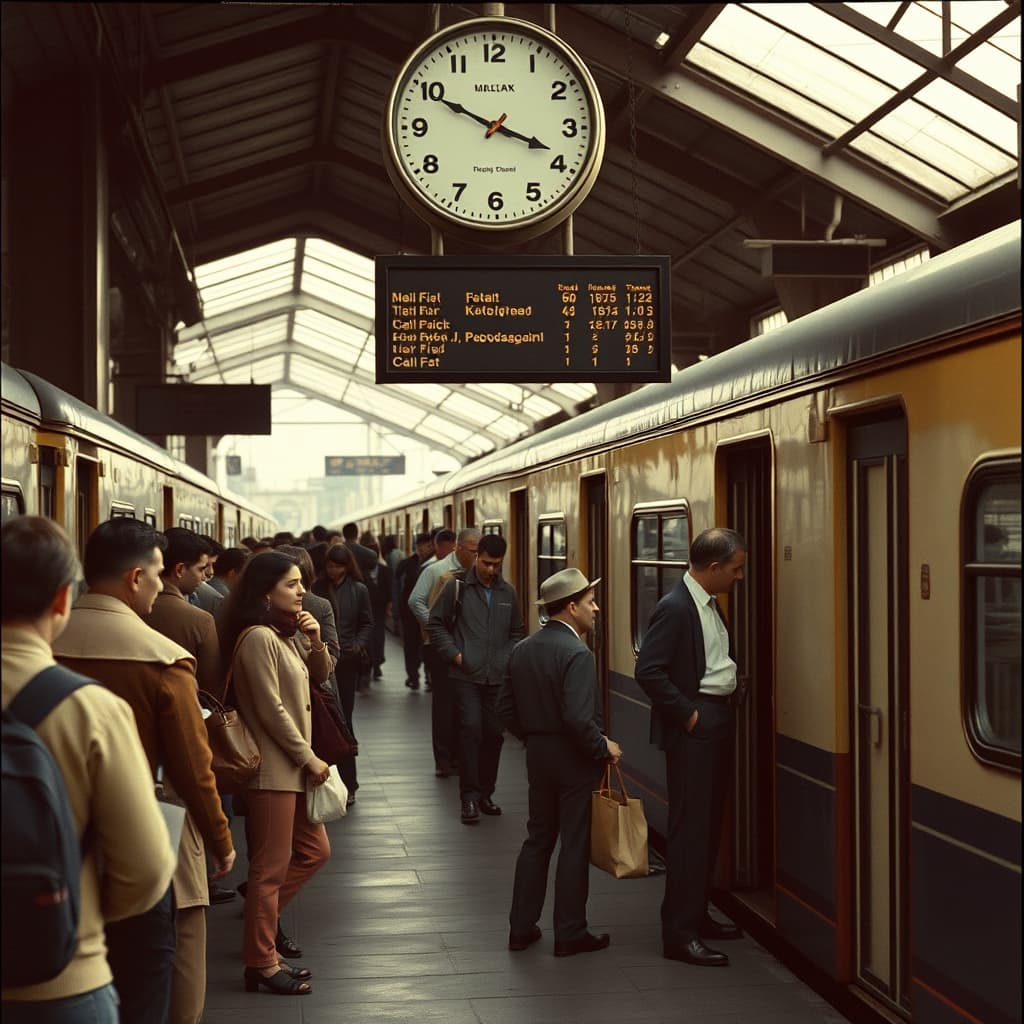
A suburban train joined the working city long before an employee reached a desk, workshop, school, hospital, or shop. Its value was not simply speed. A useful railway made arrival predictable enough for households and employers to organise mornings around it. The remembered platform crowd therefore belongs to a system of timetables, maintenance, signalling, staffing, connections, and public accountability.
Routes differed by city, decade, operator, traction, track layout, fare system, industrial geography, and suburban growth. Steam, diesel, and electric services had different operating constraints. Working timetables, public schedules, route maps, tickets, delay logs, maintenance records, union documents, photographs, and passenger testimony should be read together before describing one commute.
A Timetable Was a Promise with Consequences
A departure printed at 06:42 influenced alarm clocks, childcare, the walk to the station, factory gates, school opening, and connecting buses. Frequency mattered as much as journey time. Missing a train on a ten-minute service was inconvenient; missing one on an hourly branch could cost wages or discipline a worker who had little control over the failure.
Reliable information reduced that uncertainty. Platform indicators, audible announcements, clocks, staff advice, printed notices, and clear disruption plans had to agree. People with hearing, vision, language, or cognitive differences needed information in more than one form. A handwritten cancellation placed beyond a staircase could not serve every passenger.
Maintenance Happened outside the Family Photograph
Track inspection, points, signals, brakes, doors, lighting, power supply, wheel condition, cleaning, and depot work determined whether the morning train moved safely. Deferred maintenance might remain invisible until a breakdown. Archival celebration should credit drivers, guards, signallers, station staff, cleaners, technicians, dispatchers, and engineering teams rather than turning reliability into a property of the vehicle alone.
Shift design also mattered. Fatigue, inadequate rest, excessive overtime, and poor communication can affect safety. Historical records may reveal long hours or unequal employment conditions behind a punctual service. Preserving railway culture means documenting worker knowledge and occupational risk without romanticising exhaustion.
Access Began before the Platform Edge
Stairs, gaps, high steps, crowded passages, narrow gates, poor lighting, and distant ticket offices excluded some travellers. A commuter system should consider step-free routes, tactile guidance, seating, toilets, safe crossings, prams, luggage, mobility devices, and assistance. Retrofitting a historic station requires conservation judgment, but heritage value does not cancel equal access.
Crowding changes risk at doors, stairs, and platform edges. Passengers need visible boundaries, orderly boarding, emergency communication, and staff who can intervene without discriminatory policing. Harassment and intimidation may make a technically available service unusable, especially early or late in the day. Safety records should include passenger experience, not only collisions.
Rain, snow, heat, flooding, fallen trees, and power problems test the resilience of a timetable. Operators need inspected drainage, weather monitoring, alternative transport, honest delay estimates, and procedures that protect staff as well as passengers. Keeping a train moving is not always safer than suspending it; the important measure is a transparent and proportionate decision.
A Digital Nostalgia Archive can connect a morning ticket with the exact route, published and working timetables, rolling stock, station design, maintenance history, weather, delay evidence, worker roles, accessibility barriers, and passenger accounts. The ache attached to suburban trains often comes from remembering a city that relied on shared time. A responsible record shows how that shared time was built, whom it served, where it failed, and what dependable public transport still requires.