 Eski Pano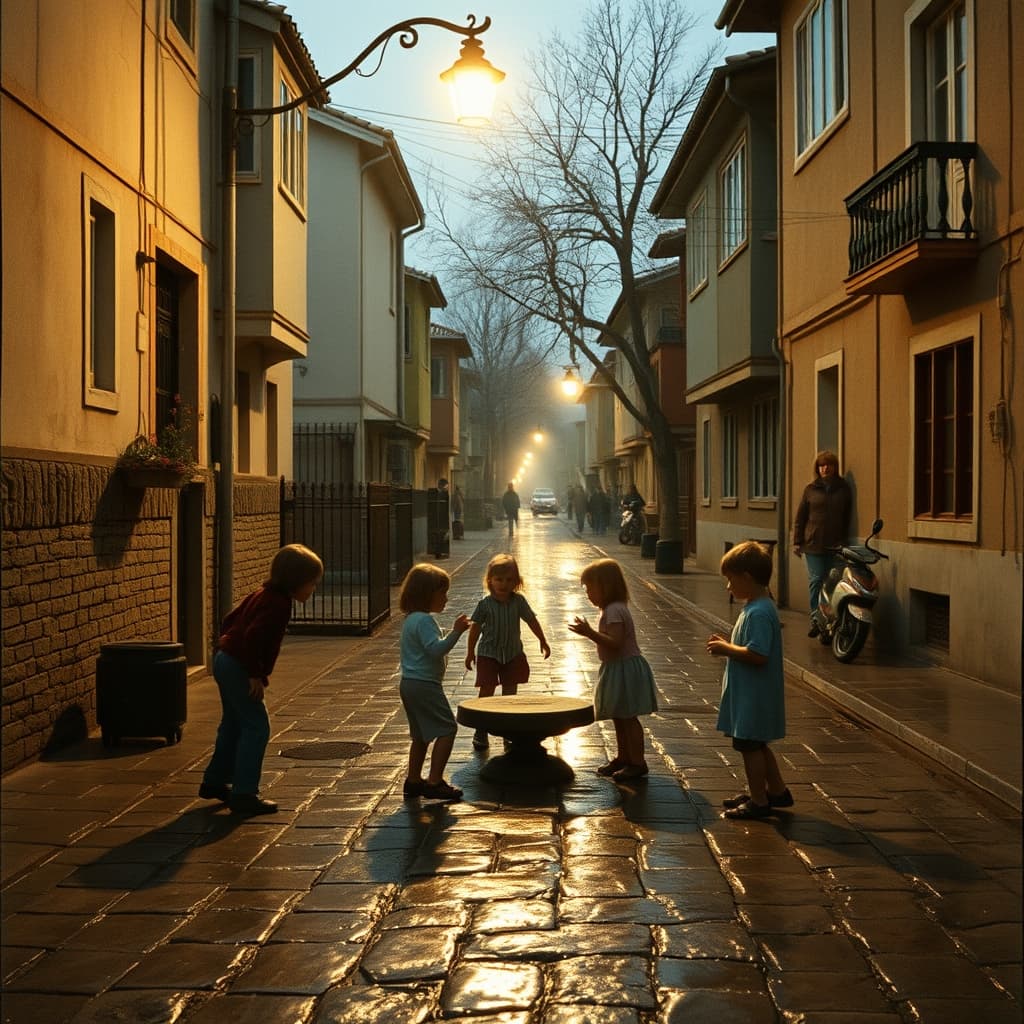
When the streetlight came on, play did not always end. It changed. The ball became harder to follow, shadows lengthened across walls, and children drew closer to the pool of light. Calls from windows set new deadlines while one final round became two. The street felt like a shared room because homes, shopfronts, pavements, and familiar voices remained connected after sunset.
This freedom varied sharply by place and person. Traffic, lighting, season, age, gender expectations, disability, family rules, and neighbourhood safety determined who could remain outside. Some children enjoyed long games; others watched from balconies, worked, cared for siblings, or were required home earlier. A truthful memory of the communal street makes room for both participation and exclusion.
The Lamp Redrew the Playing Field
Games adapted to visibility. Players moved goalposts closer, chose hide-and-seek boundaries, or avoided the darkest corner. A bright lamp could reveal faces but create deep contrast beyond its reach. Wet pavement after spring rain reflected light while becoming slippery. Potholes, cables, steps, parked vehicles, and traffic remained hazards even when children knew the street well.
Rules were negotiated aloud: where the safe zone ended, who counted, whether younger children received another chance, and what happened when a ball hit a window. These agreements trained memory, fairness, and argument. They were not always kind. Older or stronger players could dominate, so the nostalgic idea of natural harmony should be balanced with stories of conflict and repair.
Windows Formed an Informal Network
Adults recognised voices and movement from kitchens or balconies. A name called from above could stop a dispute, summon a child to dinner, or warn of a car. Shopkeepers closing shutters and neighbours returning home added more eyes. This familiarity sometimes made help available quickly, but informal observation was inconsistent and could become intrusive.
Child safety cannot rest solely on the claim that everyone knew everyone. Trusted guardians, adequate lighting, traffic calming, accessible public space, and clear reporting of harmful behaviour remain necessary. Recognition does not guarantee good intent. Children need permission to leave an uncomfortable situation and adults who take concerns seriously.
Public Light Was Civic Infrastructure
The lamp itself depended on electricity, poles, wiring, bulbs, maintenance crews, and municipal decisions about placement. Failed lamps changed routes and shortened play. Uneven lighting could leave certain streets, stairways, or settlements neglected. Remembering the glow should include workers who repaired faults and questions about which areas received reliable service.
Noise also required negotiation. Residents sleeping early, caring for babies, studying, or working shifts did not always welcome games beneath their windows. Children learned when to move, lower voices, or finish. Shared space became home-like not because it belonged to one group, but because different needs had to be acknowledged repeatedly.
A Digital Nostalgia Archive can connect photographs, game rules, street maps, lighting plans, outage records, weather notes, and testimony from players, residents, and maintenance workers. Images of minors demand consent. Streetlight games endure in memory because evening independence was measured in minutes and metres. The glowing circle offered extra time, but community was created by the limits, warnings, compromises, and returns home that surrounded it.