 Eski Pano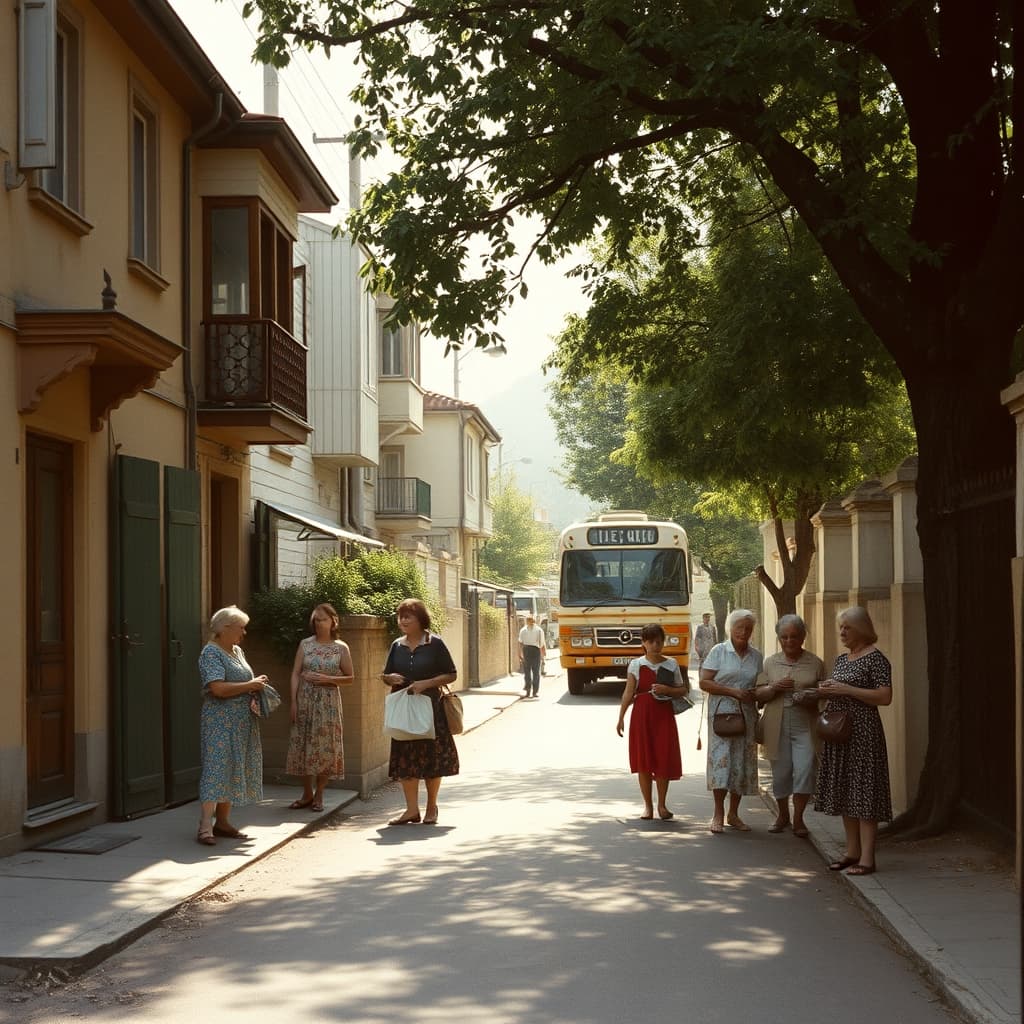
Before families disappeared toward parks, waterfronts, relatives, or picnic grounds, the Sunday outing was visible in the street. Windows opened earlier, shoes were checked at doorways, food parcels moved between homes, and children were warned not to soil clothes before departure. The street did not merely watch the journey begin. It helped families test their timing, remember missing items, and decide how to reach a crowded destination.
Summer made preparation public. An open window allowed questions to travel between floors. Someone below could report whether the bus had passed, whether the sky looked unsettled, or whether another family was nearly ready. A neighbour under the plane tree might hold a bag while a parent returned for water. These were modest acts, but they reduced the friction of moving several generations through the city.
Departure Had a Neighbourhood Clock
Official timetables mattered, yet neighbourhood time was also measured through shutters, bells, vendors, and the position of shade. Families knew that leaving after a certain hour meant standing on crowded transport or walking in stronger heat. Children experienced this schedule as a chain of instructions: finish breakfast, wash, dress, wait, do not wander, carry the light parcel.
Groups often departed in stages. An older relative might walk slowly to a meeting point while others locked the house. One household could reserve space in a queue for another. Advice moved quickly: use a different stop, avoid a closed road, take extra water, expect wind near the shore. This informal information network made the street part of urban mobility.
Trust Was Practical, Not Decorative
Neighbourliness appeared in small responsibilities. A key might be left with a trusted resident, a plant entrusted to someone staying home, or a message passed to a visitor expected later. People noticed which flats were empty and when a family was likely to return. Such awareness could strengthen security, although it could also feel intrusive. Healthy trust depended on discretion: helping without treating another household's movements as public property.
Not every family had equal access to leisure. Cost, disability, work schedules, care duties, and transport limited who could leave and where they could go. Some neighbours remained because Sunday was a working day. A complete memory of lively streets must include those who opened shops, drove buses, cleaned public spaces, or prepared food for other people's outings.
The Return Completed the Ritual
Evening brought families back with tired children, lighter food bags, damp towels, and stories already being edited for retelling. The street again served as a threshold. Neighbours asked about the destination, helped lift a sleeping child, or shared news that had arrived during the day. A street lamp and the broad shade of a plane tree could frame both departure and return.
The strength of this culture did not come from constant togetherness. It came from repeated, limited acts of coordination. People lent attention for a few minutes, exchanged useful knowledge, and then allowed families to continue on their own. The boundary between support and interference was negotiated daily and was not always successful.
Today's outing may begin with navigation apps, private messages, and online weather reports. Those tools are efficient, but they make preparation less visible to the street. Remembering the older pattern helps document how local knowledge once supported movement across the city. The checked doorway, the neighbour calling down a bus update, and the child waiting beneath a tree show that a family day out was also a small neighbourhood production, assembled before anyone reached the destination.