 Eski Pano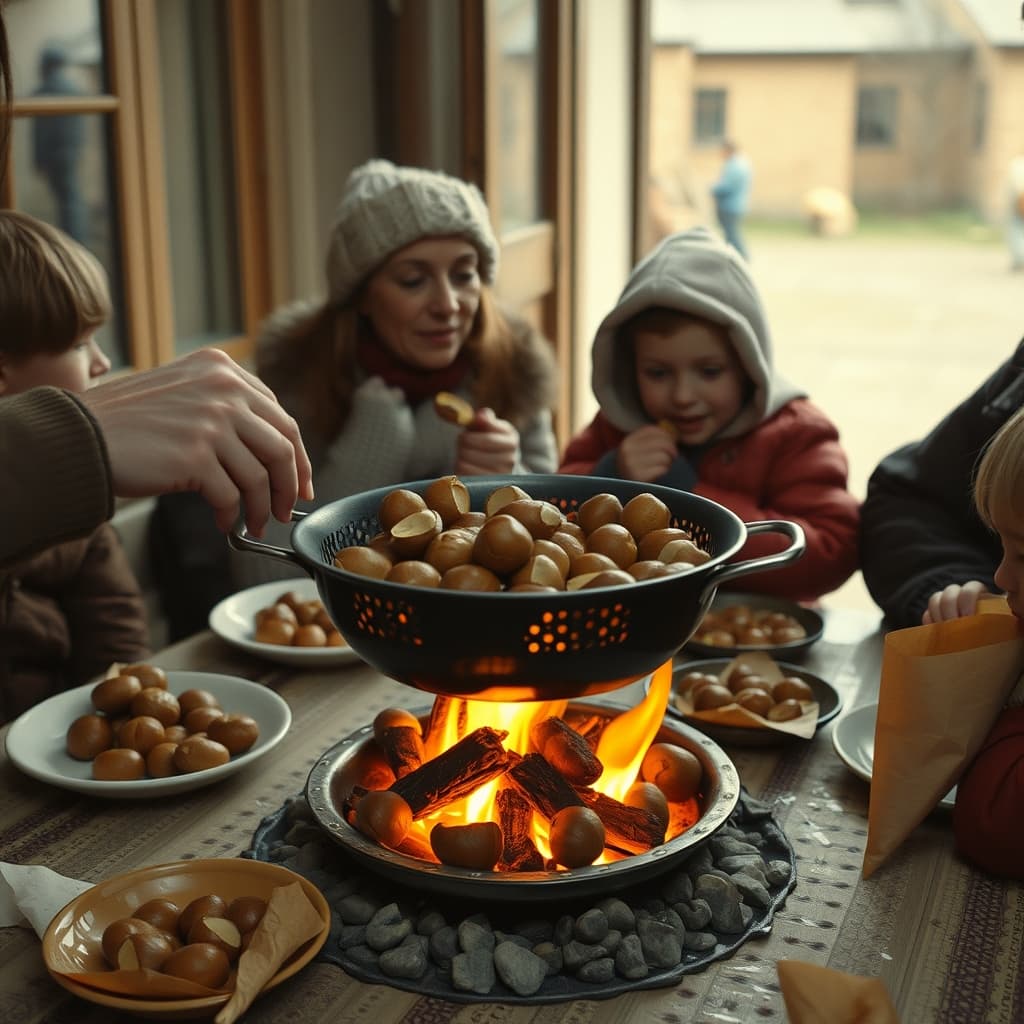
Coal-roasted chestnuts reached memory through more than sweetness. Their shells clicked against a pan, smoke entered wool coats, and hot kernels demanded patience from cold fingers. At a crowded table or beside a street brazier, the first bite could recall childhood because it joined flavour with a precise winter situation: darkness arriving early, people gathering close, and heat becoming something to share.
Chestnuts vary by size, moisture, freshness, and origin. A successful batch therefore begins with selection rather than fire. Sound nuts should feel firm and heavy for their size, without mould, holes, or a sour smell. Storage matters because they contain more moisture than many other nuts and can spoil. Romantic images of sacks beside a stove should not replace careful inspection and appropriate cool storage.
Scoring Was a Safety Step
Before roasting, the shell is commonly scored. The cut allows steam to escape and makes peeling easier. Methods differ in shape and placement, but the purpose is practical. An uncut chestnut can burst as internal moisture becomes steam. Cutting also requires a stable surface, a suitable sharp tool, good light, and hands kept away from the blade. Children could observe or help with safer tasks, but scoring belonged to a capable adult.
Washing or soaking practices vary by household and recipe. Some cooks used water to clean, soften, or help manage moisture; others roasted after sorting and scoring. There is no need to present one family habit as universal. Recording the pan, heat source, batch size, and timing gives a recipe memory more value than claiming a single correct old method.
Coal Heat Required Judgement
A coal fire does not behave like a numbered modern hob. Heat changes as fuel catches, settles, and develops ash. A perforated pan or roasting surface needed movement so one side did not burn while the centre remained hard. The cook judged by smell, shell opening, colour, sound, and resistance. That knowledge was acquired through repeated batches and occasional failure.
Coal also brings serious risks. It produces carbon monoxide, an invisible and potentially fatal gas, and should never be burned in an enclosed or poorly ventilated space. Braziers and stoves can cause burns, fires, and smoke exposure. Historical practice is not proof of safety. Anyone recreating the flavour today should use equipment approved for its setting, follow ventilation and fire guidance, keep children away, and prefer safer modern methods when conditions are uncertain.
Peeling Turned Food into Shared Time
Freshly roasted chestnuts are easiest to peel while still warm, but too much heat burns fingertips. Families developed a rhythm: cover briefly, open a small batch, pass them around, and remove shell and inner skin before the nut cooled completely. One person might peel for a younger child or older relative. The growing pile of shells recorded the pace of conversation.
Street vendors added another layer. Their roasting apparatus, paper portions, call, and position near transport or evening crowds turned chestnuts into portable warmth. Home roasting created a table ritual; street roasting accompanied movement. Both depended on labour, fuel, sourcing, and the ability to manage heat in public or domestic space.
The enduring taste should be documented without turning hardship into decoration. Coal was not only atmospheric; carrying, lighting, cleaning, and paying for it shaped winter life. Smoke affected rooms and lungs. The chestnut's warmth was precious partly because cold and fuel limits were real. Remembering the full process honours the people who selected, cut, roasted, sold, and peeled the food. It also lets today's reader separate cultural knowledge worth preserving from hazards that should not be repeated.