 Eski Pano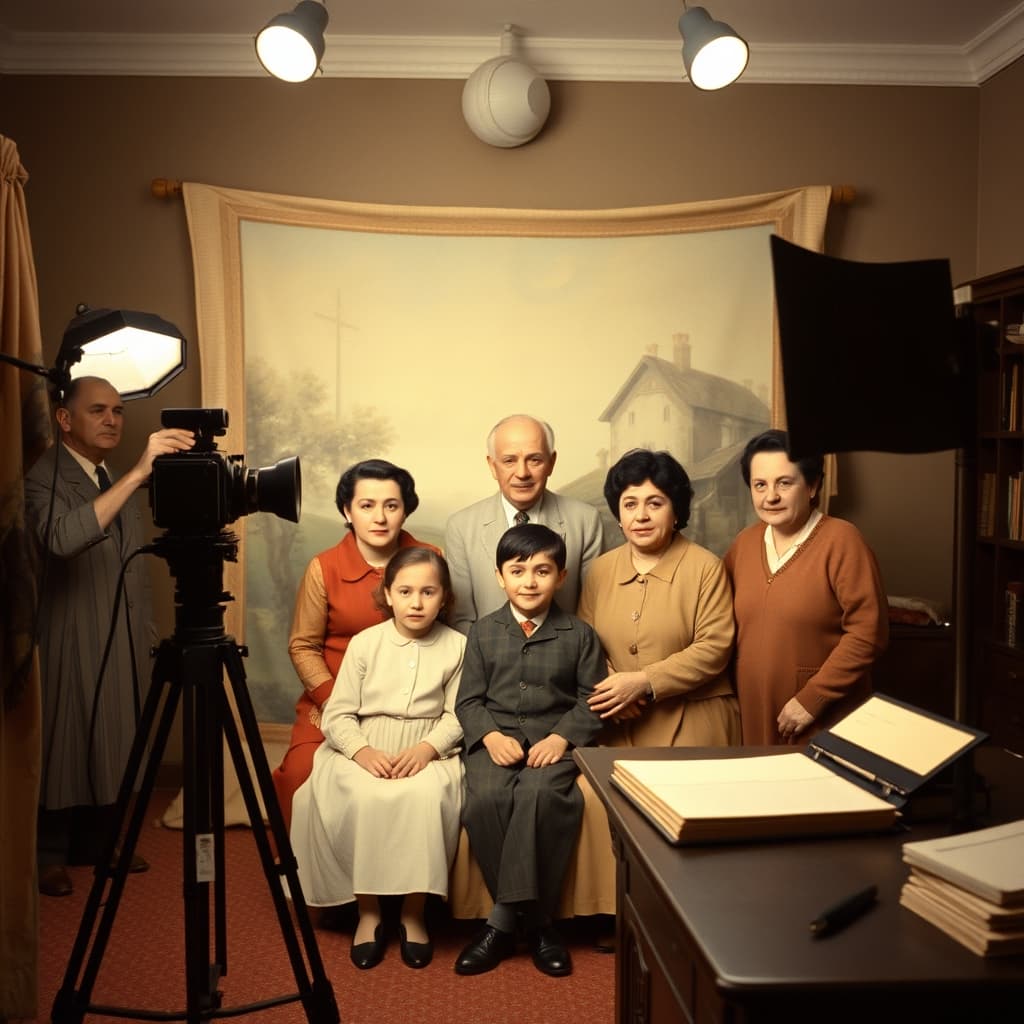
A family portrait studio offered more than a camera and a chair. It turned a private relationship into an arranged public image. An appointment had to be chosen, clothes prepared, children settled, and relatives placed according to height, age, mobility, and family expectations. The finished photograph might look effortless, yet it was the result of negotiation between the people in front of the lens and skilled workers behind it.
The studio separated the sitting from the ordinary street outside. Painted backdrops suggested a columned room, garden, curtain, or neutral distance. Chairs, small tables, carpets, and posing supports helped bodies remain still. Light from windows or lamps was shaped to describe faces without losing detail. These devices did not make the portrait false; they reveal the visual conventions through which a family wished to be seen.
The Negative Was the Studio's Working Memory
Customers usually carried away a print, while the studio might retain a glass plate, sheet film, or roll-film negative according to period and practice. Negatives allowed additional copies, enlargements, or replacements. Their numbering connected an image to an appointment book, envelope, receipt, or handwritten name. When these records survive together, they can restore identities that a loose photograph has lost.
When the connection breaks, caution is essential. A studio stamp can identify the maker or business, but not automatically every sitter. Clothing and backdrop can suggest a date range, not a precise year without supporting evidence. Family testimony should be recorded with the speaker's name and date rather than silently converted into fact. Uncertainty is part of responsible description.
Retouching and the Finished Face
Portraits were often adjusted before delivery. Workers could soften blemishes, strengthen eyes, correct backgrounds, or alter contrast on negatives and prints. Hand colouring added another layer. These interventions reflected technical limits, customer wishes, and contemporary ideas of presentation. They should not be dismissed as deception or mistaken for modern digital manipulation; they belong to the craft history of photography.
The studio also depended on invisible labour: reception, cleaning, film processing, printing, mounting, bookkeeping, and delivery. Women and apprentices frequently contributed even when the business name highlighted one photographer. Researching invoices, employment records, oral histories, and annotations can recover a fuller account of who made the portrait possible.
Preserving a Photograph Without Losing Its Context
Old prints should be handled with clean, dry hands or appropriate gloves where the process requires them, supported from beneath, and stored in archival-quality enclosures. Writing directly on the image, applying adhesive tape, laminating, or forcing a curled print flat can cause permanent damage. Information is best recorded on a separate archival sleeve or in a catalogue linked to a digital copy.
The reverse of a photograph matters. Studio marks, addresses, dedications, dates, order numbers, and later notes can be as valuable as the face. Both sides should be digitised with accurate colour and sufficient resolution. Related frames, envelopes, mounts, and receipts should remain associated, even when stored separately for conservation.
Portrait studios framed family history because they created a repeatable occasion for being seen together. The warm stone street ended at the studio door; inside, posture, light, furniture, and timing transformed daily life into an image intended to last. The most useful archive does not merely admire that image. It preserves the negative number, the handwriting, the studio address, the uncertainty, and the labour. Those details allow a portrait to remain beautiful while also becoming evidence.