 Eski Pano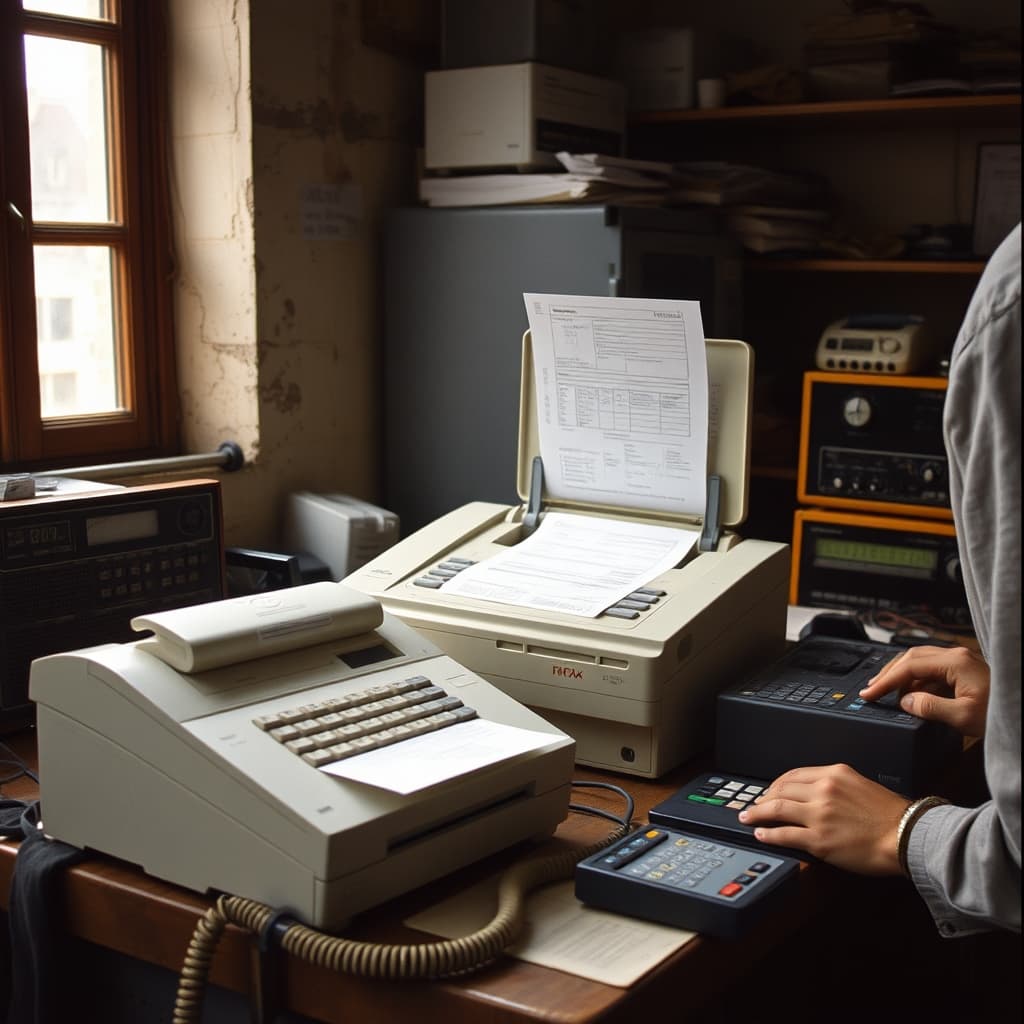
A fax machine promised that a page could cross distance while remaining recognisably a page. Contracts, sketches, price lists, news copy, reservations, and family messages entered a feeder and emerged elsewhere through telephone infrastructure. The result could be immediate enough to change office tempo, yet every transmission depended on paper movement, scanning, line quality, printing, and confirmation working in sequence.
When the machine failed, the symptom did not always identify the cause. A blank page could point to reversed thermal paper, a scanning problem, an exhausted consumable, or a fault at the other end. Skewed copies might begin with dirty rollers or badly placed guides. Broken lines could arise from the original document, scanner, print head, or connection. Good repair began with questions and a controlled test, not immediate disassembly.
The Paper Path Told the First Story
Feed rollers accumulated dust and glazing through repeated contact. Small scraps, bent guides, and worn separation parts could cause jams or multiple sheets. A technician traced the route from document tray to exit, looking for resistance and evidence. Cleaning materials had to suit rubber, plastic, glass, and coated components; an aggressive solvent could solve one mark while damaging the machine.
Original documents also needed care. Staples, torn edges, wet ink, adhesive notes, and fragile photographs could catch or contaminate the scanner. Protective carrier sheets were used in some contexts, provided the machine allowed them. Operators learned that speed depended on preparing the page before pressing send.
Thermal Prints Were Never Permanent by Default
Many fax machines printed on thermal paper whose coating darkened under heat. Convenient and quiet, it could fade, yellow, or darken through light, heat, friction, plasticisers, and chemical contact. A message that appeared clear on arrival might become unreadable in storage. Important faxes were therefore often photocopied onto stable paper, filed with transmission details, or later digitised.
Preservation requires avoiding heat, strong light, unsuitable plastic sleeves, adhesives, and pressure. A thermal original should be scanned before deterioration advances, while retaining the original as evidence when possible. Digital files need descriptive names, dates, backup, and links to the related transaction. A scan without context can become as anonymous as a faded roll.
Line Faults Joined Two Machines and a Network
Fax diagnosis crossed the boundary of the device. Telephone noise, extension wiring, switchboards, incompatible settings, or a busy destination could interrupt communication. Technicians and operators used test numbers, reports, and known-good equipment to isolate the fault. Confirmation pages and error codes were working records, not meaningless waste.
Electrical safety matters when restoring old machines. Capacitors, power supplies, heat-producing components, and degraded cables should be assessed by qualified people. Replacement parts may be scarce, and a cosmetic restoration does not make a machine safe. Documentation of repairs preserves more historical value than hiding every new component.
The fax found a second life in repair shops because its users still needed a particular workflow and because technicians understood the whole chain. Their skill combined mechanics, optics, electronics, telecommunications, and patient conversation with customers. Remembering hours beside the fax should include that diagnostic intelligence. The lasting archive is not the imagined ache of a machine beneath a neighbour's window; it is the fragile print, transmission report, worn roller, service note, and human decision that kept a page moving.