 Eski Pano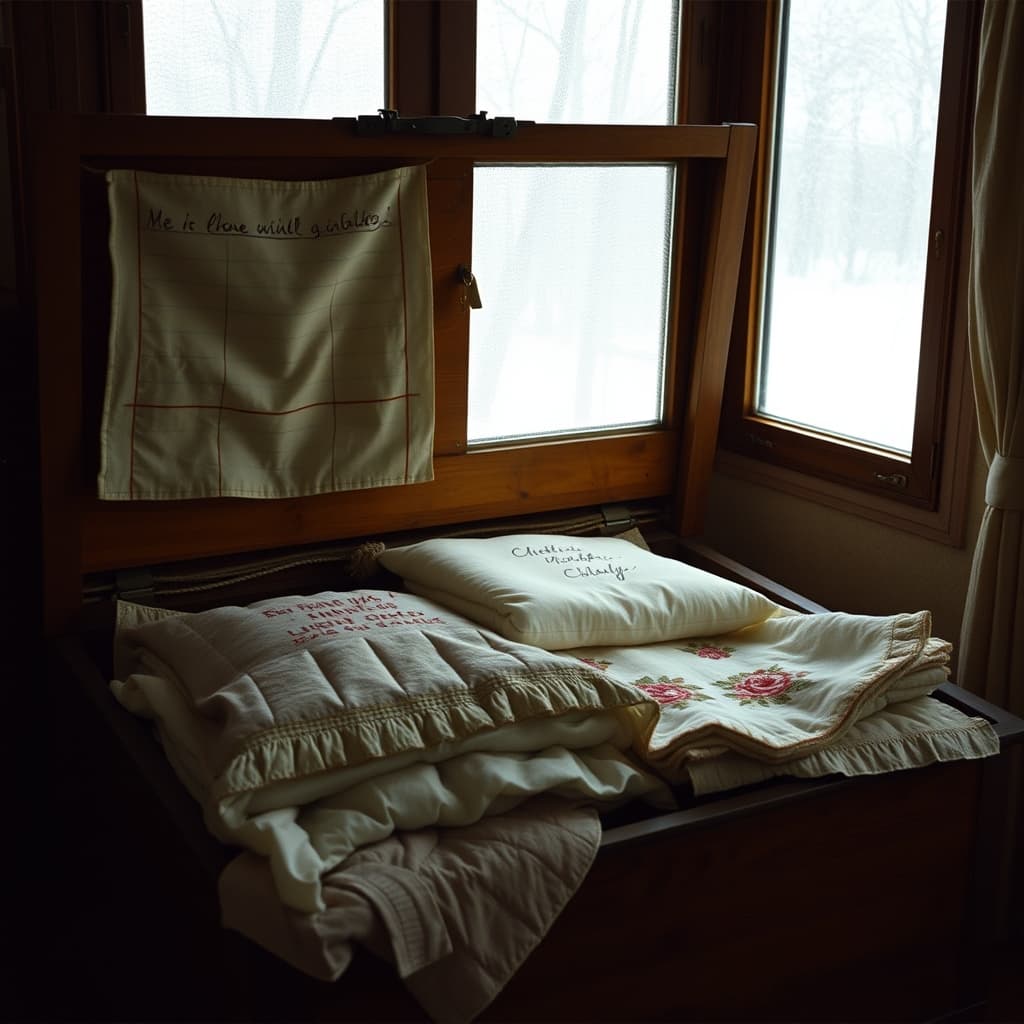
A quilt chest accompanied a household through moves because it solved two problems at once. It protected bulky textiles and gathered them into a unit that could be counted, carried, and placed in a new room. Quilts, blankets, sheets, embroidered covers, and occasionally documents or keepsakes entered its interior. The chest therefore acted less like a mysterious treasure box and more like a working household archive.
Its value depended on construction. Boards, joints, base, lid, hinges, lock, and handles had to resist weight and repeated movement. A chest could be repaired many times: a new hinge, reinforced foot, replacement lock, or lining added against dust. These interventions should be recorded rather than hidden, because they show how the object remained useful.
The Inventory Was as Important as the Chest
Textiles can lose identity when folded together. A simple written list, label, photograph, or family note preserves who made an item, when it was used, and whether it belongs with a particular set. Claims should distinguish direct knowledge from later recollection. An embroidered cover may be inherited, but pattern alone cannot prove a maker or village.
During a move, the list helped detect loss and decide what needed immediate access. The chest might be loaded last and opened first if bedding was required that night. Moving scratches, rope marks, and numbered labels can thus document logistics as clearly as domestic taste.
Air, Moisture, and Pests
A closed chest is not automatically safe. Damp textiles encourage mould, metal fittings can corrode, and insects may attack wool or other fibres. Traditional airing practices responded to real risks, but strong sunlight can fade colour and weaken material. Modern care favours clean, dry storage, periodic inspection, gentle support, and methods appropriate to each fibre.
Mothballs and other chemicals can be hazardous and leave persistent residues. Unknown powders, oils, or scented substances should not be added to historic textiles. Active infestation or mould calls for professional advice and isolation from other collections. Washing an old quilt without understanding dyes, fillings, stitching, and condition can cause irreversible damage.
Why the Chest Attracts Collectors
Collectors respond to scale, wood, hardware, patina, and the idea of hidden family history. That appeal can encourage over-restoration. Sanding may erase tool marks and old paint; replacing hardware removes evidence; a new varnish can change both appearance and future conservation. Cleaning should begin with documentation and the least invasive method.
The contents and container should be studied together. A chest emptied for display loses part of its function, while textiles separated without records lose provenance. Even if conservation requires different storage, catalogue links and photographs can preserve the relationship.
The quilt chest shines in memory because it made continuity practical. It carried warmth, labour, and household order through changing addresses. Its truthful story lies in inventories, folded layers, repaired joints, pest traces, moving labels, and remembered use. Preserving those details allows the chest to remain an heirloom without inventing a legend for every mark on its lid. It also protects the textiles from becoming anonymous decoration when the household story begins to fade.