 Eski Pano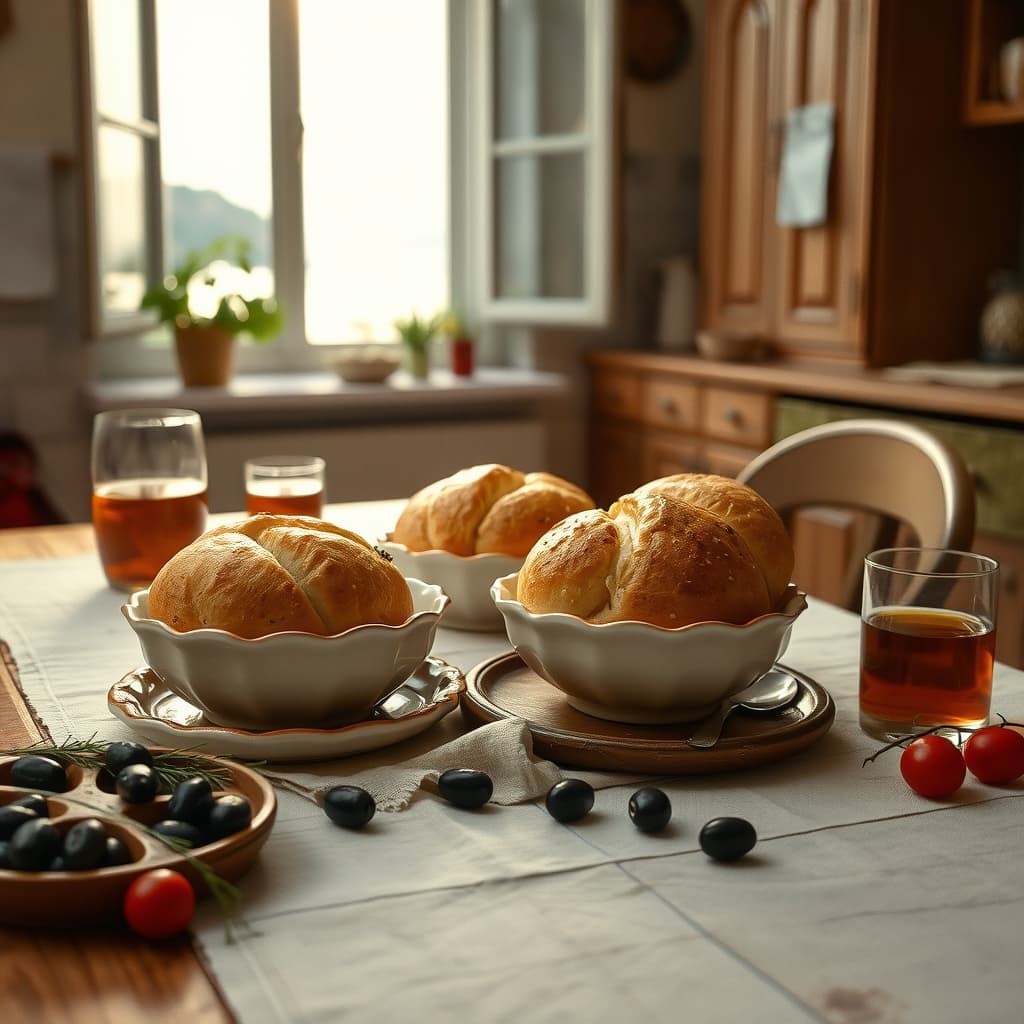
Olive bread belonged to the kind of spring table that made a kitchen reveal its character. It was humble, fragrant, and generous enough to be shared before a formal meal began. A plate placed in the middle of the table could gather hands, stories, and small signs of appetite.
The Kitchen’s Signature
Every home gave olive bread a slightly different voice. Some used more thyme, some preferred softer dough, some added a sharper olive taste. These small choices mattered because they made the recipe belong to a particular kitchen. The same name could carry many family accents.
A Spring Table Without Ceremony
The best tables were often the least formal ones. A clean cloth, tea glasses, tomatoes, fresh herbs, and bread still warm from the oven could turn an afternoon into memory. People reached for pieces while talking, and the table became lively before anyone called it a meal.
Why the Taste Becomes an Ache
Years later, the smell of baked dough and olives can return with surprising force. It may bring back an open window, a coastal evening, or the distant sound of a ferry joining the kitchen noise. The taste becomes a sweet ache because it remembers not only food, but the ease of being gathered around it.