 Eski Pano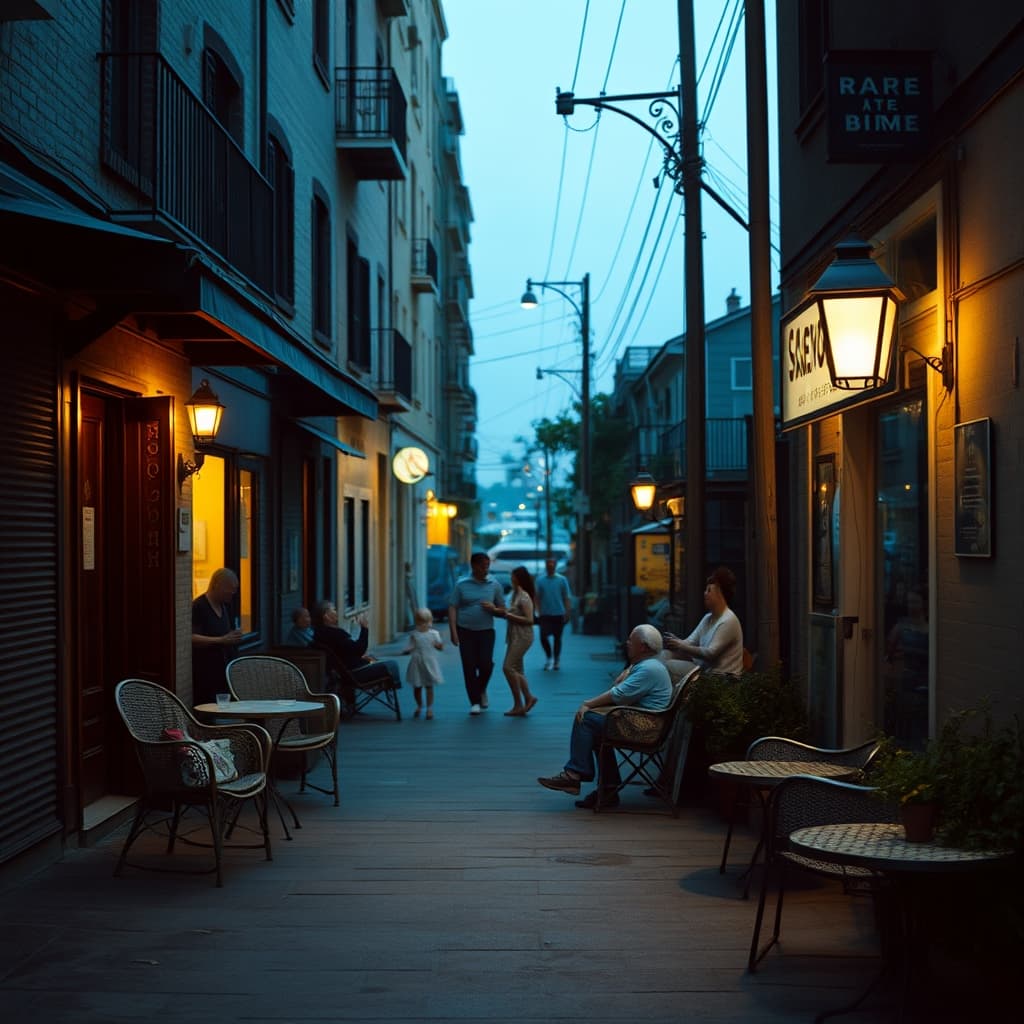
The sidewalk chair arrangement was one of the quiet inventions of old neighborhoods. A few chairs placed outside an entrance could turn stone, dust, and streetlight into a shared room. No sign announced it. Everyone knew where to sit, who preferred the shade, and which chair belonged to the eldest neighbor.
The Street as an Extension of Home
These chairs softened the line between private houses and public life. People stepped outside without fully leaving home. They carried tea, a small cushion, a plate of fruit, or simply the need to be seen. The sidewalk became a place where news slowed down and loneliness had less room.
Evening Order and Neighborhood Trust
The arrangement had its own manners. Chairs faced the passing life but also protected the doorway. Children played within sight, shopkeepers joined between customers, and late arrivals were given a place by shifting the circle a little. Trust was built through repetition, not declaration.
Why It Stayed in the Heart
It is remembered because it made the city human at eye level. The pavement was not only a path; it was a threshold of conversation. With the night air and distant ferry sounds, the chair circle became proof that a neighborhood could gather without planning, simply because people still belonged to one another.