 Eski Pano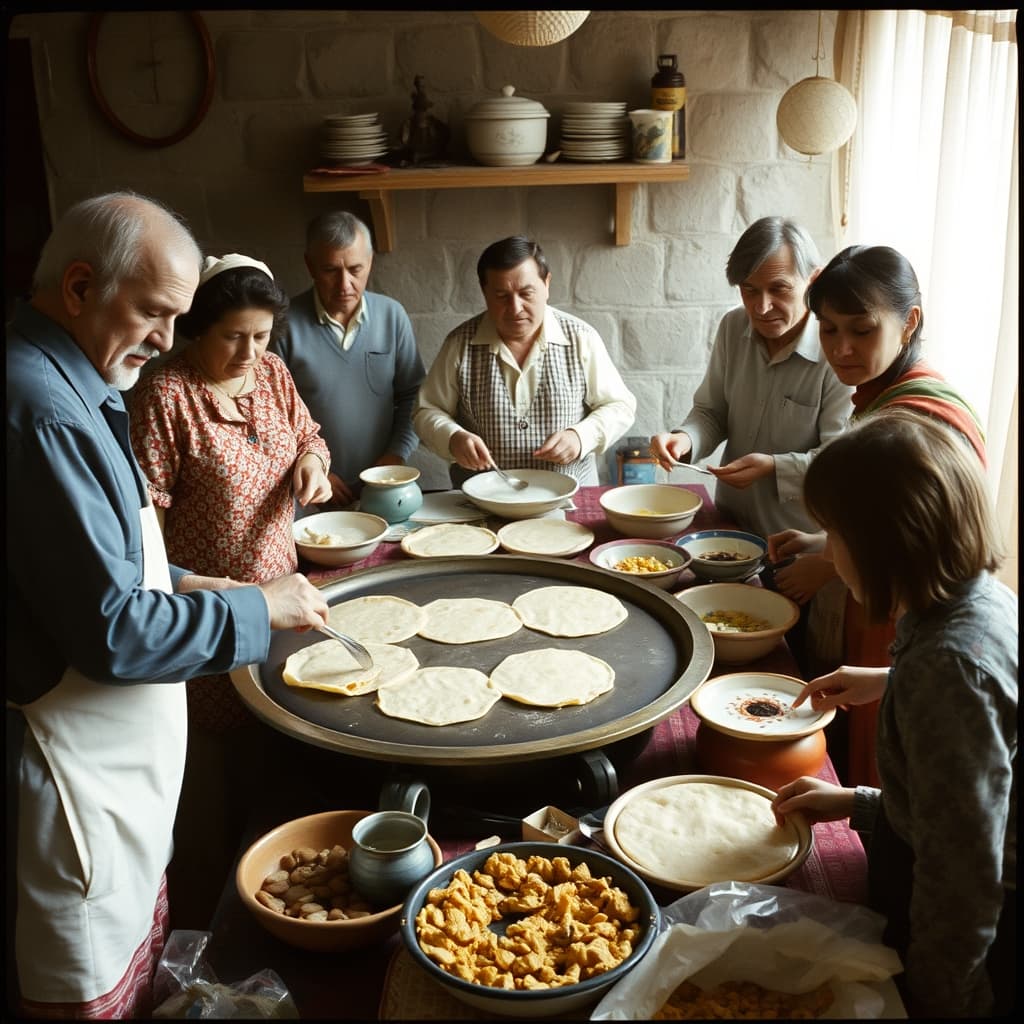
A crowded table could make sac-cooked gözleme appear almost effortless: one flatbread arrived, hands tore pieces, tea glasses moved, and another followed while the first was still warm. In practice, that rhythm depended on a small production line. Dough had to rest, fillings had to be prepared, rounds had to be rolled, the griddle had to hold a suitable temperature, and serving had to match cooking without exhausting the people doing the work.
Gözleme varies by region, household, flour, hydration, rolling technique, filling, fat, fuel, griddle, season, and occasion. Some versions are folded, layered, unleavened, lightly fermented, brushed with butter, or cooked dry. Cheese, greens, potato, minced meat, herbs, or combinations require different preparation. One family memory should be documented as a specific practice, not presented as the single authentic recipe.
Preparation Created the Pace before the Sac Was Hot
Flour and water became workable dough through measured hydration, mixing, kneading, and rest. Dividing equal portions helped each round cook at a similar rate. Too much bench flour could burn on the griddle; too little could make dough stick. Rolling required a stable surface, suitable oklava, room for movement, and repeated judgement about thickness rather than speed alone.
Fillings were a separate workstation. Greens needed sorting, washing, drying, and chopping; potatoes required thorough cooking and safe cooling; cheese needed cold storage and accurate identification; meat required strict separation, refrigeration, and complete cooking. Wet mixtures could tear thin dough or leak onto the hot surface. Preparing ingredients in advance reduced pressure but did not remove time and temperature controls.
The Sac Set the Rhythm of the Whole Team
A sac or convex griddle stores and transfers heat unevenly across its surface. Fuel, wind, metal thickness, distance from flame, and the residue of previous rounds affect temperature. The cook watched blistering, colour, steam, edge dryness, and flexibility, moving the gözleme or adjusting heat as needed. A scorched exterior does not guarantee a meat filling has reached a safe internal temperature.
The rolling person, filling person, cook, server, tea maker, dishwasher, shopper, fuel carrier, and cleaner formed one system even when only the cook appeared in photographs. In many households this labour was assigned mainly to women and older girls. Calling it togetherness should not hide unequal preparation, heat exposure, standing time, or cleanup. Fair participation includes planning, carrying, serving, and restoring the space.
Sharing Food Requires Sharing Safety
Open flame, hot metal, smoke, unstable stools, trailing clothing, children, and crowded movement create burn and fire risks. The cooking area needs firm equipment, ventilation, clearance from combustibles, safe fuel handling, protective tools, clean routes, and suitable fire response. Indoor charcoal or poorly vented combustion can produce deadly carbon monoxide; nostalgic atmosphere never justifies it.
Raw and ready-to-eat foods require separate utensils, boards, containers, and clean hands. Perishable fillings should not remain at unsafe temperatures during a long gathering. Leftovers need prompt cooling and refrigeration according to current food-safety guidance. Cloths, brushes, and shared plates can spread contamination if they are not cleaned and changed appropriately.
Wheat and gluten are usually central allergens. Milk may be present in cheese, yoghurt, butter, or dough; egg, sesame, nuts, or soy may appear in household variations or shared products. A greens label is not sufficient if cheese or butter was added. Guests need clear ingredient information and separate preparation where cross-contact must be controlled.
A Digital Nostalgia Archive can connect a gözleme table with the recipe actually used, dough notes, ingredient sources, work sequence, sac dimensions, fuel, temperature observations, utensils, seating plan, allergen information, and testimony from every participant. The first warm bite carried a culture of sharing because many timed tasks met at the table. Preserving that culture honestly means recognising skilled and gendered labour, distributing work fairly, documenting variation, and keeping hospitality beside fire, ventilation, allergy, and food-safety responsibilities.