 Eski Pano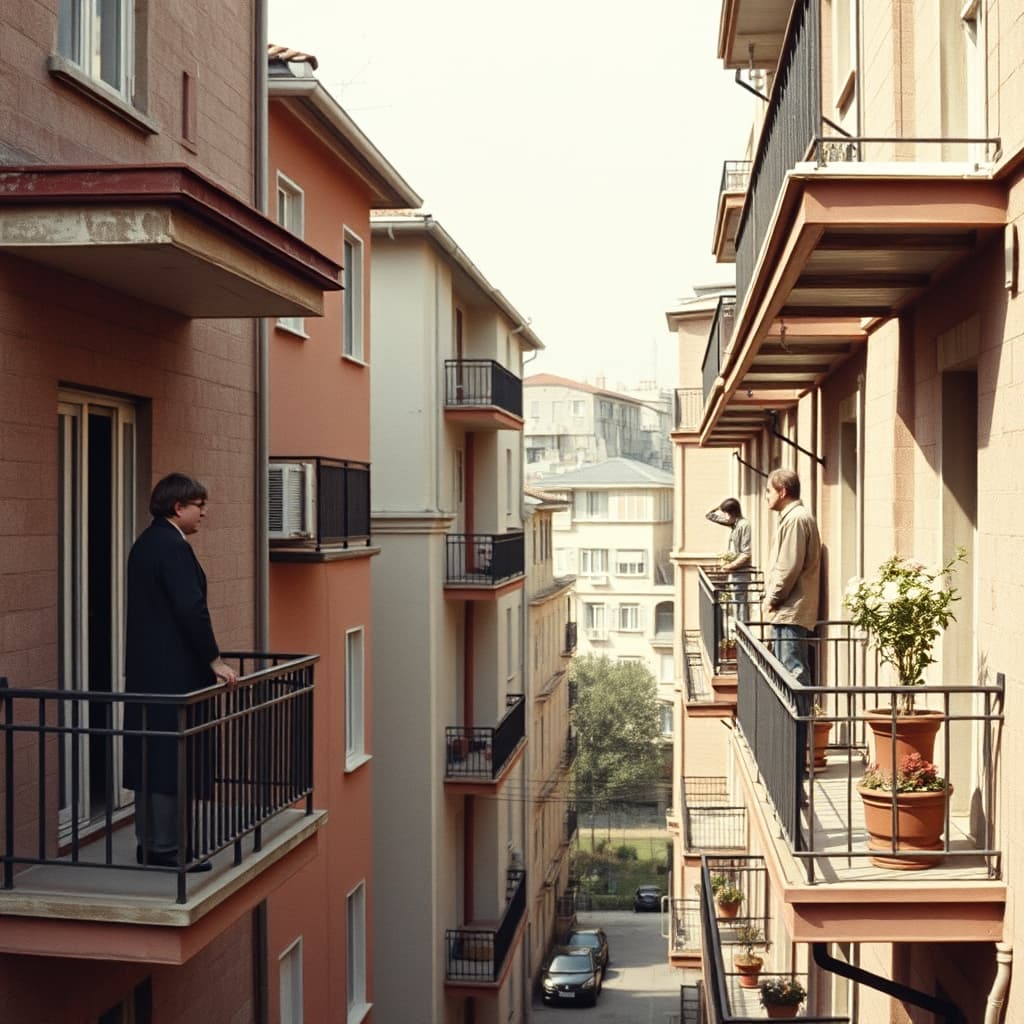
Neighbouring balconies could operate like a low-tech communication network. A voice crossed the gap to announce rain, a hand gesture confirmed that a child had arrived, a basket carried a small object, and a light left on at an unusual hour prompted concern. These exchanges did not literally turn a street into one home. They created a layer of mutual awareness across separate households, with useful connections and necessary boundaries.
Balcony life varied by climate, building type, floor height, street width, household composition, work patterns, tenure, gender norms, and period. Courtyard galleries, wooden bay windows, apartment balconies, roof terraces, and ground-floor stoops supported different contact. Plans, photographs, building records, weather data, household interviews, and neighbour accounts are needed to reconstruct an actual network.
Sight and Sound Defined the Network
Communication depended on line of sight, voice range, traffic noise, trees, awnings, glass enclosures, and the position of doors and windows. A person might hear a call without seeing who made it, while upper floors could observe weather or street movement earlier than lower ones. Messages were short because distance reduced detail. Repetition, names, gestures, and agreed meanings helped prevent misunderstanding.
Weather information was especially practical. Neighbours warned one another about rain approaching laundry, wind lifting rugs, frost affecting plants, or smoke entering open windows. The value lay in speed, yet the message still needed checking. A shout about gas, fire, structural danger, or medical emergency should trigger professional services and evacuation procedures rather than improvised balcony investigation.
Small Exchanges Carried Social Obligations
Salt, a sewing tool, a newspaper, a key, or a note might move between nearby homes, sometimes in a basket or by a person using the stairs. Borrowing saved time but created duties: ask permission, return promptly, keep items clean, replace what was consumed, and avoid sending sharp, heavy, hot, breakable, or valuable objects over a drop. Children should never be used to reach beyond railings.
Informal child supervision could add another pair of eyes, but it was not a substitute for responsible care. Visibility can be blocked in seconds, and assumptions about who is watching are dangerous. Families need clear arrangements, age-appropriate boundaries, protected windows and doors, and safe play areas. Emergency contact details are more reliable than relying on a call that may not be heard.
Mutual Awareness Could Become Intrusion
The same sightline that enabled help could expose meals, clothing, arguments, visitors, illness, religious practice, or financial hardship. Looking repeatedly, commenting on private behaviour, photographing without consent, sharing rumours, or policing women and young people turns neighbourliness into surveillance. Curtains, screens, quiet refusal, and a closed door are legitimate boundaries, not evidence of hostility.
Sound also travels unevenly. Conversation, music, repairs, furniture movement, pets, and late-night calls affect shift workers, babies, students, older people, and people with sensory sensitivities. Local rules set minimum standards, but considerate neighbours often need clearer agreed hours. Nostalgia for lively balconies should not dismiss the right to rest.
Balustrades, slabs, fixings, flowerpots, awnings, washing lines, electrical cables, and enclosed additions require inspection and lawful maintenance. Leaning, climbing, overloaded storage, unsecured planters, dropped objects, and improvised ropes create serious hazards. Accessibility also matters: steps, narrow doors, high thresholds, and heavy shutters may exclude residents from the network celebrated in photographs.
A Digital Nostalgia Archive can map balcony positions, sightlines, common calls, weather warnings, objects exchanged, quiet hours, building alterations, accidents, consent rules, and stories from people who preferred privacy. The network worked because separate homes developed limited channels of trust. Preserving it responsibly means distinguishing mutual help from surveillance, remembering care work without romanticising risk, and adapting communication to safer buildings, accessible design, professional emergency systems, and freely chosen boundaries.