 Eski Pano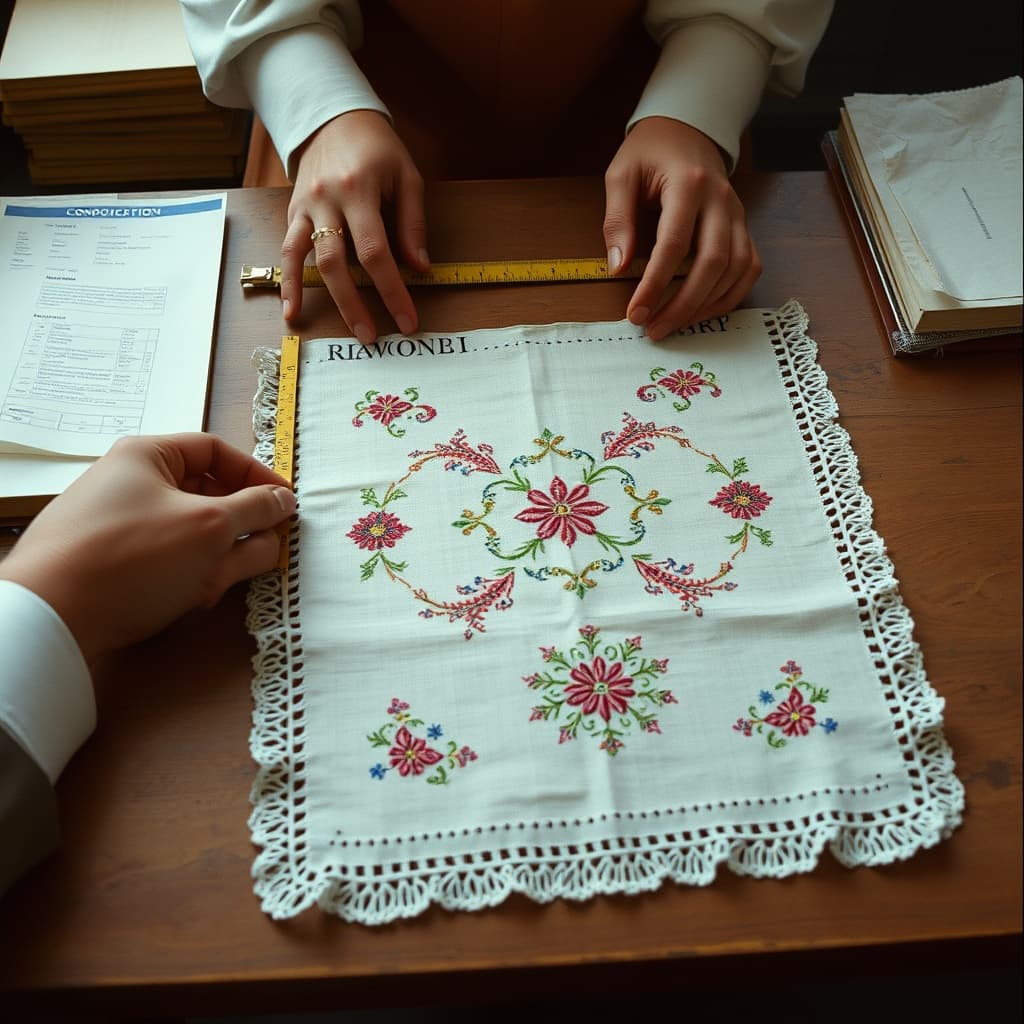
An embroidered handkerchief may enter a family archive with only a sentence: it waited in the dowry room. That memory is important, but a useful catalogue must slow down and separate what can be observed from what has been inherited as testimony. Cloth, stitches, repairs, folds, names, photographs, and family accounts can support one another. They should not be compressed into a confident romantic story when dates, maker, or intended recipient remain uncertain.
Handkerchiefs differ in size, fibre, weave, edge finish, embroidery technique, thread, motif, colour, inscription, use, and regional terminology. Some were practical, ceremonial, gifted, displayed, carried, never used, or later repurposed. A square textile found in a chest is not automatically a bridal handkerchief. Cataloguing begins with a unique identifier and a cautious object name that can be revised.
Description Must Begin with the Cloth
Record dimensions without stretching, the direction and density of warp and weft, selvedges, hems, drawn-thread areas, lace additions, and any joining seams. Fibre identification by appearance alone can be unreliable; cotton, linen, silk, rayon, and synthetic fibres may imitate one another. Microscopy or specialist analysis may be appropriate, while destructive tests are rarely justified for a unique family object.
Stitches should be described with a recognised vocabulary where possible, while preserving the family's local names as alternative terms. Photograph front and reverse because thread paths, knots, starts, stops, corrections, and unfinished sections reveal how the work was made. Note thread twist, sheen, thickness, fading, dye transfer, and later substitutions. Motifs can suggest comparison, but they do not by themselves prove village, ethnicity, date, or maker.
Attribution Requires Evidence and Consent
A label saying grandmother's may identify ownership rather than authorship. Ask who supplied the cloth, who drew the design, who embroidered, whether several people helped, and who performed later repairs. Letters, dowry lists, studio portraits, wedding photographs, pattern sheets, school notebooks, receipts, and related textiles may narrow the possibilities. Conflicting memories should be recorded with their sources rather than silently resolved.
Dowry objects can carry private information about marriage plans, economic difficulty, broken engagements, migration, inheritance disputes, or gendered expectations. Families may not want every name or story published. An archive should distinguish internal documentation from public display, record permissions, offer respectful anonymisation, and allow contributors to correct contextual information without altering the physical evidence.
Condition Mapping Preserves a History of Handling
Creases, yellowing, stains, worn corners, broken stitches, insect loss, rust marks, perfume, starch, smoke, and repairs are not merely defects. They may indicate folding, washing, ironing, pinning, storage furniture, display, or use. Mark damage on a simple diagram and photograph it with a scale and colour reference. Do not describe every brown mark as age; water, metal, adhesive, cosmetics, and handling leave different traces.
Washing a fragile handkerchief can cause shrinkage, bleeding, fibre loss, or disappearance of finishes and evidence. Bleach, stain remover, starch, perfume, adhesive tape, ironing, and household moth chemicals may cause irreversible change. A textile conservator should assess valuable or unstable objects. Clean hands or suitable gloves, gentle support, and minimal handling are safer first steps than cosmetic improvement.
Storage should use stable, suitable archival materials and protect against light, damp, heat, pests, dust, and sharp folds. Flat storage may suit small textiles; otherwise padded folds and adequate support reduce stress. Labels must not be stapled, pinned, glued, or written directly onto the cloth. The object identifier belongs on its enclosure and documentation, with a reversible specialist method used only when necessary.
A Digital Nostalgia Archive can connect the handkerchief with its catalogue record, condition map, full and detailed photographs, dowry list, pattern source, family statements, consent decisions, storage history, and unresolved questions. The textile's years of waiting deserve documentation more precise than sentiment. Preservation means crediting skilled hands while admitting uncertainty, protecting private histories, retaining material evidence, and giving future researchers enough information to test today's interpretation.