 Eski Pano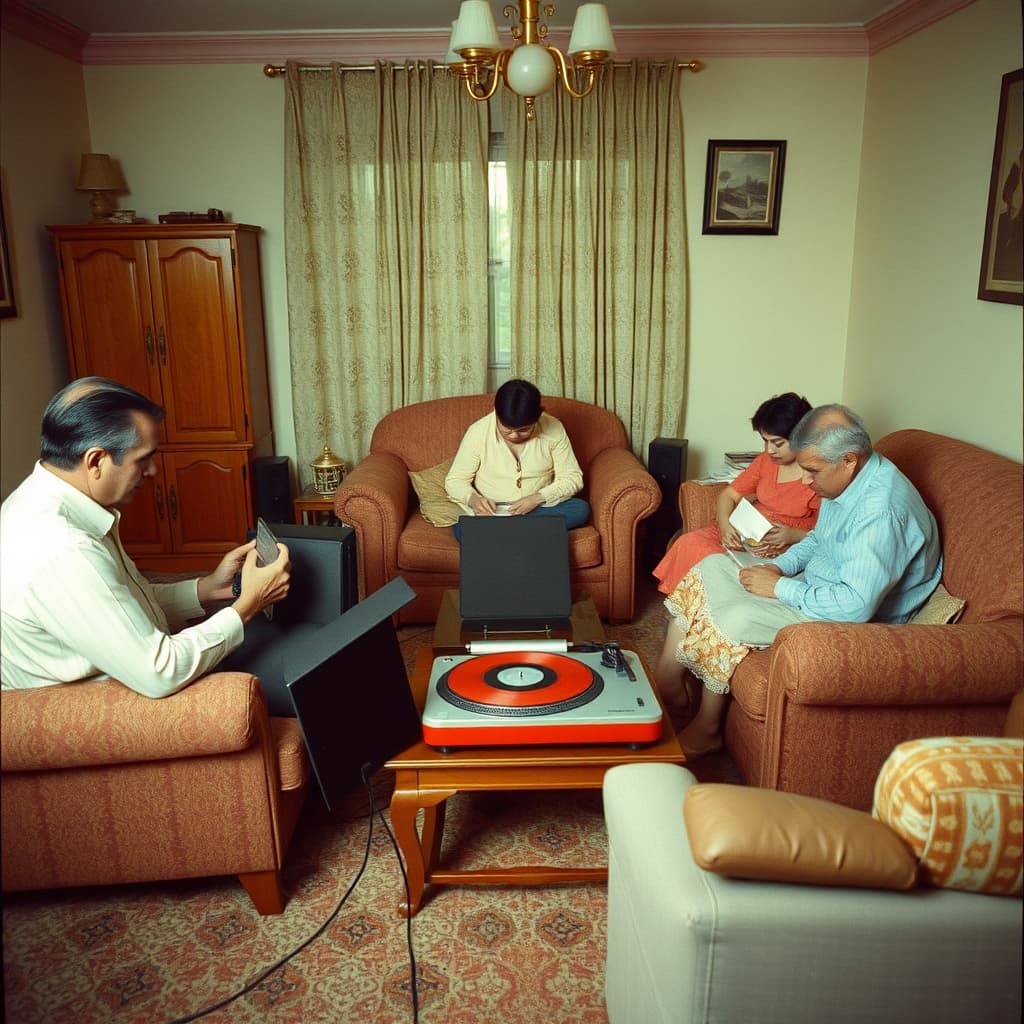
A record player did not create a family listening evening by itself. The sitting room had to be rearranged around sound: chairs angled toward a loudspeaker, a cabinet cleared for equipment, conversation softened, and household tasks fitted around the length of a side. The room became an acoustic arrangement as well as a social one, and its design shaped who heard clearly, who controlled the music, and who remained busy at the edge.
Equipment and rooms varied widely. A wind-up gramophone with an acoustic horn, a radiogram, a mono portable player, and a component stereo produced different sound fields. Rugs, curtains, glass cabinets, tiled floors, upholstered furniture, room size, and open doors altered reflection and absorption. Photographs, manuals, floor plans, purchase records, record sleeves, and listener testimony should identify a particular setup rather than inventing one universal salon.
Furniture Drew an Invisible Listening Map
A single loudspeaker created a strong centre and weaker edges. Stereo speakers introduced another geometry: spacing, height, direction, and listener position affected the image between channels. Placing equipment in a corner could increase bass or exaggerate reflections. Heavy furniture, wall surfaces, and crowded bodies changed the result again. Families may not have used acoustic terminology, yet they learned through repeated adjustment where music sounded balanced.
The best chair was also a form of privilege. Age, family hierarchy, guests, gender expectations, or ownership could decide who sat nearest and who selected the record. Someone cooking, clearing dishes, caring for a child, sewing, or moving between rooms heard a fragmented performance. A photograph of everyone gathered can conceal the domestic labour that allowed some people to listen without interruption.
One Record Required Several Agreements
Choosing an album meant negotiating taste, sequence, duration, and occasion. A side could last long enough to discourage constant changes but short enough to require someone to stand, lift the tonearm, turn the disc, and begin again. Requests, dedications, dance music, religious recordings, comedy, children's songs, and imported releases carried different meanings. Shared attention was produced through rules, not guaranteed by kinship.
Volume connected the room to the building. Thin walls, open windows, sleeping children, studying students, illness, shift work, and neighbour relations limited how loudly a record could play. Courtesy might involve an agreed hour or lowered bass, but social power affected whose complaint was heard. Today's demonstrations should follow hearing guidance and local noise rules rather than copying remembered levels.
Playback Joined Acoustics to Material Care
The turntable needed a stable, level surface away from footfall and vibration. Correct speed, a suitable stylus, appropriate tracking force, clean records, and a functioning tonearm protected grooves. Worn needles, stacked discs, dust, makeshift weights, or dragging the stylus could cause permanent damage. Valuable records should be tested only on inspected equipment, never for the sake of theatrical authenticity.
Old mains cables, plugs, transformers, valves, capacitors, and improvised repairs can present shock, heat, and fire risks. A qualified technician should inspect equipment before use. Ventilation must remain clear, liquids kept away, and children supervised around moving parts and hot components. Historic wiring is evidence, but it is not automatically safe wiring.
Access includes more than a chair near the speaker. Hearing loss, tinnitus, sensory sensitivity, mobility, vision, and language change the experience. Written track information, controllable volume, seating choice, induction or headphone systems where suitable, and permission to leave can make a listening event more inclusive. Headphones should not isolate a person from alarms or surrounding hazards.
A Digital Nostalgia Archive can document the room as a system: player model, loudspeaker position, furniture plan, surface materials, records, volume customs, electrical changes, repair history, neighbour accounts, and the work performed during listening. Family excitement arose because sound reorganised a domestic space for a limited time. Preserving that transformation means hearing the music alongside acoustics, authority, interrupted labour, neighbourly limits, accessibility, conservation, and electrical safety.