 Eski Pano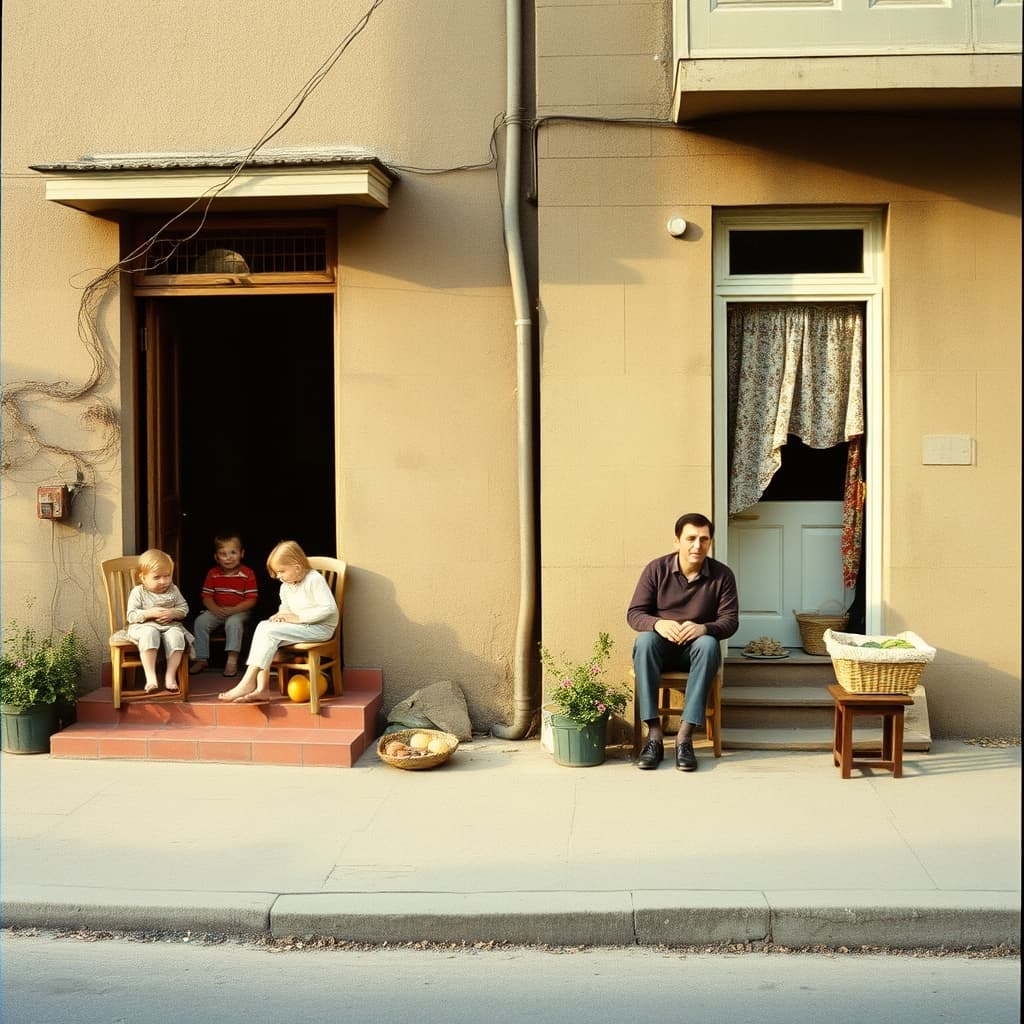
The first mild days of spring moved conversation from interior rooms to the doorstep. A chair appeared beside a door, another came from the neighbouring house and short greetings stretched into an afternoon exchange. The street did not literally become one home, but domestic attention extended across the threshold into shared space.
This practice depended on architecture. Low entrances, stoops, courtyards, pavements and windows created different degrees of contact. A person could join fully, listen while working or withdraw inside. Traffic, slope, weather and building ownership affected whether sitting outside was comfortable or permitted.
The Threshold Connected Work and Sociability
People shelled vegetables, mended clothes, watched children or rested while speaking. Conversation accompanied tasks rather than replacing them. Information about illness, prices, school, visitors and local problems travelled quickly. The same network could provide help, but it could also circulate rumour and unwanted judgement.
Women often appear at the centre of doorstep memory because domestic labour kept them near home, not because they possessed unlimited leisure. Gender expectations shaped who could sit, when and with whom. Older residents and disabled neighbours may have gained contact without travelling far, provided steps and seating were accessible.
Children Played Within a Field of Attention
Adults at several doors could notice a fall, argument or approaching vehicle. This informal observation supported play, but responsibility was never perfectly clear. Familiar adults were not automatically safe, and busy conversation could miss danger. Modern safeguarding should not be replaced by idealised collective supervision.
Children also heard adult stories and learned neighbourhood relationships. They carried messages, fetched chairs and moved between play and household errands. Privacy was limited when arguments, finances or family news could cross an open window.
Shared Space Needed Practical Limits
Chairs could narrow pavements and obstruct prams, wheelchairs or passers-by. Noise affected shift workers, babies and people who were ill. Good neighbourliness included moving aside, lowering voices and recognising that not everyone wished to participate.
Cars, apartment redevelopment, television, changing work and private balconies altered the practice. Doorstep conversation did not simply vanish; it moved to building entrances, parks, cafés and digital groups. Each setting changes who is included and how quickly information spreads.
Spring maintenance often entered the conversation. Residents noticed cracked paving, blocked drains, peeling paint and branches needing attention. Speaking together could help coordinate a repair or petition, although agreement was never guaranteed. The doorstep was therefore also a modest civic forum where domestic observations became shared neighbourhood concerns.
Seating itself communicated invitation. An empty chair angled towards the street suggested room for another person, while a chair close to the doorway could signal a brief pause. Moving furniture was a simple way to redraw the social boundary without words.
A Digital Nostalgia Archive can map thresholds, photograph street furniture, record seasonal routines and gather accounts from enthusiastic participants and those who felt watched or excluded. Exact addresses should be handled with privacy. The warmth of the doorstep came from repeated availability: someone was near enough to greet, ask or help. Its honest history also remembers that a shared street remained public, requiring courtesy, access and the right to close the door.