 Eski Pano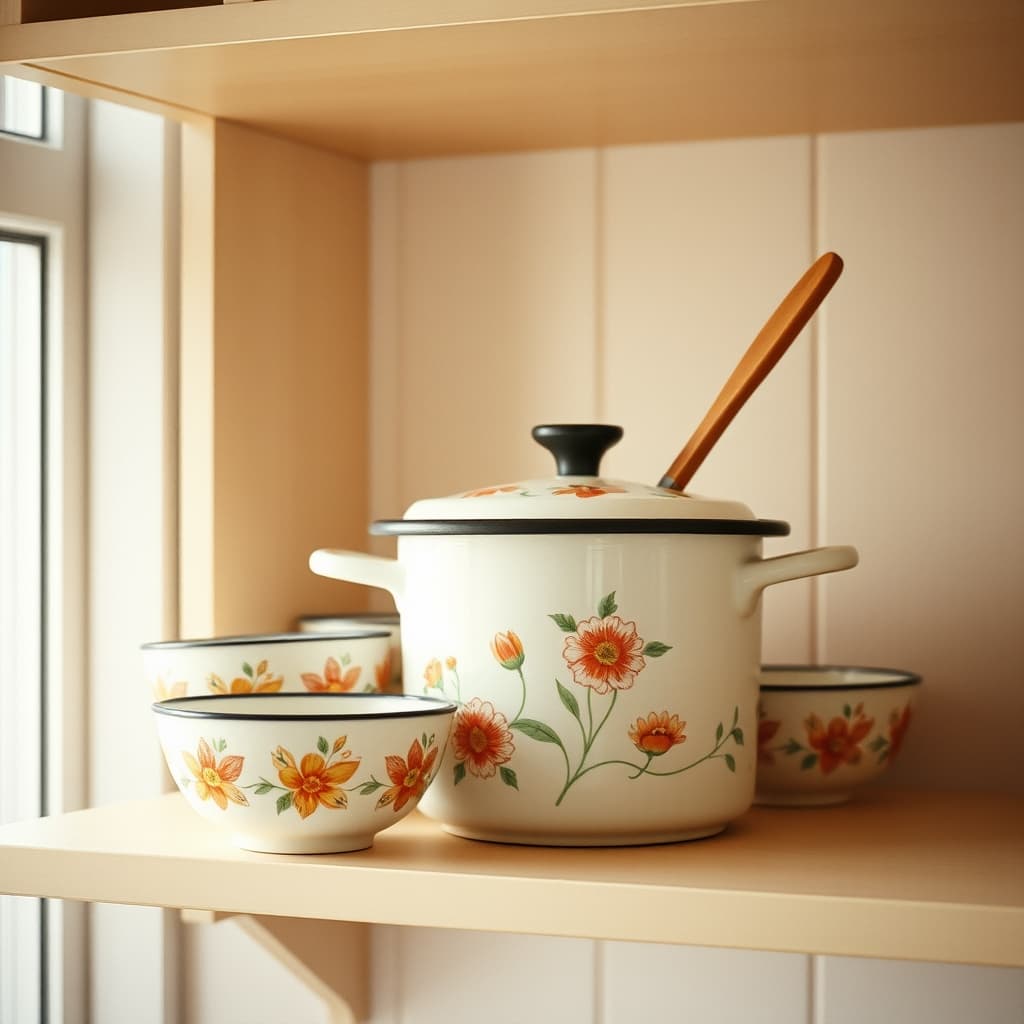
An enamel pot could move from stove to shelf and back several times in one day. It heated soup, milk or vegetables, then cooled, washed and waited in view. Its bright coating made practical metal suitable for the domestic interior, while repeated use left a darkened base, fine scratches and a handle polished by hands.
Enamelware is generally made by fusing a glass-like coating to metal, often steel. The surface resists many stains and is relatively easy to clean, but it is not indestructible. Impact and sudden temperature change can chip the coating. Once metal is exposed, rust may begin and the pot's safe use needs assessment.
The Coating Joined Hygiene and Colour
A smooth interior offered fewer places for residue than rough bare metal. White or pale enamel made cleanliness visible, while coloured rims, floral motifs and solid shades expressed changing taste. Manufacturers could produce matching pots, bowls and jugs, turning utility into an affordable coordinated kitchen set.
Appearance did not guarantee identical quality. Thickness, firing, metal base and workmanship varied. Maker marks, labels and catalogue illustrations help identify origin. A family attribution should be recorded separately from the technical description, especially when similar patterns remained in production for years.
Heat Required Attention to the Vessel
Thin metal responded quickly to the flame. Milk and thick foods could catch on the bottom if left unstirred. An empty enamel pot should not be overheated, and a hot pot should not meet cold water suddenly. Thermal shock and impact both stress the coating.
Handles and lids created their own risks. A loose handle needed repair before lifting a full pot. Metal knobs became hot, while chipped lid edges could cut. Historic pieces with severe interior damage are better kept for display than returned to food preparation.
Cleaning Could Preserve or Erase Evidence
Soaking and gentle non-abrasive cleaning usually protects a sound surface better than scraping. Steel wool and harsh powders can dull enamel and enlarge damaged areas. Burnt residue may need patient repeated treatment rather than force. Unknown household remedies should be tested against reliable care guidance.
Old repairs, wire handles and replacement knobs reveal adaptation. They should be photographed before intervention. Rust should be kept dry and evaluated; coating it cosmetically without understanding the corrosion can trap a continuing problem. Food safety takes priority over preserving active use.
Stacking changed wear. Pots nested to save shelf space, but unprotected rims scratched inner enamel. Cloth or paper separators reduced contact while taking additional room. The order on the shelf therefore reflected kitchen size, frequency of use and the household decision to favour convenience or protection.
A Digital Nostalgia Archive can record dimensions, weight, maker mark, pattern, chips, repairs, dishes cooked and shelf location. Oral history should ask who used the pot and how it moved through daily meals. The enamel pot's quiet magnificence lies in repetition rather than rarity. Its design brought colour to coated steel, but its meaning grew through thousands of ordinary decisions about heat, stirring, washing and whether a familiar vessel remained sound enough for one more meal.