 Eski Pano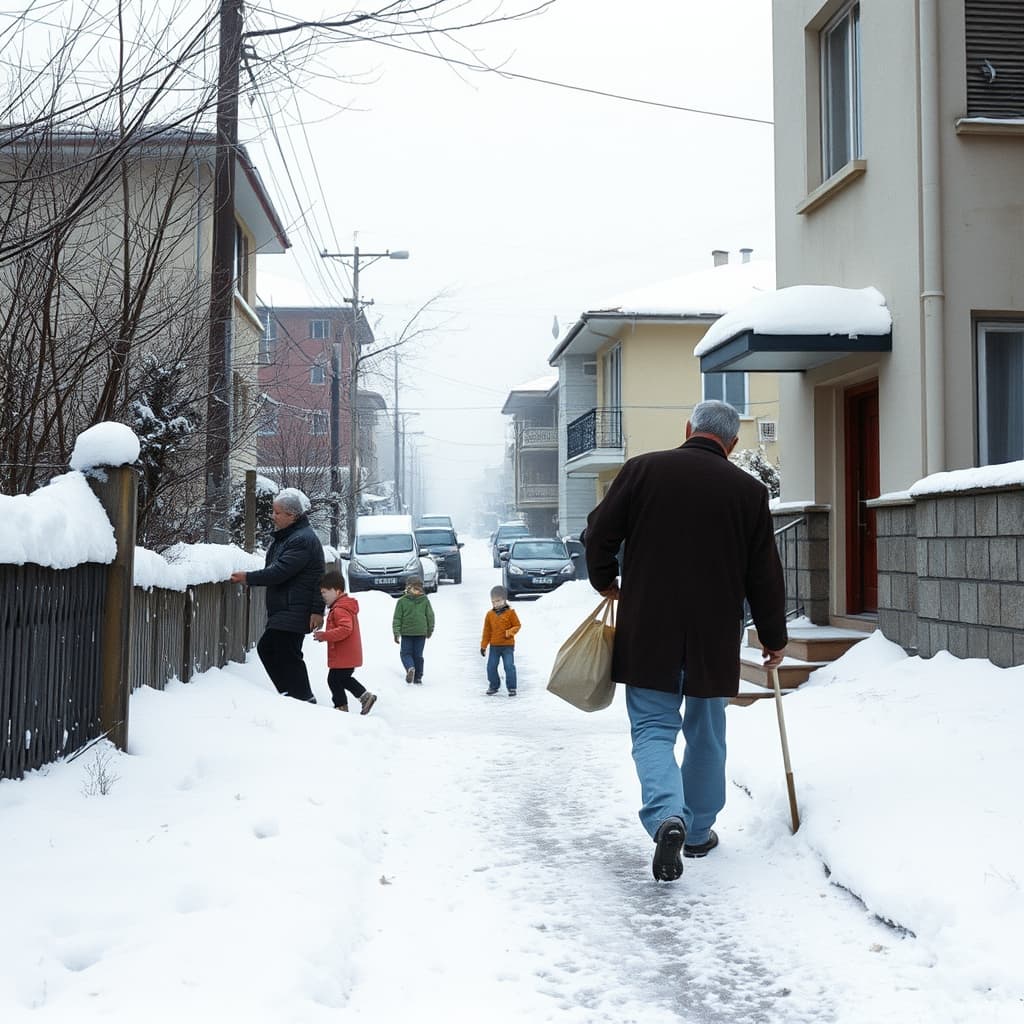
A street under fresh snow is easy to remember as a picture: softened roofs, children’s voices and footprints crossing a white surface. The street did not truly stay alive because people ignored winter. It remained connected because residents adjusted their movements, watched conditions and did small pieces of work for one another. Neighbourliness was visible in paths, errands and doors that were checked.
Snowfall, building types and municipal services differed between regions and years. A steep lane, apartment entrance and village road created different responsibilities and risks. No single memory should stand for every neighbourhood. The useful question is not whether the past was always more communal, but which actions made one particular street usable and who carried them out.
A Cleared Path Was Shared Infrastructure
Removing snow from a doorway or narrow walking route helped more than one household. Residents might coordinate informally, borrow tools or continue a path begun by someone else. The work could be repeated as snow fell or compacted. A photograph of a cleared strip therefore records maintenance, not simply an empty space in a scenic view.
The burden was not distributed equally. Age, health, work schedules and access to equipment affected who could help and who needed assistance. Children could participate in safe, age-appropriate tasks, but romantic accounts should not turn hazardous labour into play. Current local safety advice and official guidance matter more than remembered improvisation when dealing with ice or severe weather today.
Shared Errands Reduced Separate Journeys
A neighbour already going to a bakery, shop or pharmacy could ask whether another household needed something. Such coordination reduced exposure and kept people with limited mobility connected. The exchange depended on trust, clear lists and repayment, and it could also produce misunderstandings. Mutual aid was a practical relationship, not proof that every neighbour was intimate.
Checking an older person’s door, confirming heating or passing on news could matter as much as carrying food. Privacy and consent still mattered. A closed curtain or unanswered knock did not justify entering a home without cause; communities balanced attention with boundaries, even if the language for that balance differed.
The Street Held Both Play and Risk
Children used slopes, courtyards and accumulated snow as temporary play spaces. Adults watched from windows or doorways, called warnings and sometimes restricted a route near traffic. Cars, hidden kerbs, falling ice, cold and poor visibility were real hazards. Remembering the laughter does not require pretending that the street was safe by itself.
Wet gloves and boots returned indoors, adding drying, cleaning and heating work that often remained invisible in photographs. Someone prepared warm food, protected floors and found space for damp clothes. A complete winter memory includes this domestic labour rather than placing all neighbourliness outside.
Evidence Can Map a Network
When archiving a snow-day photograph, identify the street, date range, direction of view and people only when consent and evidence allow. Note the cleared routes, open shops, vehicles and building entrances, not just the depth of snow. Oral histories can ask who made which journey and how information moved when transport or telephone access was limited.
Avoid converting one helpful episode into a claim that conflict disappeared. Some residents were isolated, tenants and owners could disagree over duties, and public services might be delayed or uneven. Recording these limits makes acts of cooperation more meaningful because it shows what they actually overcame.
For a Digital Nostalgia Archive, the footprints in a snowy street form a social map. One leads to a shared errand, another to a cleared entrance, another to a brief check at a neighbour’s door. The street did not empty because winter was harmless. It remained inhabited through repeated, ordinary decisions to keep one another within reach.