 Eski Pano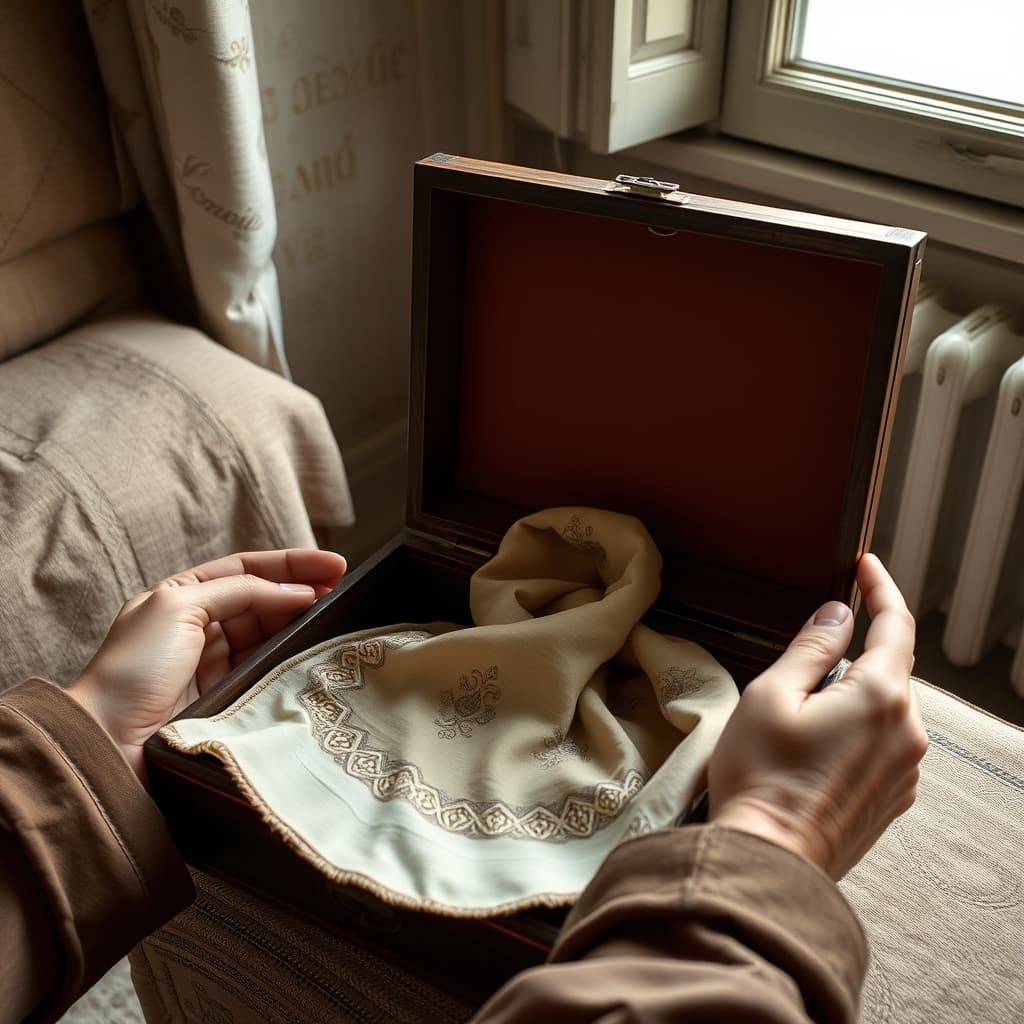
A silk scarf resting in a decorative box can appear to explain itself: a trousseau room, a period of waiting and an object passed between generations. Yet the visible pairing does not prove every part of that story. The scarf may have been bought with the box, placed there later or moved repeatedly. Preserving family meaning begins by keeping the relationship intact while recording what is known, remembered and still uncertain.
Silk, paperboard, lining, adhesives and decorative coverings age differently. A box that feels protective may contain acidic paper, loose colour or a rough edge. The first task is not to make the set look new. It is to document its present arrangement and seek material-appropriate conservation advice, especially when the textile is brittle, stained or attached to other elements.
Record the Opening Before Rearranging It
Photograph the closed box, lid, interior, scarf position, labels and damage under gentle neutral light. Note dimensions and the direction of folds. These details capture a household method of keeping, even if that method later needs adjustment for preservation. Avoid repeated unfolding merely to create a more attractive picture; each handling can strain weakened fibres.
A handwritten name, shop label or small repair can connect the object to a person or place, but interpretation should remain exact. A name shows association, not necessarily ownership from the date of purchase. A shop label may identify the seller rather than the maker. Transcribe what is legible, photograph it and distinguish reading from inference.
The Box and Scarf Need Separate Attention
Keeping the set together intellectually does not always mean leaving the textile in direct contact with every original material. A conservator may recommend a stable barrier, broader support or fewer sharp folds. The right choice depends on actual fibre, dye, condition and environment. Generic household tissue, perfume, moth products or improvised washing can introduce new damage.
Support the scarf fully when it must be moved, and remove jewellery or rough accessories that could catch threads. Clean, dry hands or suitable gloves depend on the task and professional guidance. Do not test colour with water at home. If fragments have detached, keep them labelled with the object rather than discarding them as dust.
Provenance Is a Chain of Attributed Memories
Ask focused questions: who remembers the box, in which home, during which approximate years, and what did they personally witness? One relative may recall seeing it in a trousseau room; another may know that the scarf was worn later at a wedding. Both accounts can coexist if attributed. They should not be blended into a single confident narrative when dates or people conflict.
The period of waiting associated with a trousseau was not identical for every woman or household. It could contain anticipation, labour, pressure, negotiation and unequal resources. A local magazine voice can be warm without reducing a life to romantic patience. The object becomes more human when the archive preserves choice and constraint alongside beauty.
Digital Access Should Protect the Original
A high-resolution record can reduce handling. Include overall views, texture, edges, seams, box construction and inscriptions, with a scale and colour reference where appropriate. Keep an unedited master and document adjustments. Personal letters, names or addresses found inside may require restricted access rather than automatic publication.
Assign identifiers that preserve the relationship, such as one collection group with separate item records for scarf, lid, base and associated notes. This prevents the box from becoming an anonymous container and the scarf from losing its context. If storage changes, photograph and date the new arrangement so later custodians understand what happened.
For a Digital Nostalgia Archive, inheritance is not created by polished prose. It grows from traceable care: a remembered room identified as memory, a fold documented before it is eased, and a box retained even when it is not ideal storage. The scarf’s family value survives best when affection is joined to restraint, so the next generation receives both the object and an honest account of how it travelled.