 Eski Pano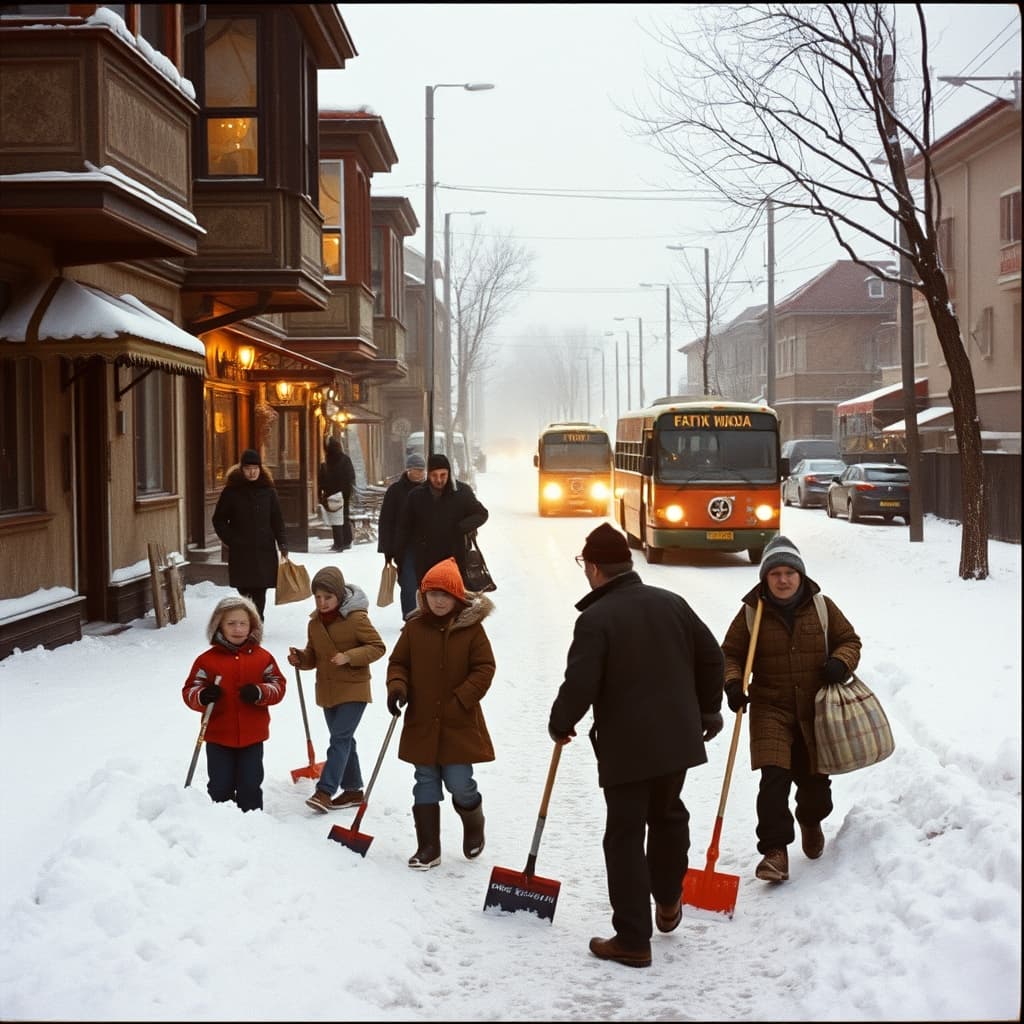
A heavy snowfall could quiet traffic without emptying the neighbourhood street. Children tested the first drifts, shopkeepers cleared their thresholds, and residents watched from windows for anyone struggling uphill. Footprints quickly turned a white surface into a map of errands, games, deliveries, and help. The scene is remembered as trust, but that feeling was produced through repeated practical acts rather than snow itself.
Winter experience varied by climate, housing, income, age, and municipal service. A picturesque street for one household could mean lost wages, frozen pipes, inaccessible steps, or dangerous travel for another. Some districts had reliable heating and stocked cupboards; others depended on daily coal, wood, bread, or medicine deliveries. Nostalgia becomes more truthful when pleasure and vulnerability remain in the same frame.
Play Occupied the Changed Street
With fewer vehicles, children used slopes, pavements, and vacant corners for sledges, snowballs, and improvised games. Older children helped younger ones or set rules around a shared run. Adults recognised voices and clothing from windows, creating informal supervision. That visibility could build confidence, but it was not complete protection. Traffic, hidden ice, low visibility, cold exposure, and unsafe sled routes still required clear boundaries.
Clothing and equipment shaped how long anyone could stay outside. Wet wool, leaking boots, and inadequate gloves turned excitement into discomfort quickly. Families dried garments near stoves or radiators, sometimes creating fire risks if placed too close. Safe play included warm breaks, dry layers, visible routes, and attention to signs of cold injury. Childhood resilience should not be used to dismiss preventable danger.
Trust Grew Through Shared Work
Neighbours lent shovels, spread ash or grit, cleared drains, carried shopping, and checked older residents. Shopkeepers kept a path open; building caretakers managed entrances; drivers fitted chains. These gestures created a sense that assistance was nearby. They also involved labour that could fall unevenly on particular workers, women, young people, or physically able residents. Gratitude should be paired with recognition of who repeatedly did the work.
Informal help operated alongside public infrastructure. Municipal crews ploughed roads, collected waste, repaired utilities, and supported emergency access. Bus drivers, health workers, bakers, delivery staff, and energy workers faced difficult conditions. Community solidarity cannot substitute for safe roads, accessible pavements, reliable heating, and professional services. The strongest winter memory includes both neighbourly action and accountable institutions.
A Street Remembered Everyone's Rhythm
Small shops became information points: whether buses were running, which hill was closed, who needed bread, and when fuel might arrive. Telephone chains and calls from windows travelled faster than formal notices. Yet people new to the area, living alone, speaking another language, or avoiding public attention could remain outside these networks. Trust was real where it existed, but it should not be assumed to include everyone.
Thaw brought another phase. Packed snow became ice, gutters overflowed, roofs shed dangerous loads, and shoes carried mud indoors. The same residents who celebrated the first white morning cleaned entrances days later. Photographs favour fresh snow; diaries, municipal records, weather reports, and oral histories recover the longer cycle of preparation, disruption, and repair.
A Digital Nostalgia Archive can connect snow photographs, school notices, bus schedules, coal receipts, tools, weather data, and testimony from residents and workers. Exact locations and dates improve environmental history. Snowy streets nurtured trust when people learned that others would notice, warn, lend, and return. The enduring lesson is not that winter used to be harmless, but that safety became a shared practice visible in every cleared step and borrowed shovel.