 Eski Pano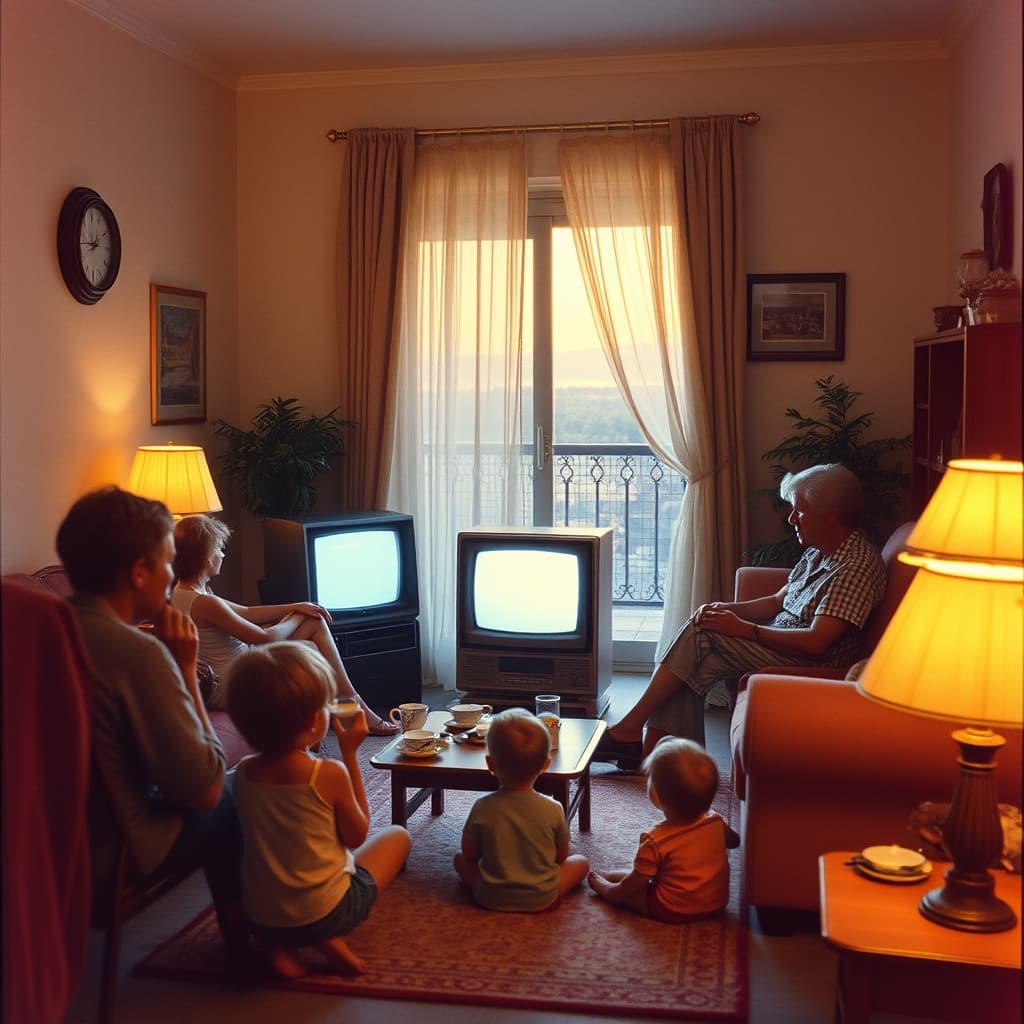
Single-channel television created a rhythm that belonged not only to one house but to an entire country. When the evening program began, streets grew quieter, balconies emptied a little, and living rooms filled with the same light. People in distant cities watched the same image at nearly the same breath.
A Common Hour in Separate Homes
The power of that era was not abundance but simultaneity. There were few choices, and that limitation created a shared calendar. A program could be discussed at the grocer, at school, on the ferry, or under the shade of an apartment entrance. Everyone had seen it because everyone had waited for it.
Summer Evenings Around the Screen
In summer, the ritual became softer. Windows stayed open, curtains moved with the night air, and the sound of the television mixed with distant street voices. Children were told to lower their voices, tea was poured again, and the room became a small gathering place where attention was shared without ceremony.
The Habits That Remained
What remains today is a habit of gathering around a story. Even when screens multiplied and programs became endless, the memory of a common hour did not disappear. It left behind the wish to watch together, to talk about the same scene, and to feel that a small private room could still be connected to a wider life.