 Eski Pano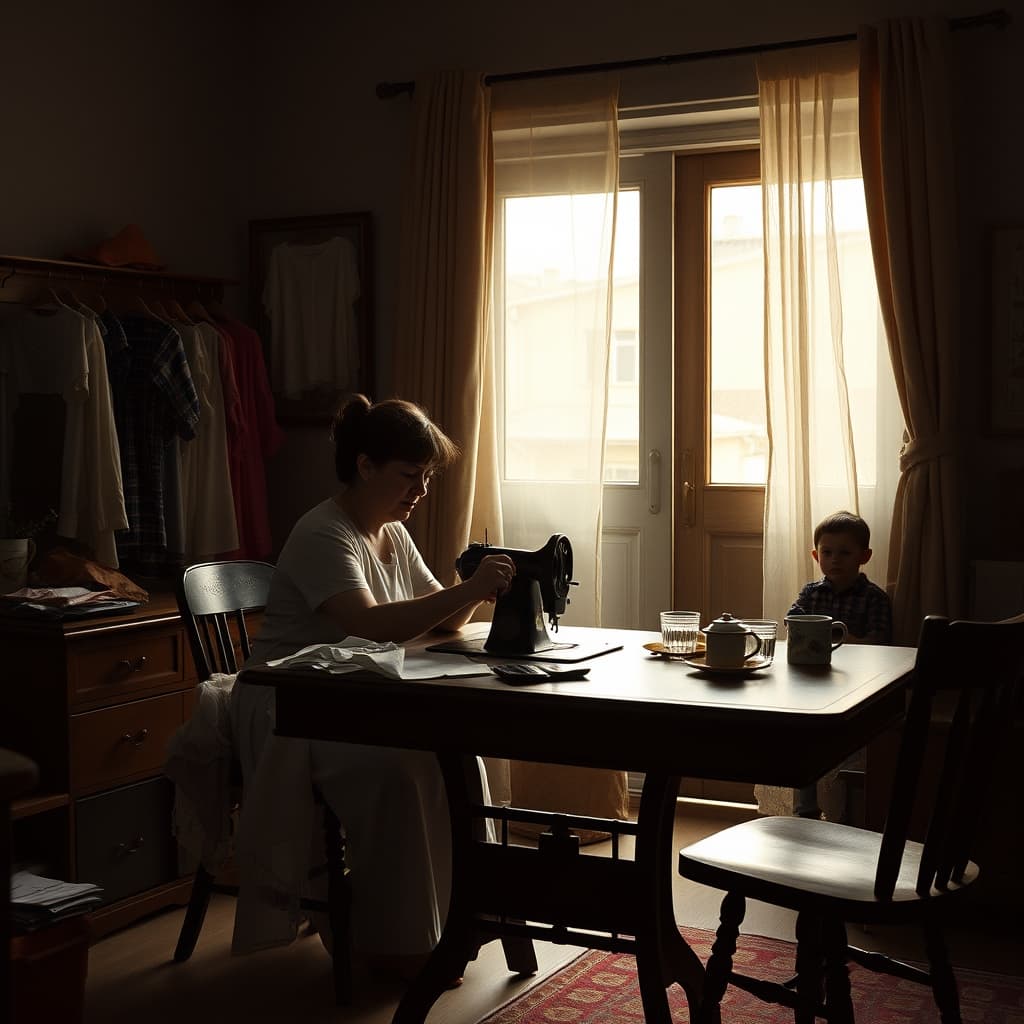
In old neighborhoods, the person who knew sewing held a quiet kind of authority. A loose hem, a curtain that needed shortening, a child's holiday outfit, or a torn pocket could turn one home toward another. The visit was practical, but it also carried trust. Fabric crossed thresholds before many other things did.
A Skill That Opened Doors
Sewing was not only a skill; it was a reason to knock. People arrived with folded cloth, a spool of thread, a hurried request, and sometimes a plate of something from the kitchen. The sewing table became a small station of repair where household problems were solved without formality.
Holiday Preparation as Shared Labor
Before holidays, this traffic increased. Trousers were adjusted, dresses were refreshed, curtains were fixed, and children's clothes were made presentable for visits. The street prepared itself through many hands. One house washed, another ironed, another stitched, and the whole neighborhood felt more complete.
How the Street Became a Shared Home
These sewing visits are remembered because they blurred the line between private and common life. A neighbor's room could briefly become an extension of one's own home. Advice was exchanged with measurements, news passed with needles, and care moved quietly from door to door. The strongest part of the memory is not the finished seam but the feeling that no household stood entirely alone.