 Eski Pano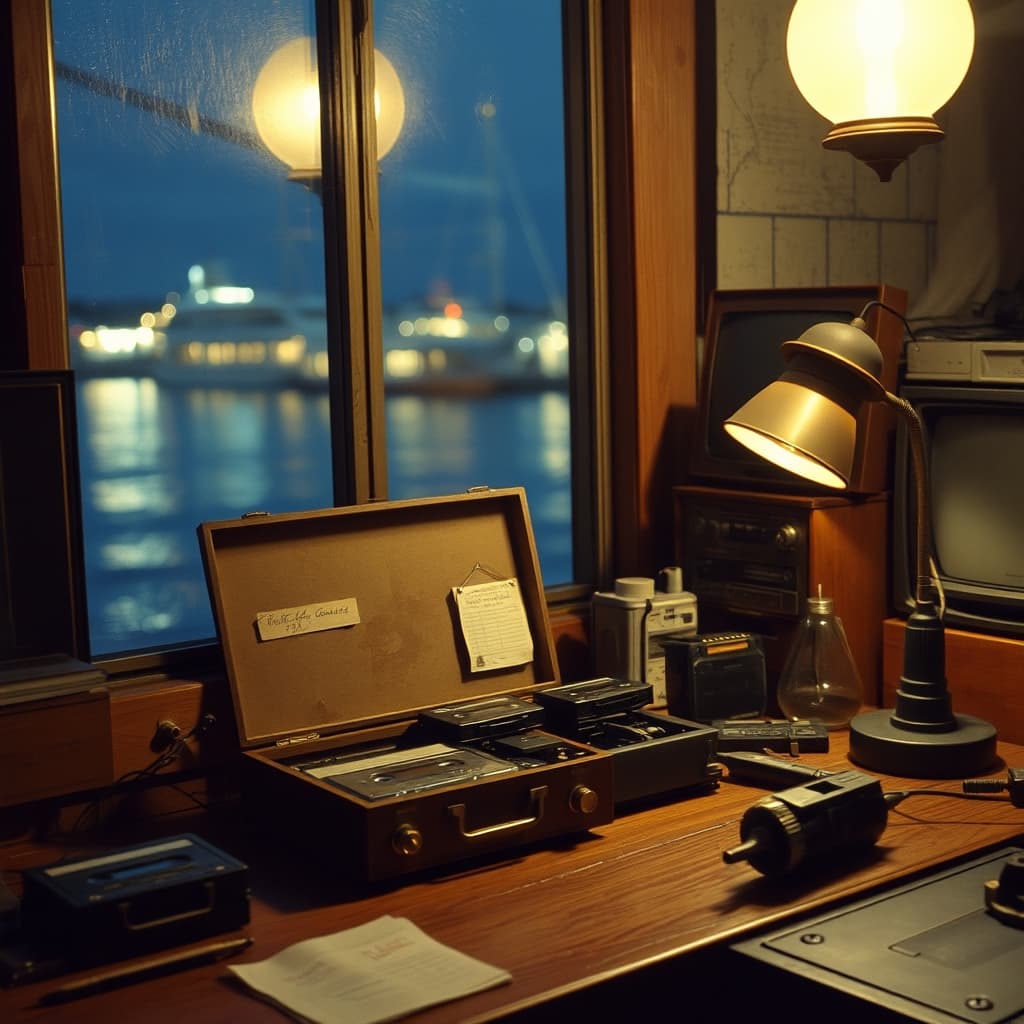
Old technology often carried hope in its smallest adjustments. A television antenna turned a little to the left, a cassette rewound with care, a loose cable pressed into place, and suddenly the evening became usable again. The repair shop understood this hope better than any showroom did.
The Patience of Analog Objects
Analog devices rarely failed in silence. They hissed, flickered, slowed down, or demanded a hand on the dial. This made people believe that repair was possible. The cassette archive box, with its handwritten labels and worn plastic cases, stood as proof that sound could be protected if someone cared enough.
Repair Shops as Memory Rooms
In the hands of repairers, broken objects gained not only function but dignity. A tape deck, antenna, radio, or archive box could return home with a second life. The counter became a place where technology was not discarded quickly. It was opened, understood, cleaned, and given back to the household.
The Ferry Sound in the Background
For coastal cities, the memory often carries a distant ferry sound. That sound belonged to evenings when lights trembled on the water and people walked home with repaired devices under their arms. What is remembered is not only the machine. It is the belief that something old could still become clear again.