 Eski Pano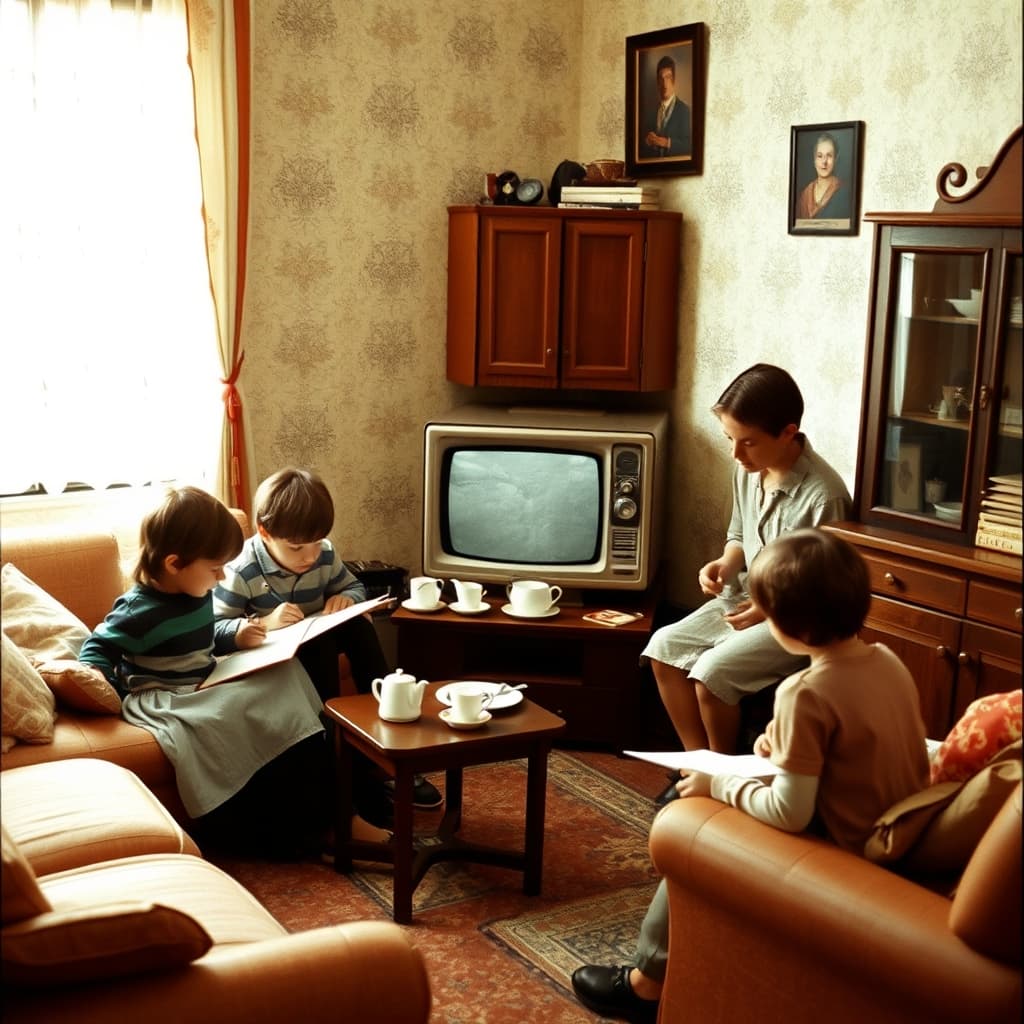
When one television channel dominated the evening, a programme schedule could synchronise households that otherwise lived very different days. Children hurried through homework, tea was poured before the opening music, and neighbours without a set arrived in time for a serial, match, news bulletin, or entertainment show. The shared hour became part of urban memory because millions of private rooms faced the same sequence of images.
The experience varied by country, region, decade, transmitter coverage, electricity access, set ownership, and household. “One channel” can mean a legal monopoly, the only service reliably received, or the only station a particular aerial and location could capture. Official schedules, transmitter maps, audience research, newspapers, licences, and oral histories are needed before turning the phrase into a universal technical fact.
The Schedule Organised the Day
Printed listings and on-air announcements made viewers plan ahead. School departure, dinner, bathing, visiting, shop closing, and sleep could be adjusted around a programme. Unlike later on-demand viewing, missing an episode might mean relying on a friend's account or waiting for a repeat. Scarcity gave the broadcast weight, but it also left little flexibility for shift workers, caregivers, and families with conflicting needs.
Children learned time through recurring programmes and the instruction to finish lessons first. A school-day routine might place homework at the kitchen table while adults listened to early news. Yet the television could distract, compete with reading, or become a source of family argument. The screen did not organise every home peacefully, and rules depended on authority, age, exams, and available space.
Watching Together Was Produced by Labour
A communal evening required someone to clean the room, arrange chairs, prepare tea and food, welcome visitors, supervise children, and clear afterwards. Women and girls often performed much of this work while the memory centres on the programme. Recording who served, missed scenes, or remained in the kitchen gives the shared experience a more accurate social structure.
Set ownership also mattered. Neighbours might gather in the first home with a television, a coffeehouse, shop window, club, or communal room. Hospitality could strengthen ties, while crowded viewing, smoke, noise, unequal seating, and expectations of reciprocity created pressure. People with hearing, sight, mobility, or sensory needs did not necessarily share the same access.
A Common Screen Concentrated Media Power
Limited choice meant broadcasters had unusual influence over news, culture, language, entertainment, and the rhythm of national events. Public-service aims, educational programmes, censorship, political control, technical limits, and commissioning decisions all shaped what viewers saw. A shared audience was not proof of shared interpretation or consent. Families discussed, doubted, mocked, or resisted content as well as absorbing it.
Audience memory can merge original broadcasts, repeats, clips, and later anniversary programmes. A familiar theme tune may be remembered in the wrong year. Researchers should compare schedules, recordings, press coverage, production files, and testimony from several viewers. Copyright and performer rights also apply when archived footage is republished.
Old television sets and recordings need technical care. Cathode-ray-tube receivers can retain dangerous voltage and contain heavy evacuated glass; only trained technicians should open them. Film, videotape, photographs, programme guides, and audio recordings require material-specific storage and digitisation. A photograph of the screen should include date, location, programme identification, and whether the image was staged.
A Digital Nostalgia Archive can connect schedules, transmitter maps, audience letters, set invoices, repair notes, school timetables, room photographs, recordings, and voices from viewers and domestic workers. Single-channel television left a deep mark because scarcity created common time. Preserving that time means keeping collective anticipation beside unequal access, household labour, broadcast authority, technical safety, and the many different meanings viewers made from one national screen.