 Eski Pano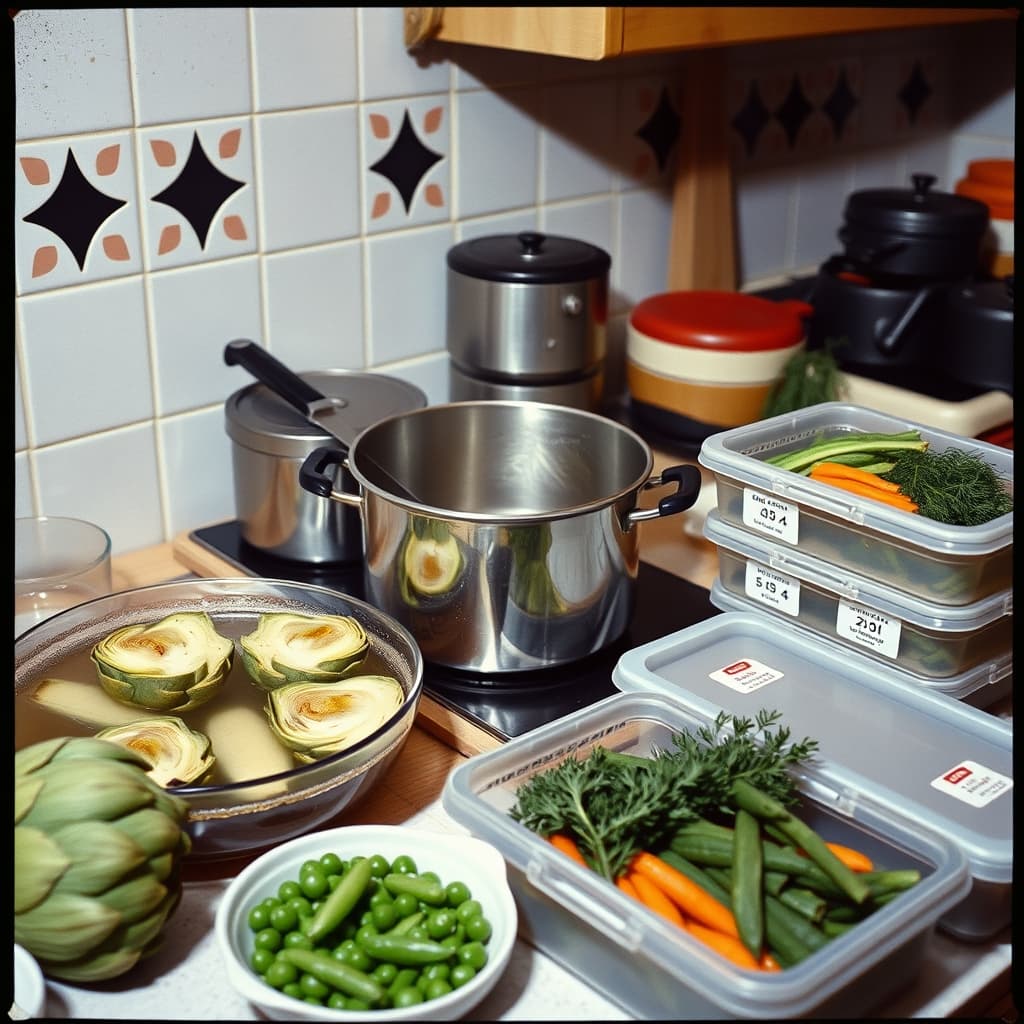
Olive-oil artichokes return seasonal cooking through preparation rather than spectacle. A firm artichoke is trimmed, protected from browning, arranged with vegetables, and cooked gently until its heart holds flavour without losing shape. The dish often rests before serving, allowing olive oil, acidity, herbs, and cooking juices to settle. Patience is part of the recipe.
There is no single zeytinyağlı enginar. Whole trimmed bases, halved hearts, or artichokes with leaves may be used depending on region and household. Peas, carrots, potatoes, broad beans, onions, dill, lemon, orange, sugar, and different seasonings appear in varying combinations. A culinary archive should record the cook, location, produce, date, and exact sequence rather than present one arrangement as universal.
Selection Began at the Market
Fresh artichokes generally feel heavy for their size, with compact leaves and a stem that has not completely dried. Variety and maturity influence tenderness, colour, and preparation. Ready-cleaned hearts save labour but need trustworthy handling, temperature control, and protection from contamination. Price and access determine whether a family buys whole vegetables, prepared bases, frozen hearts, or substitutes.
Trimming whole artichokes requires a stable board, sharp suitable knife, and care around tough leaves and fibres. Cut surfaces brown quickly through oxidation, so cooks often use lemon or another acidic solution. Acid slows browning but does not disinfect spoiled produce. Mouldy, slimy, or suspicious artichokes should be discarded rather than disguised with citrus.
The Pot Balanced Structure and Flavour
Onion and vegetables may be softened before or alongside the artichokes. Liquid quantity, pan width, lid, heat, and produce age determine cooking time. Too much agitation can break tender hearts; insufficient liquid or high heat can scorch the base. Sensory cues such as a knife entering with slight resistance should be recorded together with approximate time and quantities.
Olive oil contributes aroma, texture, and richness, but quality, storage, and amount vary. Oil should be protected from heat, light, and air before use. A heritage description should not turn the dish into a medical promise. It can be part of a balanced diet without claiming that one preparation prevents or cures disease.
Cooling Is a Food-Safety Step
Many olive-oil vegetable dishes are served cool or at room temperature, but cooked food should not remain for extended periods in unsafe temperature ranges. The pan needs prompt, hygienic cooling and refrigeration according to current guidance. Large quantities cool more safely in suitable shallow containers than in a deep warm pot left overnight.
Clean utensils prevent contamination after cooking. Serving portions should be removed without repeatedly returning used forks to the dish. Leftovers need dates, covered refrigeration, and use within recommended times. A pleasant acidic smell does not prove safety. For picnics or holiday visits, an insulated cold chain may be necessary.
Allergens and dietary needs depend on the actual recipe and shared kitchen. Peas and broad beans may be unsuitable for some individuals; broad beans are particularly important for people with favism. Celery, nuts, dairy, or other ingredients can appear in local versions or cross-contact. Guests need precise ingredient information rather than assumptions based on the dish's name.
A Digital Nostalgia Archive can connect olive-oil artichokes with market calendars, seed varieties, produce crates, knives, pots, recipe notebooks, holiday menus, and recorded cooks. The dish keeps older kitchen culture alive because season, knife skill, low heat, resting time, and shared labour remain visible. Preserving it means welcoming variation while respecting agricultural context, safe trimming, cooling, allergens, honest health language, and the people who prepared each delicate heart.