 Eski Pano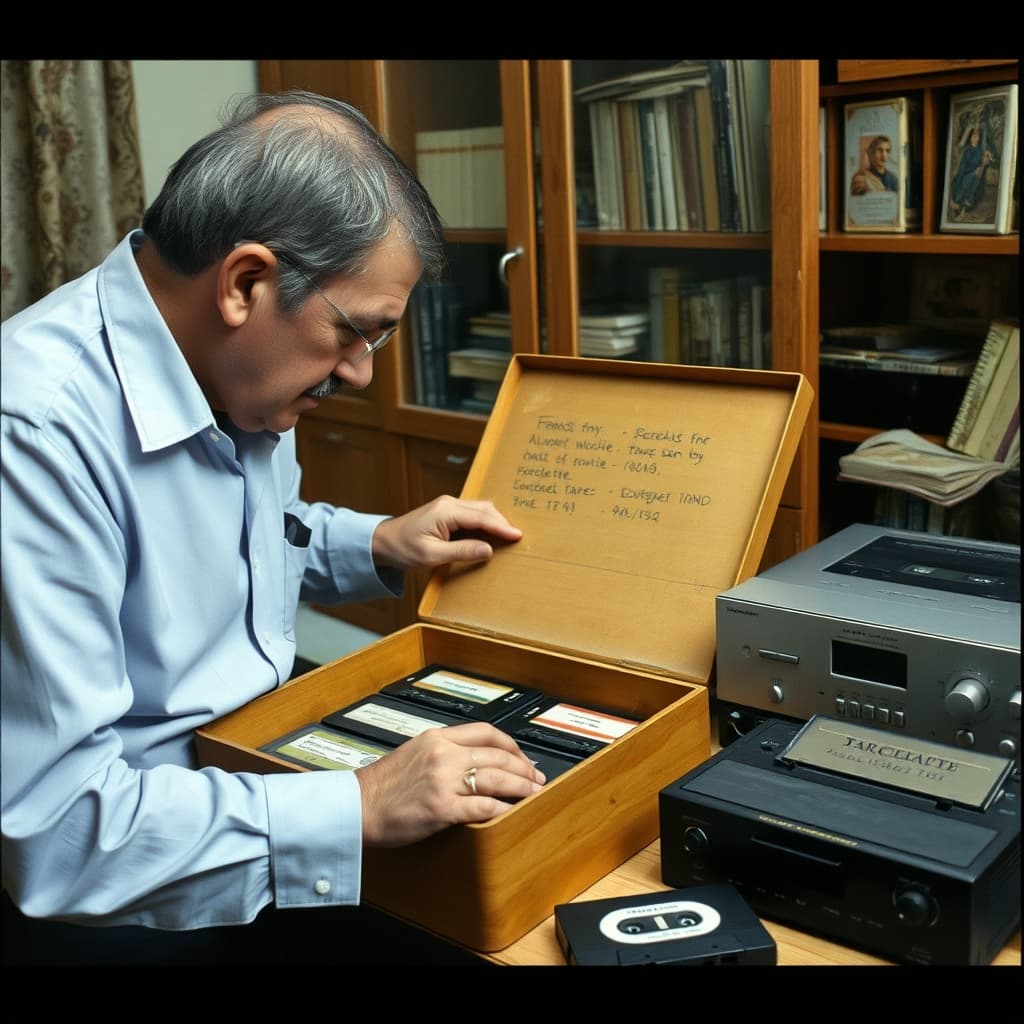
A cassette archive box can look silent while holding years of family sound. Handwritten labels name songs, radio programmes, language lessons, ferry journeys, weddings, children's voices, or tapes copied from friends. The order of the compartments may be as meaningful as any one recording. Giving the box a second life requires preserving that arrangement before attempting playback.
Compact cassettes vary in tape formulation, length, shell construction, recording speed, noise-reduction encoding, track use, and recording quality. Commercial releases, home recordings, dictation, data cassettes, and answering-machine material may share a similar shell. Labels can be wrong or reused. Brand, type markings, leader, hubs, screws, handwriting, and context should be documented without assuming content.
The Box Was Part of the Archive
A storage case protected tapes from dust, light, impact, and disorder. Numbered slots, dividers, index cards, and colour codes reveal how the owner found material. Cracked hinges, warped trays, rusting metal, unstable foam, or acidic paper can threaten the cassettes. Repair should stabilise the container without discarding labels, sequence, stickers, and improvised dividers that explain use.
Photographs should capture the closed box, every row, spine labels, loose notes, and the location of each cassette. A simple inventory records visible title, number, brand, tape type, shell condition, and uncertainty. Tapes should not be rearranged for a prettier photograph. If they must be removed, temporary identifiers preserve original position.
Playback Began with Inspection
A cassette may have a missing pressure pad, damaged felt, cracked shell, uneven pack, loose leader, jammed hub, mould, or stretched tape. Playing it immediately can worsen damage or contaminate equipment. A conservator or experienced audio technician evaluates the tape and decides whether shell repair, controlled winding, cleaning, or specialised treatment is appropriate.
The playback deck must also be serviced. Dirty heads, hardened pinch rollers, worn belts, incorrect azimuth, unstable speed, and failing electronics damage sound or tape. Household oil, random solvents, and untrained alignment can make matters worse. A sacrificial non-archival cassette should test the machine before an irreplaceable recording is loaded.
Mould and Degraded Tape Need Isolation
Visible growth, unusual odour, powder, sticky surfaces, squealing, or repeated shedding require caution. Suspected mould should be isolated in suitable containment away from clean collections and assessed by professionals with ventilation and protective procedures. It should not be blown, brushed, or played in a domestic room, where spores can spread to people, equipment, and other tapes.
Stable, cool, dry storage away from magnets, sunlight, heaters, leaks, and rapid climate change slows deterioration. Cassettes are usually stored upright in their cases. Unverified baking methods associated with some other tape formats should not be improvised on compact cassettes. Material-specific advice matters more than a popular online remedy.
Digitisation uses a suitable serviced deck, correct noise-reduction setting where known, high-quality conversion, stable levels, and uncompressed preservation files. The archive keeps raw transfers separate from cleaned or edited versions. Metadata records cassette order, side, speed, channels, equipment, settings, operator, date, audible problems, edits, and links to photographs.
A Digital Nostalgia Archive can connect the cassette box with recorders, deck manuals, radio schedules, diaries, ferry tickets, photographs, and interviews with speakers and compilers. Copyright, performers' rights, private conversations, children, and sensitive family material require access controls and consent. The box earns a second life when repair and digitisation recover sound without erasing order, uncertainty, ownership, privacy, or the physical traces of listening.