 Eski Pano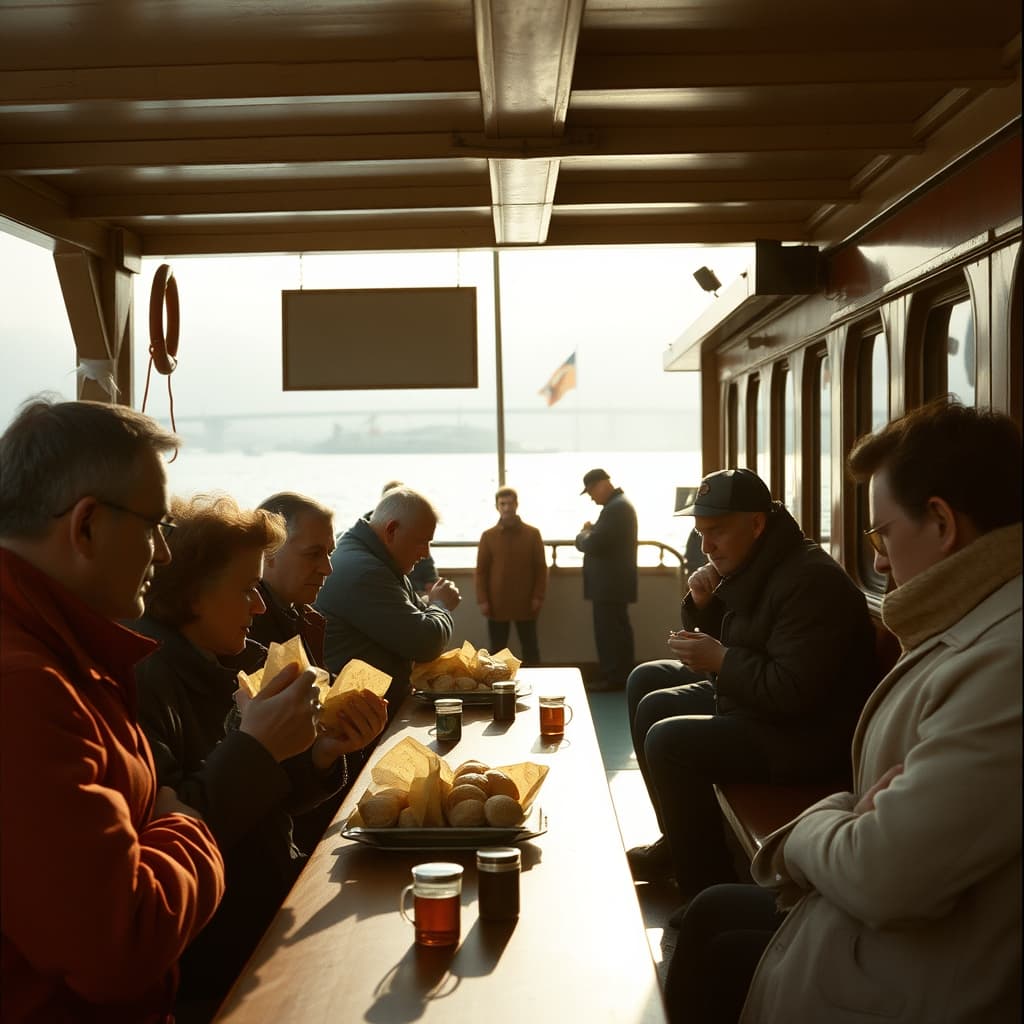
On an early city ferry, the smell of toasted sesame could arrive before the first clear view of the opposite shore. A passenger opened a paper-wrapped simit, a tea glass clicked against its saucer, and breakfast became part of the crossing rather than something completed at home. The ritual survives vividly because it joined food, movement, weather, and the beginning of work within a few practical minutes.
The experience varied by route, pier, operator, decade, and vendor. Some passengers bought from a cart outside the gate; others used a kiosk, bakery, or onboard service. Simit itself differed in size, crust, sesame coverage, sweetness, and baking method. A remembered ferry breakfast should therefore be located through timetables, vendor permits, menus, photographs, packaging, and oral histories.
Breakfast Began at the Pier
Vendors aligned their hours with commuter traffic. Freshness, visible display, rapid change-making, and familiarity with regular passengers mattered. A person running late needed a transaction completed before the barrier closed. Bakers, delivery workers, cart owners, kiosk staff, ticket workers, and ferry crews collectively made the simple breakfast possible before much of the city had opened.
Paper wrapping kept hands cleaner and made the ring easy to carry, though it offered limited protection from rain, dust, or handling. Food sellers needed clean storage, protected display, safe water, and hygienic contact. Historical charm does not remove the importance of current food rules. Sesame is also a significant allergen and should never be treated as an invisible ingredient.
The Deck Changed the Taste
Wind cooled tea and carried aroma across benches. Salt air, engine vibration, gull calls, and the pressure of reaching work changed how the same simit felt compared with a kitchen table. Passengers divided it with a child, added cheese, or ate it plain. The food was affordable for many but not universally so; income and daily travel costs shaped whether it was routine or occasional.
Crumbs created another relationship with the vessel. Feeding gulls became a familiar image, yet it can encourage birds to approach people, alter behaviour, create waste, and conflict with safety rules. Passengers should follow operator guidance and keep food under control. A nostalgic photograph of a bird catching bread does not show the ecological and operational consequences.
Tea Service Was Moving Labour
Carrying hot tea on a moving vessel required balance, route knowledge, and awareness of passengers. Trays, glasses, spoons, washing, water, and waste management formed a service system. Rough weather increased spill and burn risk. The familiar call of a server belonged to skilled work, not merely atmosphere, and safe practice had to change with vessel design and regulation.
Modern ticketing, faster vessels, packaged food, chain cafés, changing health rules, and new commuting patterns altered the ritual without erasing it. Some passengers still measure a crossing through tea and simit; others carry coffee or eat nothing. Cultural continuity does not require an identical menu. It survives through the habit of turning travel time into a brief shared meal.
A Digital Nostalgia Archive can connect simit carts, bakery receipts, ferry menus, tea equipment, vendor licences, paper wrappers, route schedules, and testimony from sellers, servers, crews, and commuters. The smell remains vivid because it was never only about bread. It marked the moment the city day began moving, when breakfast crossed the water alongside everyone else.