 Eski Pano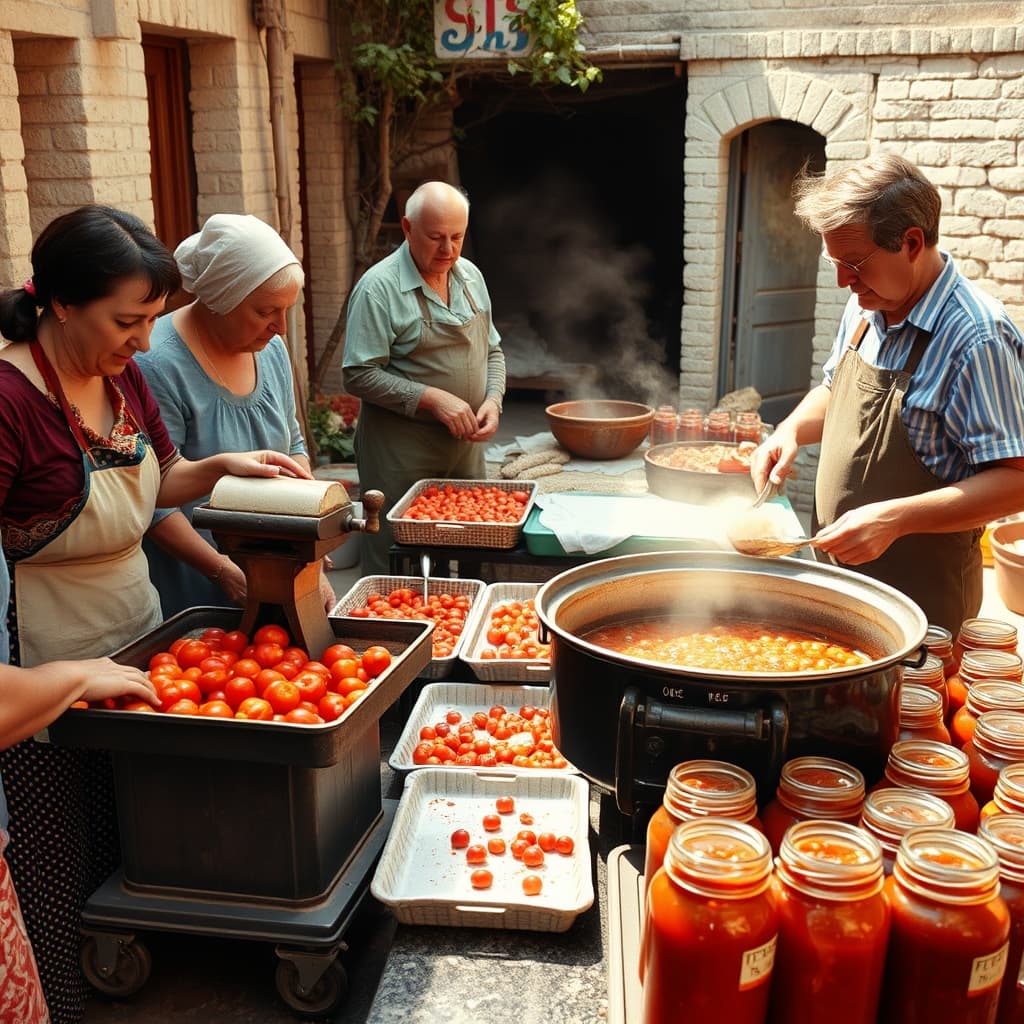
Tomato paste days announced themselves before the first jar was filled. Crates arrived, red juice marked hands and aprons, knives and sieves claimed the work surface, and the kitchen or courtyard took on a seasonal timetable. The finished salça later seemed like a simple spoonful added to soup or stew, but its concentrated flavour carried purchasing, sorting, crushing, reducing, salting, storing, and cleaning.
Household methods vary by region, climate, family, and intended use. Tomatoes may be cooked before sieving, crushed and strained, concentrated under sun, reduced with heat, salted at different stages, or combined with peppers. These are not interchangeable processes. A responsible recipe record gives quantities, acidity or tested method where relevant, salt, equipment, temperature, time, and storage rather than relying on the phrase “as much as it takes.”
Good Paste Began with Selection
Ripe, sound tomatoes were sorted and washed with safe water. Rotten or mouldy produce should not be rescued by cutting away a visible patch for preservation. Stems, soil, insects, and damaged parts were removed. Large batches magnified every hygiene problem, so clean hands, utensils, cloths, containers, and working surfaces mattered throughout the day.
Crushing and straining separated skin and seed according to household preference. Manual mills, sieves, knives, and later machines reduced labour but introduced pinch points and cleaning needs. Children could help only with safe, age-appropriate tasks under supervision, away from blades, heavy vessels, hot liquid, and exposed machinery.
Concentration Required Control
Sun concentration depended on dry weather, clean protected trays, airflow, and defence against dust, insects, animals, and contamination. Heat reduction required wide pots, stirring, stable burners, and protection from splashes and steam. Neither sunshine nor long boiling automatically guarantees safety. Current tested preservation guidance appropriate to local ingredients and altitude should govern home canning and storage.
Salt contributed flavour and preservation but should not be guessed as the only safeguard. Changes in tomato acidity, moisture, jar treatment, processing, and refrigeration affect risk. An oil layer on top is not a universal safety solution and can create conditions that require expert guidance. When a method is not validated for shelf storage, refrigeration or freezing may be safer.
The Jar Continued the Work
Clean suitable jars, sound lids, controlled filling, and the specified processing method mattered. Each batch benefited from a date and recipe note. Bulging lids, leaking, spurting liquid, unusual odour, gas, or mould are warning signs. Suspect preserved food should not be tasted to test it. Local food-safety authorities provide the correct disposal advice.
Paste making was frequently collective labour. Relatives and neighbours divided washing, cutting, stirring, tray watching, jar preparation, meals, and cleanup. Women often carried the planning and longest hours, though roles varied. The cheerful courtyard photograph can hide heat, repetition, back strain, water use, and the expense of tomatoes, fuel, salt, and containers.
A Digital Nostalgia Archive can preserve recipe notebooks, mills, sieves, crates, labels, market receipts, courtyard photographs, and testimony from growers and cooks. Old sealed food should not be opened or eaten as heritage. Homemade tomato paste reveals the character of a kitchen because one spoon contains a whole system: seasonal judgement, shared labour, preservation knowledge, risk management, and the decision to carry summer flavour into winter.