 Eski Pano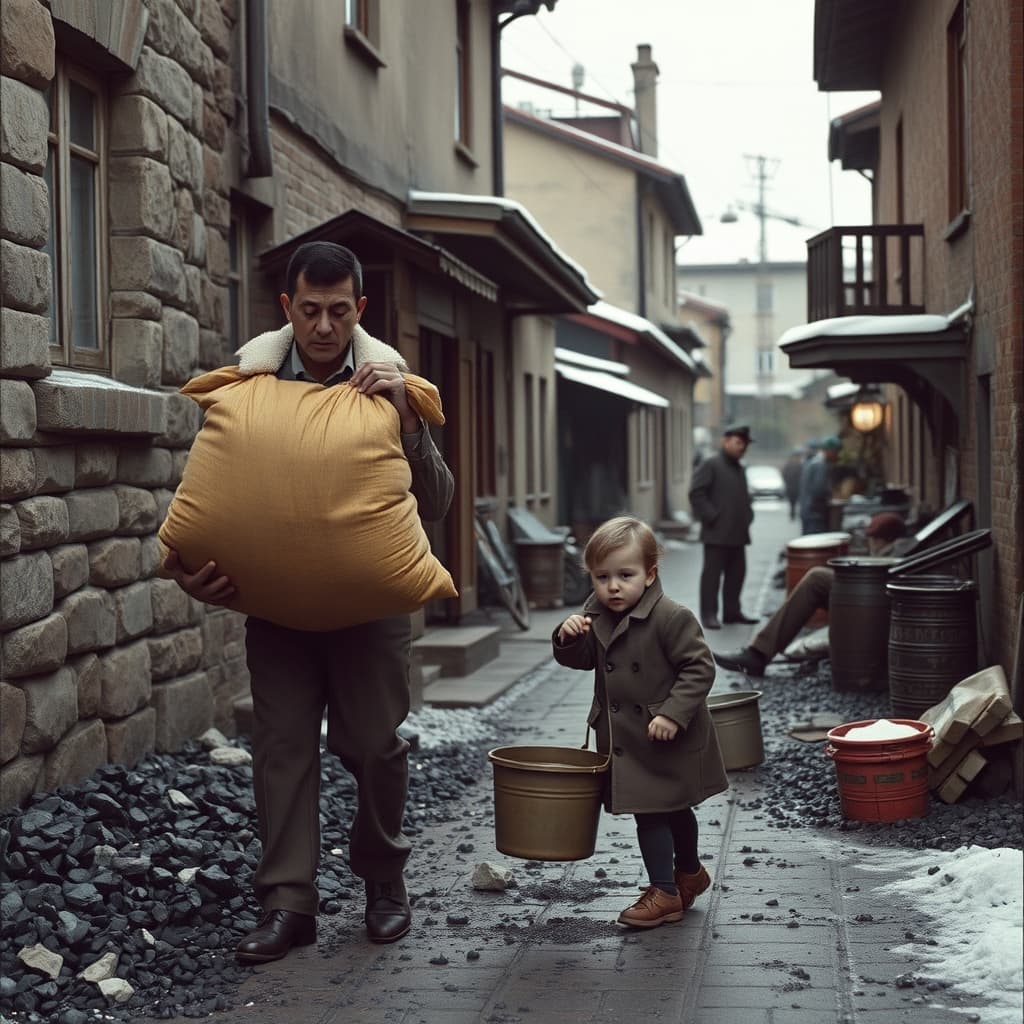
The image of a child carrying coal through a winter street can appear in family memory as resilience, usefulness, or neighbourhood life. It must also be named clearly as heavy and potentially hazardous labour. A sack or bucket linked the coal yard to a stove, but the weight, soot, cold, traffic, and lost study time fell on a young body. Admiration for endurance should never become approval of exploitation.
Children's roles varied. Some carried a household's own fuel from a cellar or delivery point; others helped a family business, earned money, or worked for dealers. Age, poverty, migration, housing, and local custom shaped the task. Oral history should establish whether the work was occasional help or repeated employment, and whether the child had meaningful choice, protection, and access to school.
Heating Began Before the Stove
Coal had to be purchased, weighed, transported, stored dry, broken or sorted, and brought indoors in manageable amounts. Courtyards, basements, stairs, and narrow lanes created difficult routes. Spilled pieces were gathered because fuel was costly. The warm room depended on a chain of miners, transport workers, merchants, porters, household members, and frequently under-recognised children.
Dust and soot entered clothing, skin, lungs, floors, and food areas. Lifting caused strain and falls; icy steps added risk. Appropriate adult handling, protective equipment, safe loads, clean storage, and separation from living and food spaces matter. Historical practice does not make exposure harmless. Children should be protected from hazardous work and tasks that interfere with education, health, rest, or development.
The Stove Added Another Layer of Risk
Solid-fuel stoves required suitable installation, ventilation, chimney cleaning, controlled ignition, and constant attention. Carbon monoxide is colourless and can kill. Fuel should never be burned in an unsuitable appliance or poorly ventilated room. Modern alarms, professional inspection, and current fire guidance are essential where such heating remains in use. A remembered headache or drowsiness near a stove may have represented danger, not ordinary winter fatigue.
Ash disposal also required care. Embers could remain hot, metal containers were safer than combustible ones, and ash dust needed containment. Children sent to empty a pan faced burns and exposure. The domestic cycle continued after warmth was enjoyed: tending, cleaning, carrying, and watching belonged to the heating system.
A Familiar Scene Reflected Inequality
Households with central heating or easy deliveries did not face the same burden as families dependent on daily fuel. Tenants in poor housing, older residents, and low-income households experienced winter differently. Neighbourly assistance could reduce immediate hardship, but reliable energy, safe housing, social protection, and schooling were structural needs that goodwill could not replace.
Photographs of working children demand particular ethics. Names, consent, context, and dignity matter. Images should not turn dirt or exhaustion into picturesque evidence of a supposedly stronger generation. Testimony can include pride in helping family while still recognising that responsibility arrived too early. Both truths can coexist without excusing unsafe conditions.
A Digital Nostalgia Archive can connect coal receipts, stove manuals, housing plans, school records, delivery tools, winter photographs, and testimony from former child workers and adults. The scene belongs in urban history because heating shaped every cold day. Its lesson is not that children once carried more without complaint. It is that household warmth had a hidden cost, and that cost should be remembered so it is not assigned to children again.