Eski Pano
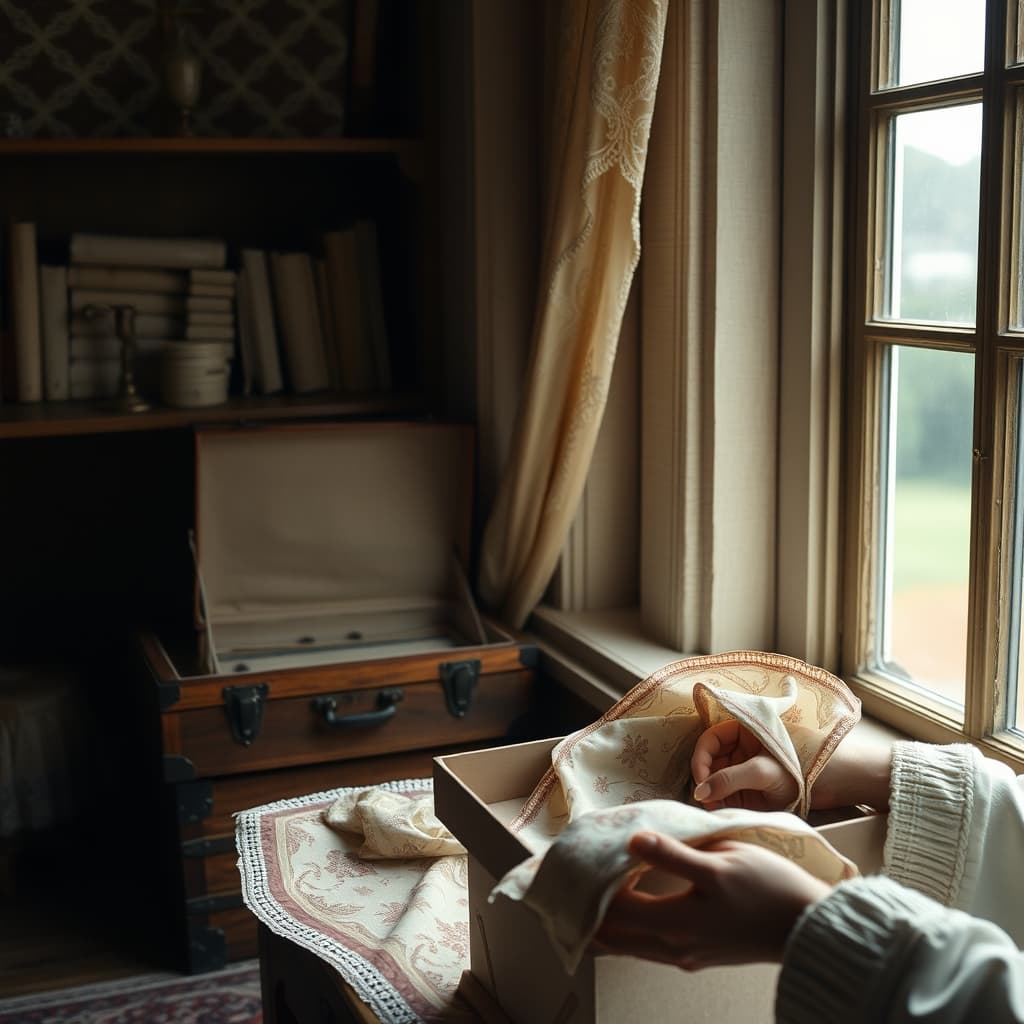
Some objects gain meaning less from the moment they are used and more from the years they are carefully kept. The silk scarf box was one of those objects. It usually sat on the highest shelf, inside a dowry room lined with lace covers, protected not as an everyday item but as a promise reserved for the future. When opened, the light soap scent, the smooth touch of tissue-wrapped fabric, and the delicate shimmer of edge patterns in the light offered young women in the household a quiet lesson: do not consume beauty immediately, use it when the time is right. In that sense, the scarf box was not simple accessory storage, but a subtle instrument of domestic patience culture.
In earlier home life, the dowry room was not merely storage; it was an organized archive of family memory. Chests, embroidered towels, guest-only table sets, waiting porcelain, and silk scarf boxes stood like parts of a future plan. Every visit to that room became a small inspection for elders: “Any moisture?”, “Any fold marks?”, “Is the color still vivid?” These questions carried more than material concern. Preserving the scarf meant preserving family care itself. The object moved beyond aesthetic taste and became a behavioral code transferred across generations.
This ritual of waiting shaped daily domestic life as well. On Bayram mornings, engagement visits, or special guest evenings, the box was brought down carefully, the scarf was ironed, pinned with precision, and then returned to its place with equal attention. Children watching this preparation learned that clothing could be tied to occasion and meaning. The scarf was not only something worn on the head; it signaled seriousness of the day, household representation, and social courtesy. The waiting that grew in the dowry room was therefore not passive delay. It was the gradual construction of ritual knowledge inside home life.
Even the design of the silk scarf box supported these cultural codes. Rigid cardboard structure, fine gilt edges, the restrained sound of the lid, and the folded inner paper gave the object ceremonial value. Opening and closing it did not match everyday speed; it required slower, deliberate movement, almost like entering a stage. Such details encouraged households to relate to objects through care and preservation rather than consumption. In many homes, the box itself was never discarded and later held letters, photographs, or sewing tools, becoming a second memory object.
Today dowry rooms have largely lost their former role, consumption cycles are faster, and the boundary between special days and ordinary days is softer. Yet people who remember the silk scarf box still recall the rhythm that waiting introduced into domestic life. That waiting was not only about protecting fabric. It taught care, moderation, and intergenerational transmission. As a small object, the silk scarf box had a place in the larger pedagogy of home: it taught how to preserve what is valuable, how to use it at the right time, and how to value memory as much as use.
The Silk Scarf Box and the Waiting That Grew in the Dowry Room: How Did It Shape the Rituals of Home Life?