 Eski Pano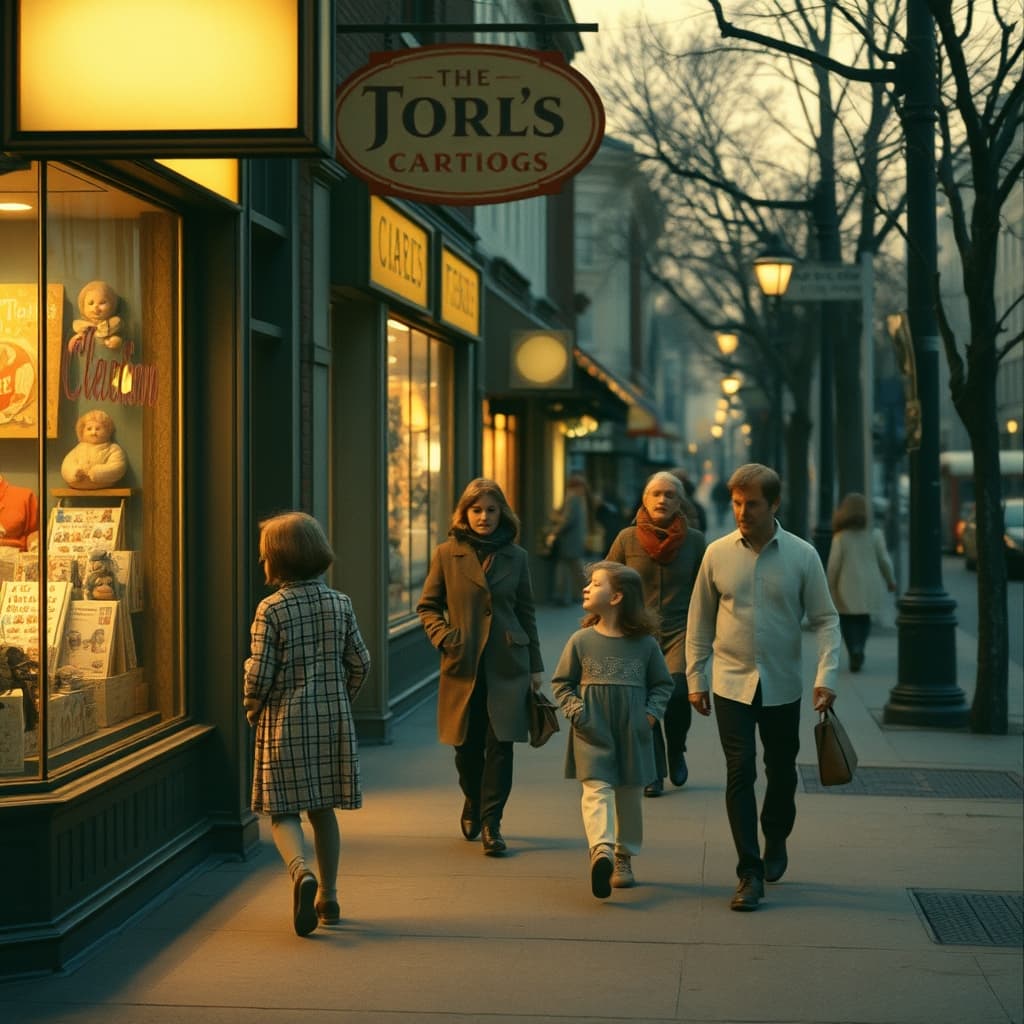
There was a time when walking through the bazaar was not only a way to buy something. It was a small public ceremony, a slow passage through light, fabric, glass, and expectation. Families did not always enter every shop. Sometimes they only stopped in front of the window, leaned forward a little, and carried the scene home in conversation.
The Window as a Shared Screen
Before every home had its own bright private screen, the shop window belonged to everyone. New shoes, folded shirts, enamel pots, school bags, and holiday sweets stood behind glass like carefully arranged promises. Children chose silently, parents calculated quietly, and neighbors met each other in the reflection.
Holiday Air in the Bazaar
The feeling became stronger before holidays. Streets smelled of starch, soap, roasted nuts, paper bags, and fresh cloth. Even a short walk could feel like preparation. The bazaar gave rhythm to the days: one evening for looking, another for deciding, and perhaps one last morning for buying what the household could afford.
Why It Still Hurts Gently
These walks are remembered with a slight ache because they joined desire with patience. Nothing was instant, and that delay made ordinary objects glow. A dress in a window, a toy behind glass, or a box of sweets could hold a whole family conversation. The memory remains because it was never only about shopping. It was about being together in the same light.