 Eski Pano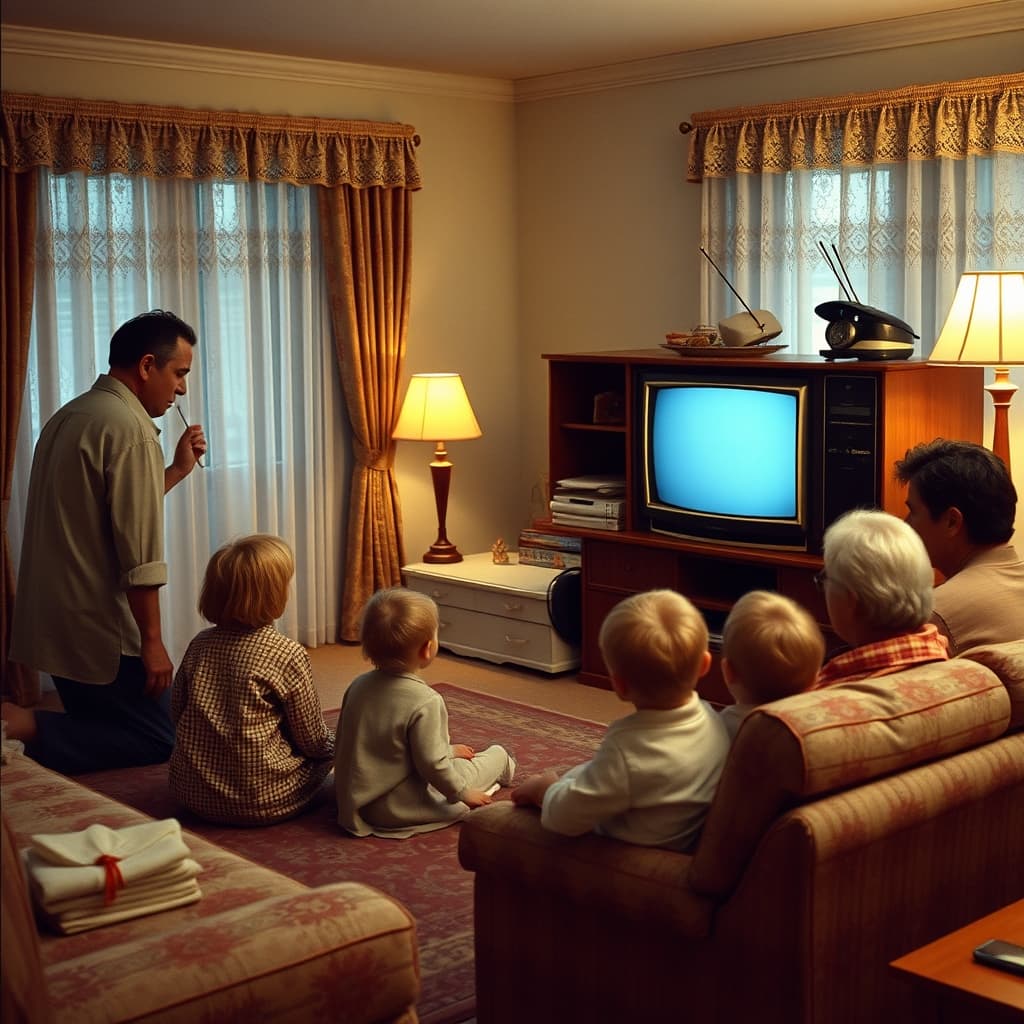
The antenna-tuned television belonged to a world where images had to be invited into the room with patience. A small movement of metal rods could change the whole evening. One person stood near the set, another watched the screen, and the room waited for the picture to become clear enough to trust.
A Household Chore With an Audience
Adjusting the antenna was almost a household role. It required listening to instructions from behind: a little left, stop there, no, go back. The screen filled with snow, lines, sudden brightness, and then a face appeared. That moment produced an excitement modern devices rarely create because everyone had worked for the image together.
The Living Room as a Small Theater
When the signal settled, the living room changed. Tea glasses moved carefully, children were asked to sit back, and the sound of the program became the center of the house. During holiday preparations, this scene gained another layer. Ironed clothes, polished furniture, and the smell of soap stood beside the television glow.
What the Analog Age Left Behind
The memory survives because imperfection made participation necessary. The picture was not guaranteed, the sound was not always clean, and the evening could be interrupted by a weak signal. Yet those small troubles made the shared attention stronger. The television was not simply watched; it was tuned, waited for, protected, and remembered.