🇹🇷 Türkçe | Köşe Başında Parlayan Günlük Emek
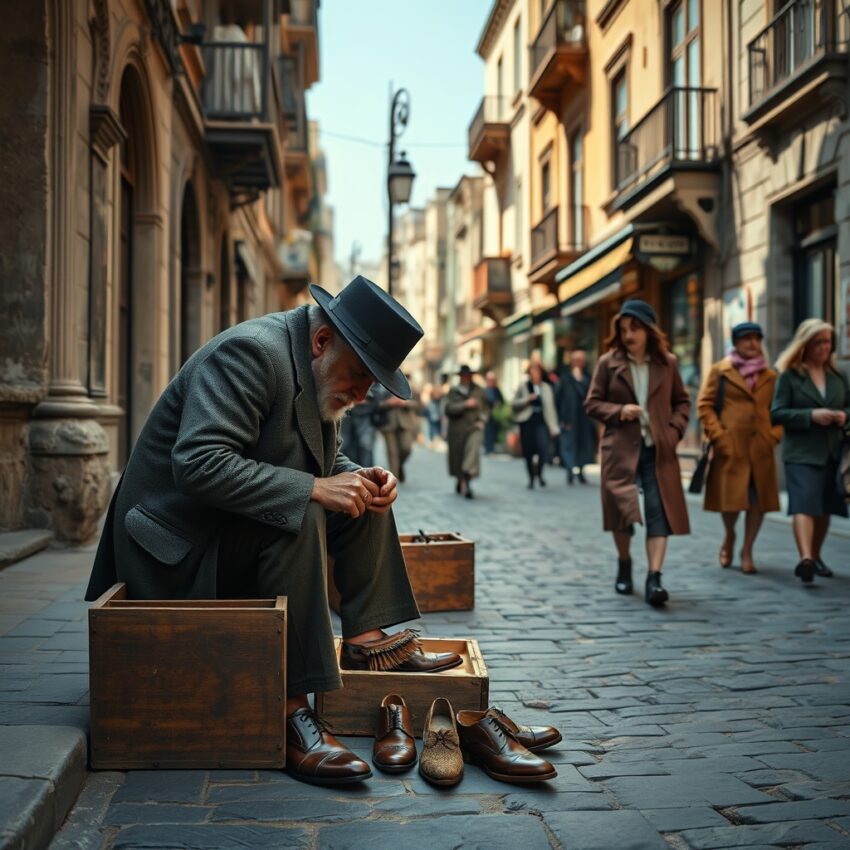
Bir zamanlar şehrin en tanıdık görüntülerinden biri, köşe başında sabırla bekleyen ayakkabı boyacısıydı. Sabahın erken saatlerinde taburesini, fırçalarını, cilasını ve küçük sandığını aynı yere kurar; gün boyunca gelip geçen kalabalığın içinden kendi ritmini yaratırdı. Onun varlığı bir dükkân tabelesi kadar resmî değildi ama mahallenin hafızasında en az onlar kadar yer ederdi. Ayakkabı boyacısının köşe nöbeti, yalnız bir geçim çabası değil, eski şehir hayatının görünür emek ahlakıydı. Yoldan geçen memur, pazara yetişen esnaf, bayramlıklarını giymiş çocuk, düğüne hazırlanan genç, hepsi bir anlığına onun taburesinde oturarak şehrin günlük düzenine katılırdı. Boyacının elindeki bezin ayakkabı üzerinde bıraktığı parlaklık kadar, müşteriyle kurduğu kısa ama ölçülü sohbet de bu sahnenin parçasıydı.
Mahalle Kültürü açısından ayakkabı boyacısı, sokak hayatının hem hizmet veren hem haber toplayan figürlerinden biriydi. Şehrin hangi tarafında düğün var, hangi dükkân yeni açıldı, hangi memurun tayini çıktı, hangi çocuğun ayakkabısı artık küçüldü; bütün bu küçük şehir bilgileri, onun köşe başındaki yerinden geçerdi. Boya sandığı aynı zamanda bir tür gözlem noktasıydı. İnsanları yürüyüşlerinden, ayakkabılarının yıpranışından, sabah telaşından tanırdı. Müşteri de onun karşısında yalnız ayakkabısını değil, günün yorgunluğunu ya da sevincini kısa süreliğine bırakırdı. Bu yüzden ayakkabı boyacısının yeri, şehrin kalbinde yalnız fiziki bir köşe değil, toplumsal temasın canlı bir eşiğiydi.
Eski şehir hayatında ayakkabıların ayrı bir dili vardı. Parlak bir kundura ciddiyeti, tozlu bir çocuk ayakkabısı hareketliliği, topuğu aşınmış bir günlük ayakkabı ise çalışma hayatının yükünü anlatırdı. Boyacı bu dili herkesten önce okurdu. Fırçasını sert ama özenli darbelerle kullanırken müşterinin yaşamına dair de ipuçları toplardı. Kimi aceleyle “bugün önemli bir işim var” der, kimi sessizce cilalanan ayakkabısına bakar, kimi de yalnız sokakta biraz soluklanmak için otururdu. Köşe başında geçen bu birkaç dakika, şehrin hızını hafifçe yavaşlatan bir mola gibiydi. İşte bu yüzden ayakkabı boyacısının nöbeti hatırlanır: çünkü o, kentin sert akışında insan ölçeğini koruyan küçük bir durak yarattı.
Rüzgâr alan balkonlarda solmayan aile hatırası benzetmesi de boşuna değildir. Çünkü birçok çocuk için ayakkabı boyacısı, babayla ya da dedeyle yapılan şehir yürüyüşlerinin tanıdık durağıydı. Elden tutulup köşe başına gidilir, “önce bir boyatalım” denir, o sırada çocuklar boya kutularının parlaklığına, fırçaların ritmine, bezin ayakkabıda bıraktığı son harekete dikkat kesilirdi. Eve dönüldüğünde balkon kapısında çıkartılan parlak ayakkabılar, şehrin sokaktan taşıdığı düzeni eve getirirdi. Böylece ayakkabı boyacısı yalnız sokakta kalan bir figür olmaz; aile hafızasının içine de girerdi. Birçok eski yürüyüşün, bayram hazırlığının ya da pazar sabahının kenarında onun emeğinin izi bulunur.
Bugün köşe başındaki ayakkabı boyacıları çok azaldı. Hızlı tüketim, hazır bakım ürünleri ve değişen şehir düzeni bu mesleği görünmezleştirdi. Ama hafızada kalan şey, yalnız kaybolan bir iş koluna duyulan özlem değil; kamusal hayatın ne kadar yüz yüze, ne kadar kısa ama gerçek temaslarla kurulduğunun hatırlanmasıdır. Ayakkabı boyacısının köşe nöbeti eski şehir hayatının kalbinde yer etti, çünkü o parlattığı ayakkabılardan daha fazlasını parlatıyordu: insanın sokağa çıkış özenini, mahalle içindeki görünürlüğünü ve gündelik emeğin saygınlığını. Bu yüzden o küçük sandık, eski şehir hafızasında beklenmedik kadar büyük bir yer tutar.
🇬🇧 English | Everyday Labor Shining on the Street Corner
There was a time when one of the most familiar sights in the city was the shoeshiner waiting patiently on the corner. Early in the morning he set down his stool, brushes, polish, and small wooden box in the same place and created his own rhythm within the passing crowd. His presence was not as official as a shop sign, yet it remained in the neighborhood’s memory just as deeply. The shoeshiner’s vigil on the corner was not only an effort to make a living; it was the visible ethic of labor in old urban life. The clerk passing by, the shopkeeper hurrying to market, the child dressed for a holiday, the young man preparing for a wedding, all joined the city’s daily order for a moment by sitting on his stool. The shine left by the cloth on a shoe mattered, but so did the brief and measured conversation formed between worker and customer.
From the perspective of neighborhood culture, the shoeshiner was one of those figures who both served the street and quietly gathered its news. Which part of town had a wedding, which store had just opened, which official had been transferred, which child had outgrown a pair of shoes, all these small pieces of city knowledge passed through his corner. The shoeshine box was also a kind of observation point. He recognized people by the way they walked, by the wear on their shoes, by the urgency of their morning. The customer, in turn, placed not only shoes but also a little of the day’s fatigue or joy before him. That is why the shoeshiner’s place in the heart of the city was not merely a physical corner. It was a living threshold of social contact.
In old urban life, shoes had a language of their own. A polished leather shoe spoke of seriousness, a dusty child’s shoe of movement, a pair worn at the heel of the burden of working life. The shoeshiner read this language before anyone else. As he moved the brush in firm but careful strokes, he also gathered clues about the customer’s life. One would say in haste, “I have something important today.” Another would silently watch the polish deepen. A third might sit down only to catch a breath in the street. Those few minutes spent on the corner were like a pause that gently slowed the city’s pace. That is why the shoeshiner’s vigil is remembered: he created a small station of human scale in the hard flow of urban life.
The image of a family memory that never fades on windy balconies is not accidental either. For many children, the shoeshiner was part of city walks taken with a father or grandfather. A hand would lead them to the corner, someone would say, “Let’s have them shined first,” and the child would watch the gleam of the polish tins, the rhythm of the brushes, the final motion of the cloth over the shoe. When they returned home, the polished shoes taken off by the balcony door carried the order of the street back inside. In that way, the shoeshiner did not remain only a figure of the street; he entered family memory as well. Many old walks, holiday preparations, and Sunday mornings hold the trace of his labor somewhere along their edge.
Today, shoeshiners on street corners have become rare. Fast consumption, ready-made care products, and the changing structure of the city have pushed the profession toward invisibility. Yet what remains in memory is not only nostalgia for a disappearing occupation. It is also the recollection of how public life was once built through face-to-face encounters, brief but real. The shoeshiner’s vigil belonged in the heart of old urban life because he polished more than shoes. He polished the care with which a person stepped into the street, their visibility within the neighborhood, and the dignity of everyday labor. That is why the small box at the corner holds such an unexpectedly large place in the memory of the old city.
🇧🇷 Português (Brasil) | O Trabalho Cotidiano que Brilhava na Esquina
Houve um tempo em que uma das imagens mais conhecidas da cidade era a do engraxate esperando com paciência na esquina. Logo cedo ele armava o banco, as escovas, a graxa e a pequena caixa no mesmo lugar, criando seu próprio ritmo no meio do movimento da rua. Sua presença não era tão oficial quanto a placa de uma loja, mas se fixava na memória do bairro com a mesma força. A vigília do engraxate na esquina não era apenas tentativa de sustento; era a ética visível do trabalho na antiga vida urbana. O funcionário que passava, o comerciante a caminho do mercado, a criança vestida para a festa, o jovem se preparando para um casamento, todos entravam por alguns minutos na ordem diária da cidade ao sentar naquele banco. Tão importante quanto o brilho deixado no sapato era a conversa breve e medida que surgia entre o trabalhador e o cliente.
Do ponto de vista da cultura de bairro, o engraxate era um daqueles personagens que serviam à rua e, ao mesmo tempo, recolhiam suas notícias. Em que parte da cidade haveria casamento, qual loja acabara de abrir, qual servidor seria transferido, qual criança já perdera o tamanho do sapato, essas pequenas informações urbanas passavam por sua esquina. A caixa de engraxate era também um ponto de observação. Ele reconhecia as pessoas pelo jeito de andar, pelo desgaste do calçado, pela pressa da manhã. O cliente, por sua vez, deixava diante dele não apenas os sapatos, mas um pouco do cansaço ou da alegria do dia. Por isso o lugar do engraxate no coração da cidade não era apenas uma esquina física. Era um limiar vivo de contato social.
Na antiga vida urbana, os sapatos tinham linguagem própria. Um couro brilhante falava de seriedade; o sapato empoeirado de uma criança falava de movimento; um salto gasto contava o peso do trabalho cotidiano. O engraxate lia essa linguagem antes de qualquer outro. Enquanto passava a escova com movimentos firmes e cuidadosos, recolhia também sinais da vida de quem estava diante dele. Um dizia apressado: “tenho algo importante hoje”. Outro ficava em silêncio olhando o brilho crescer. Outro sentava apenas para respirar um pouco na rua. Aqueles poucos minutos na esquina funcionavam como uma pausa que desacelerava suavemente o ritmo da cidade. É por isso que a vigília do engraxate é lembrada: ele criava uma pequena estação humana no fluxo duro da vida urbana.
A comparação com a lembrança de família que não desbota em varandas ventiladas também não é gratuita. Para muitas crianças, o engraxate fazia parte dos passeios pela cidade ao lado do pai ou do avô. Uma mão as levava até a esquina, alguém dizia “vamos engraxar primeiro”, e então elas observavam o brilho das latas, o ritmo das escovas e o gesto final do pano sobre o couro. Ao voltar para casa, os sapatos reluzentes tirados perto da varanda levavam para dentro a ordem da rua. Assim, o engraxate não permanecia apenas como figura do espaço público; entrava também na memória familiar. Muitos passeios antigos, preparativos de festa e manhãs de domingo trazem em algum canto o vestígio de seu trabalho.
Hoje há poucos engraxates nas esquinas. O consumo rápido, os produtos prontos e a mudança da estrutura urbana tornaram esse ofício menos visível. Mas o que permanece na memória não é apenas a saudade de uma profissão em desaparecimento. É também a lembrança de como a vida pública era construída por encontros diretos, curtos e verdadeiros. A vigília do engraxate ocupou um lugar no coração da antiga vida urbana porque ele lustrava mais do que sapatos. Lustrava o cuidado com que alguém saía para a rua, sua presença no bairro e a dignidade do trabalho cotidiano. Por isso aquela pequena caixa ocupa um lugar tão grande e inesperado na memória da cidade antiga.