🇹🇷 Türkçe | desenli çay tepsisi ve anneanne evinin değişmeyen köşesi: nasıl bir aile mirasına dönüştü
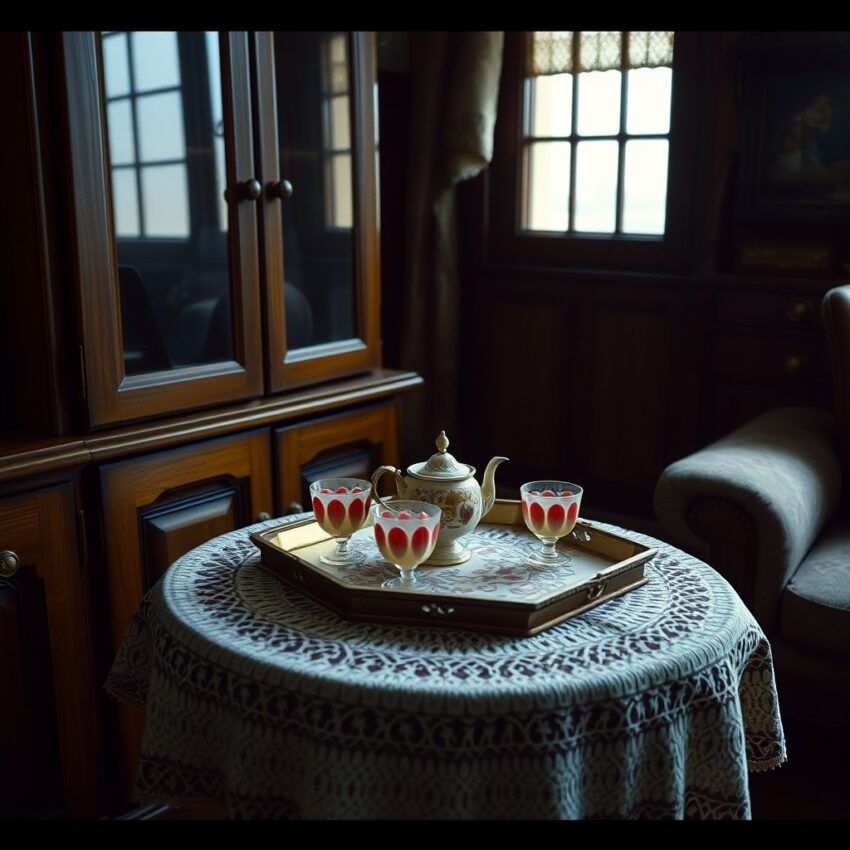
Bazı eşyalar vardır; ilk bakışta sıradan görünür, ama bir evin hafızasında şaşırtıcı derecede derin bir yer tutar. Desenli çay tepsisi de onlardan biriydi. Anneanne evinin salonunda ya da oturma odasında hep aynı köşede duran, bazen dantel örtünün üstünde, bazen vitrinin yanındaki küçük sehpanın üzerinde bekleyen o tepsi; yalnız bardak taşıyan bir eşya değildi. Üzerindeki çiçek desenleri, hafif çizilmiş metal yüzeyi, kulplarının yıllarca elde tutulmaktan kazandığı parlaklık, eve uğrayan her misafirin ve aile sofrasına oturan her kuşağın izini taşırdı. Çayın demlendiği saat yaklaşınca mutfaktan çıkan o tepsi, sanki evin bütün seslerini bir araya getirir; ince belli bardakların şıngırtısıyla birlikte aile içi konuşmaların ritmini kurardı.
Obje Hikayeleri açısından bakıldığında bir çay tepsisini değerli kılan şey, malzemesinden çok etrafında biriken kullanımdır. Eski evlerde eşyalar hızlıca değişmez, çoğu kez yıllar boyunca aynı yerini ve görevini korurdu. Bu yüzden anneanne evinin değişmeyen köşesi de aslında bir düzen duygusunu temsil ederdi. Çay tepsisi hangi rafın altına konur, hangi misafire hangi bardakla çıkarılır, hangi bayramda kalabalık sofranın ortasına nasıl yerleştirilir; bütün bunlar sessizce öğrenilen ev bilgileri arasındaydı. Tepsinin desenine bakan çocuk, onu yalnız estetik bir ayrıntı olarak değil, evin güven veren devamlılığının parçası olarak görürdü. Yıllar geçtikçe aynı tepsinin başka bir eve taşınması, eşyanın işlevinden çok hatırasını görünür kılmaya başlardı.
Bir aile mirasına dönüşmesi de tam burada başlar. Çünkü her miras kıymetli madenlerden, büyük sandıklardan ya da resmî belgelerden oluşmaz; bazen en kalıcı aktarım, her gün kullanılan bir eşyanın duygusal ağırlığında saklıdır. Desenli çay tepsisi, düğün öncesi kalabalık günleri, bayram ziyaretlerini, akşamüstü sohbetlerini, komşuya uzatılan ikramları ve “bir bardak daha koyayım mı?” diye sorulan yumuşak cümleleri içinde biriktirir. Tepsinin üstündeki bardak izleri bile zamanla aile dilinin parçasına dönüşür. Yeni kuşaklar için o eşya, anneannenin ellerini, mutfaktan salona gelişini ve konuşmalar arasındaki küçük nezaket boşluklarını hatırlatan somut bir işaret olur. Bu yüzden bir gün dolabın içinden çıkarılıp yeni eve taşındığında, beraberinde yalnız bir mutfak gereci değil; bir ev adabı, bir ikram biçimi ve bir ilişki tonu da gelir.
Bugün pek çok eşya daha hafif, daha parlak ve daha hızlı değişebilir durumda. Ama eski bir çay tepsisinin aile içinde hâlâ kıymetli bulunmasının nedeni, dayanıklılığından çok taşıdığı sessiz süreklilik hissidir. Anneanne evinin değişmeyen köşesi, aslında bütün ailenin ortak hafızasında değişmeyen bir sahnedir. O sahnede çay daima demlenir, misafir daima ağırlanır, çocuklar büyür ve konuşmalar birbirine eklenir. Desenli tepsi bu akışın görünür tanığıdır. Belki bu yüzden bugün bir vitrinde ya da mutfak dolabında yeniden görüldüğünde, insana yalnız geçmişi değil, geçmişin nasıl taşındığını da hatırlatır. Bir aile mirası bazen tam olarak budur: Büyük laflar etmeden, her günün içinden geçerek nesilden nesile ulaşan bir eşya sadakati.
🇬🇧 English | The Patterned Tea Tray and the Unchanging Corner of Grandmother’s House: How Did It Become a Family Heirloom?
Some objects seem ordinary at first glance, yet they occupy a surprisingly deep place in the memory of a home. The patterned tea tray was one of them. Resting always in the same corner of grandmother’s sitting room or parlor, sometimes atop a lace cover, sometimes on a small table near the cabinet, it was never only an object for carrying glasses. Its floral patterns, the lightly scratched metal surface, and the shine on its handles earned through years of being held by hand all carried traces of every guest who had visited and every generation that had sat around the family table. When the hour for tea approached and the tray emerged from the kitchen, it seemed to gather together all the sounds of the house, setting the rhythm of conversation with the delicate clinking of tulip-shaped glasses.
Seen as an object story, what gives a tea tray its value is less the material than the use collected around it. In older homes, objects were not quickly replaced; most kept the same place and function for years. That is why the unchanging corner of grandmother’s house represented a sense of order. Where the tray was stored, with which glasses it was brought to which guest, how it was placed in the middle of a crowded holiday table, all of these belonged to the silent knowledge of the home. A child looking at its pattern did not see it merely as decoration, but as part of the reassuring continuity of the house itself. As time passed and the same tray was carried into another home, its memory became more visible than its function.
Its transformation into a family heirloom begins precisely there. Not every inheritance is made of precious metals, large chests, or official papers. Sometimes the most lasting transfer is hidden in the emotional weight of an object used every day. The patterned tea tray gathers within itself crowded days before weddings, holiday visits, late afternoon conversations, treats sent to neighbors, and the soft question, “shall I pour one more glass?” Even the faint circular marks left by tea glasses become part of the family’s language over time. For younger generations, the object turns into a concrete sign that recalls grandmother’s hands, her walk from the kitchen into the room, and the small pauses of politeness between conversations. So when one day it is taken from a cupboard and moved into a new house, what travels with it is not only a kitchen item, but also a household etiquette, a way of offering hospitality, and a tone of relationship.
Today many objects are lighter, shinier, and easier to replace. Yet the reason an old tea tray can still be cherished within a family lies less in its durability than in the quiet feeling of continuity it carries. The unchanging corner of grandmother’s house is in truth an unchanging scene in the shared memory of the whole family. In that scene tea is always brewed, guests are always welcomed, children grow, and conversations keep adding themselves to one another. The patterned tray stands as the visible witness to that flow. Perhaps that is why, when it appears again in a cabinet or on a kitchen shelf today, it reminds a person not only of the past, but of how the past is carried forward. A family heirloom can be exactly this: a loyalty to an object that passes from generation to generation without grand declarations, simply by moving through the life of each day.
🇧🇷 Português (Brasil) | A Bandeja de Chá Estampada e o Canto Imutável da Casa da Avó: Como se Transformou em uma Herança de Família?
Há objetos que, à primeira vista, parecem comuns, mas ocupam um lugar surpreendentemente profundo na memória de uma casa. A bandeja de chá estampada era um deles. Sempre no mesmo canto da sala da avó, às vezes sobre uma toalhinha de renda, às vezes na pequena mesa ao lado do armário, ela nunca foi apenas um objeto para carregar copos. As flores estampadas, a superfície metálica levemente riscada e o brilho das alças ganho depois de anos nas mãos guardavam os vestígios de cada visita e de cada geração que se sentou à mesa da família. Quando a hora do chá se aproximava e a bandeja saía da cozinha, parecia reunir todos os sons da casa e marcar o ritmo das conversas com o tilintar delicado dos copos.
Pensando nas histórias dos objetos, o que torna valiosa uma bandeja de chá não é tanto o material, mas o uso acumulado ao redor dela. Nas casas antigas, os objetos não eram substituídos com rapidez; em geral mantinham por anos o mesmo lugar e a mesma função. Por isso, o canto imutável da casa da avó representava também um senso de ordem. Onde a bandeja ficava guardada, com quais copos era servida a cada visita, como era colocada no centro da mesa cheia nos feriados, tudo isso fazia parte de um conhecimento silencioso da casa. Uma criança olhando o desenho da bandeja não a via apenas como detalhe estético, mas como parte da continuidade segura daquele lar. Com o passar do tempo, quando a mesma bandeja era levada para outra casa, sua memória começava a se tornar mais importante do que sua função.
É exatamente aí que ela começa a se transformar em herança de família. Nem toda herança é feita de metais preciosos, baús grandes ou documentos formais. Às vezes, o que se transmite de forma mais duradoura está no peso afetivo de um objeto usado todos os dias. A bandeja de chá estampada reúne em si os dias cheios antes dos casamentos, as visitas de festa, as conversas do fim da tarde, os agrados levados ao vizinho e a pergunta suave: “quer mais um copo?” Até as marcas deixadas pelos copos se tornam, com o tempo, parte da linguagem da família. Para as gerações mais novas, o objeto vira um sinal concreto que lembra as mãos da avó, seu trajeto da cozinha até a sala e os pequenos intervalos de delicadeza entre uma conversa e outra. Por isso, quando um dia ela sai do armário e vai para outra casa, não leva apenas um utensílio, mas também uma etiqueta doméstica, uma maneira de servir e um tom de convivência.
Hoje muitos objetos são mais leves, mais brilhantes e mais fáceis de trocar. Ainda assim, a razão de uma antiga bandeja de chá continuar preciosa dentro da família está menos na resistência do material do que na sensação silenciosa de continuidade que ela carrega. O canto imutável da casa da avó é, na verdade, uma cena imutável na memória comum de toda a família. Nessa cena o chá está sempre sendo servido, os convidados sempre são recebidos, as crianças crescem e as conversas vão se somando. A bandeja estampada é a testemunha visível desse fluxo. Talvez por isso, quando reaparece hoje numa vitrine ou prateleira, ela lembre não apenas o passado, mas a forma como o passado é transportado. Uma herança de família às vezes é exatamente isso: a fidelidade a um objeto que atravessa gerações sem grandes discursos, apenas passando pela vida de todos os dias.