🇹🇷 Türkçe | boza gecelerinin sıcaklığı neden eski şehir hayatının kalbinde yer etti soba başı sessizliğinde zihinde kalan eski bir melodiyle
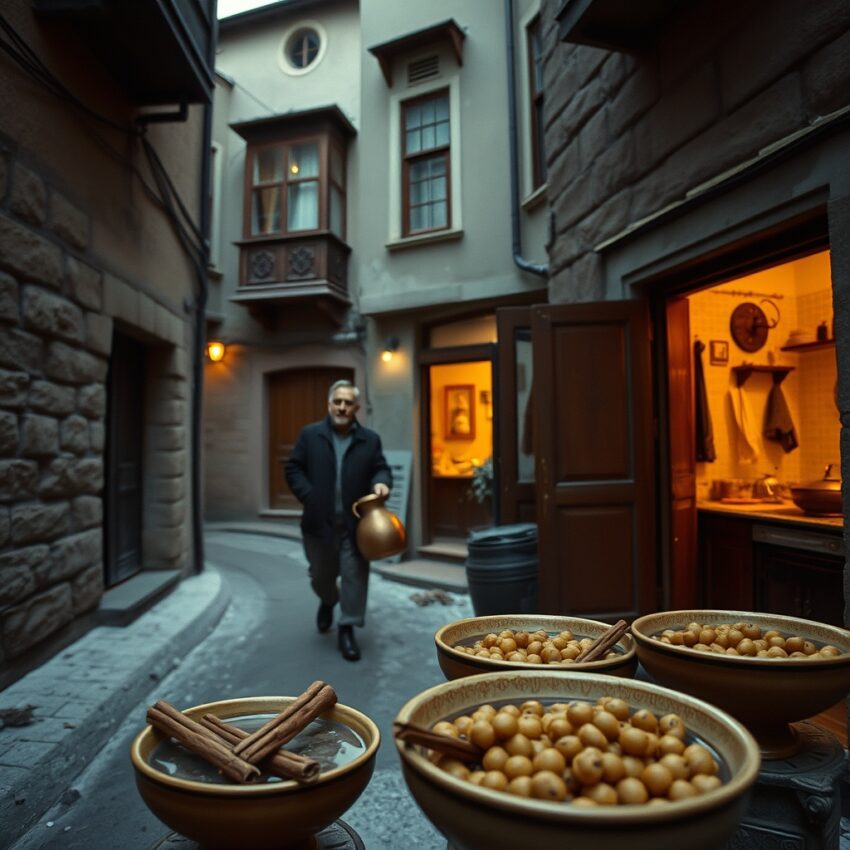
Bir zamanlar kış akşamlarının belli bir saatinde sokakların içinden yükselen tok bir ses, evlerin camlarına hafifçe çarpıp geçerdi: bozacı. Hava soğudukça o ses daha da tanıdık hâle gelir, mahallede soba başına çekilmiş evlerin içine sıcak bir beklenti taşırdı. Kapı aralığından sokağa bakan çocuklar, ellerinde bakır renkli güğümüyle yürüyen satıcıyı görmek için heyecanlanır; büyükler ise çoktan kaseleri hazırlamış olurdu. Tarçın ve leblebi kokusuyla tamamlanan o koyu içecek, yalnız damağı değil, bütün akşamı ısıtan bir mahalle ritüeliydi. Boza geceleri eski şehir hayatının kalbinde yer ettiyse, bunun nedeni sadece tadı değil; sokakla ev arasında kurduğu o yumuşak geçişti.
Mahalle Kültürü içinde boza, dolaşan satıcısıyla birlikte düşünüldüğünde gerçek anlamını bulur. Çünkü boza satın almak, yalnız bir kış içeceği almak değildi; mahallenin akşam seslerinden birine kulak vermekti. Eski şehirlerde sokak satıcıları gündelik hayatın hareketli birer parçasıydı ve her birinin sesi belirli bir mevsimi, belirli bir saati haber verirdi. Bozacı ise daha çok soğuk gecelerin habercisiydi. Onun gelişiyle birlikte apartman boşluklarında ayak sesleri duyulur, camlar açılır, bazen komşular birbirine “bozacı geldi” diye seslenirdi. Böyle anlarda şehir daha küçük, daha tanıdık ve daha paylaşılır görünürdü. Sokağın karanlığına karşı evlerin içinden yayılan ışık, bozacıyla birlikte kısa süreli bir mahalle yakınlığı yaratırdı.
Boza gecelerinin zihinde kalmasının bir diğer nedeni, ev içi sıcaklıkla sokak hareketini aynı anda taşımasıdır. Bir yanda sobanın üstünde ısınan kestane kokusu, örgü ören eller, radyodan sızan eski bir şarkı; öte yanda kapıya kadar gelen kış, nefes buğusu ve sokaktan duyulan ses… Boza bu iki dünyanın arasında dolaşan bir akşam misafiri gibiydi. Eve girdiğinde kaselere paylaştırılır, üstüne tarçın serpilir, çocukların payına biraz daha fazla leblebi düşerdi. İçilirken acele edilmez, kaşığın bıraktığı iz bile seyredilirdi. Bu yavaşlık, bugünün hızlı tüketim alışkanlıklarından ayrılan bir zevk terbiyesi taşır. Boza yalnız karın doyurmaz, akşamın temposunu düşürür, konuşmayı koyulaştırır ve mevsimi hissedilir kılardı.
Bugün boza hâlâ bulunabiliyor, ama o gecelerin sıcaklığını asıl unutulmaz yapan şey, onun etrafında kurulan mahalle ve ev sahnesidir. Eski şehir hayatının kalbinde yer etmesi, bir sokak sesini sofraya kadar taşımasından gelir. Bozacı geçerken cam açtıran merak, kasenin başında toplanan aile, soba başındaki sessizlik ve zihinde kalan eski melodi; hepsi birlikte bir kış hafızası kurar. Belki de bu yüzden boza geceleri hatırlandığında insan yalnız bir içeceği değil, sesli ama dingin bir şehir düzenini de anımsar. O düzenin içinde herkes birbirine biraz daha yakın, sokak biraz daha tanıdık, akşam biraz daha uzun görünürdü.
🇬🇧 English | Why Did the Warmth of Boza Nights Settle in the Heart of Old City Life with an Old Melody Lingering in the Silence by the Stove?
There was once a certain hour on winter evenings when a full, rounded call rose through the streets and brushed lightly against the windows of homes: the boza seller. The colder the air became, the more familiar that voice seemed, carrying a warm expectancy into houses already gathered around the stove. Children peeking from half-open doors waited eagerly to catch sight of the vendor walking with his copper-toned container, while the elders had often already prepared the bowls. Completed by the scent of cinnamon and roasted chickpeas, that thick drink warmed not only the palate, but the whole evening itself. If boza nights found a place in the heart of old city life, it was not only because of flavor, but because of the gentle passage they created between street and home.
Within neighborhood culture, boza finds its fullest meaning when thought of together with the wandering seller. Buying boza was never merely the purchase of a winter drink; it was an act of listening to one of the evening voices of the quarter. In older cities, street vendors were moving elements of daily life, and each voice announced a certain season and a certain hour. The boza seller belonged especially to cold nights. With his arrival, footsteps echoed in stairwells, windows opened, and neighbors sometimes called to one another, “the boza seller has come.” In moments like these, the city seemed smaller, more intimate, and more shareable. Against the darkness of the street, the light spilling from homes created, together with the boza seller, a brief but vivid closeness among neighbors.
Another reason boza nights remain in the mind is the way they hold domestic warmth and street movement at the same time. On one side there were chestnuts warming on the stove, hands occupied with knitting, an old song drifting from the radio; on the other, the winter air reaching the doorway, visible breath, and the call heard from the street. Boza moved between these two worlds like an evening guest. Once inside, it was divided into bowls, topped with cinnamon, and the children’s share usually received a little more roasted chickpeas. No one hurried while eating it; even the trace left by a spoon in the thick surface could be watched for a moment. That slowness carried a kind of taste discipline far from today’s habits of quick consumption. Boza did not simply satisfy hunger. It lowered the tempo of the night, deepened conversation, and made the season fully felt.
Boza can still be found today, yet what made those nights unforgettable was above all the neighborhood and domestic scene built around it. Its place in the heart of old city life came from bringing a street voice all the way to the family table. The curiosity that made people open the window as the seller passed, the family gathered around the bowl, the silence by the stove, and the old melody lingering in the mind together formed a winter memory. Perhaps that is why remembering boza nights means remembering not only a drink, but also a city order that was lively and calm at once. Within that order, everyone seemed a little closer to one another, the street felt more familiar, and the evening itself felt longer.
🇧🇷 Português (Brasil) | Por que o Calor das Noites de Boza se Instalou no Coração da Antiga Vida Urbana com uma Velha Melodia Permanecendo na Mente no Silêncio ao Lado do Fogão?
Houve um tempo em que, numa certa hora das noites de inverno, um chamado grave subia pelas ruas e tocava de leve as janelas das casas: o vendedor de boza. Quanto mais frio fazia, mais familiar aquela voz parecia, levando uma expectativa quente para os lares já recolhidos ao redor do fogão. Crianças espiando pela porta entreaberta queriam ver o vendedor caminhando com seu recipiente de tom acobreado, enquanto os adultos muitas vezes já deixavam as tigelas preparadas. Completada pelo cheiro de canela e grão-de-bico torrado, aquela bebida espessa aquecia não só o paladar, mas a noite inteira. Se as noites de boza ocuparam um lugar no coração da antiga vida urbana, não foi apenas pelo sabor, mas pela passagem suave que criavam entre a rua e a casa.
Dentro da cultura do bairro, a boza encontra seu sentido mais completo quando pensada junto com o vendedor ambulante. Comprar boza nunca foi apenas adquirir uma bebida de inverno; era ouvir uma das vozes da noite do bairro. Nas cidades antigas, os vendedores de rua eram partes móveis da vida cotidiana, e cada um anunciava uma estação e uma hora específicas. O vendedor de boza pertencia sobretudo às noites frias. Com sua chegada, ouviam-se passos nas escadas, janelas se abriam e às vezes os vizinhos avisavam uns aos outros: “o vendedor de boza chegou”. Nesses momentos, a cidade parecia menor, mais íntima e mais compartilhável. Contra a escuridão da rua, a luz que escapava das casas criava, junto com o vendedor, uma proximidade breve e intensa entre os moradores.
Outra razão para as noites de boza permanecerem na memória é o modo como carregam ao mesmo tempo o calor doméstico e o movimento da rua. De um lado estavam as castanhas aquecendo sobre o fogão, as mãos tricotando, uma canção antiga saindo do rádio; do outro, o inverno chegando até a porta, o vapor da respiração e o chamado vindo da rua. A boza transitava entre esses dois mundos como uma visita da noite. Ao entrar em casa, era dividida em tigelas, recebia canela por cima e a porção das crianças costumava ganhar um pouco mais de grão-de-bico torrado. Ninguém a consumia com pressa; até o traço deixado pela colher na superfície grossa podia ser observado por um instante. Essa lentidão trazia uma educação do gosto muito distante dos hábitos apressados de hoje. A boza não matava apenas a fome. Ela diminuía o ritmo da noite, adensava a conversa e fazia sentir a estação.
A boza ainda pode ser encontrada hoje, mas o que tornava aquelas noites verdadeiramente inesquecíveis era a cena doméstica e de bairro construída ao seu redor. Seu lugar no coração da antiga vida urbana vinha de levar uma voz da rua até a mesa da casa. A curiosidade que fazia abrir a janela quando o vendedor passava, a família reunida diante da tigela, o silêncio ao lado do fogão e a velha melodia permanecendo na mente formavam juntos uma memória de inverno. Talvez por isso lembrar das noites de boza seja lembrar não só de uma bebida, mas também de uma ordem urbana ao mesmo tempo viva e tranquila. Nessa ordem, todos pareciam um pouco mais próximos, a rua um pouco mais conhecida e a noite um pouco mais longa.