🇹🇷 Türkçe | Eski şehir hayatında semt pazarlarının haftanın nabzını tuttuğu sabahlar: hafızada neden hâlâ bu kadar canlı cam açtıran sabahlar
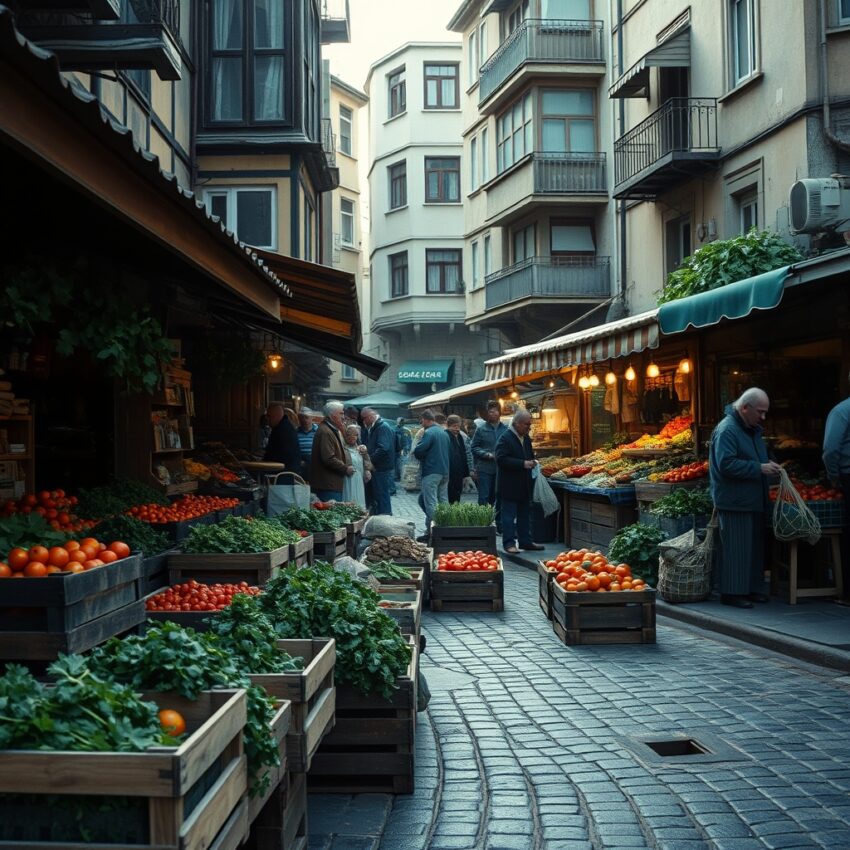
Bir zamanlar haftanın belli bir sabahı, mahallenin havası daha gün doğmadan değişirdi. Evin içinde henüz çaydanlığın ince sesi yükselirken, sokaktan tahta kasa sürtünmeleri, erken kurulmuş tezgâhların metal tınısı ve satıcıların yarım ağızla başlayan seslenişleri duyulurdu. Camı açan herkes, yalnız havayı değil, semt pazarının gelişini de içeri almış olurdu. Islak kaldırımlara dizilen maydanoz demetleri, gazete kâğıdına sarılmış taze otlar, sabah ayazında buharı tüten simitler ve filelerini koluna takmış komşular, eski şehir hayatının en tanıdık sahnelerinden birini kurardı. O sabahlar yalnız alışveriş zamanı değildi; haftanın ruhu, gündelik hayatın düzeni ve mahallenin birbirini görme biçimi de o tezgâhların arasında yeniden kurulurdu.
Zamanın İzinde bakıldığında semt pazarları, eski şehir yaşamının ekonomik olduğu kadar kültürel merkezlerinden biriydi. Eski gazetelerde pahalılık haberlerinin, mevsim bereketinin ya da bayram öncesi alışveriş telaşının pazarlardan söz ederek anlatılması tesadüf değildi. Çünkü pazar, fiyatların konuşulduğu kadar haberlerin de dolaştığı bir yerdi. Hangi evde düğün var, kim memlekete gitmiş, hangi çocuk okul değiştirmiş, hangi sokakta yeni bir kiracı görünmüş; bunların çoğu tezgâh aralarında öğrenilirdi. Satıcının tartıyı hafifçe kaldırarak yaptığı küçük jest, alıcının “biraz daha koy” derken sesine kattığı tanıdıklık, semt pazarını yalnız sebze meyve alınan bir alan olmaktan çıkarırdı. Orada şehir, kendini günlük ve canlı bir dille yeniden tarif ederdi.
Bu sabahların hafızada bu kadar canlı kalmasının bir nedeni de duyulara aynı anda seslenmesiydi. Bir yanda taze nane ve çileğin kokusu, bir yanda ıslak çuvalın toprağı andıran serinliği, öte yanda satıcıların ritimli sesleri… Çocuklar için pazar, annelerinin peşinden yürürken görülen renkli bir dünya; büyükler içinse haftayı toparlayan pratik bir akıldı. Evde pişecek yemeklerin kararı çoğu zaman pazarda verilirdi: en parlak patlıcan görüldüyse kızartma, fasulye körpeciyse zeytinyağlı, domates kokuluysa salça ya da menemen düşünülürdü. Filelerin ağırlığı eve dönülen yolu belirler, apartman kapılarında kısa kısa fiyat muhasebeleri yapılırdı. Pazar dönüşünde mutfakta başlayan yıkama, ayıklama ve yerleştirme işi de sabahın bir uzantısıydı; böylece semt pazarı yalnız sokakta değil, evin içinde de sürerdi.
Bugün büyük marketlerin düzenli rafları ve sessiz kasaları arasında dolaşırken, o eski pazar sabahlarını anımsatan şey çoğu kez beklenmedik bir sestir: sokaktan gelen bir bağırış, açılan pencereye dolan yeşillik kokusu ya da file taşıyan birinin acele adımı. Çünkü semt pazarı hafızada yalnız bir alışveriş mekânı olarak değil, eski şehrin kalp atışı olarak kaldı. O sabahlar cam açtırıyordu; çünkü dışarıda hayatın kurulduğunu, mahallenin uyandığını ve haftanın yönünü bulduğunu haber veriyordu. Eski şehir hayatında semt pazarlarının tuttuğu nabız, bugün bile insanın içine tanıdık bir hareket hissi bırakıyorsa, bunun nedeni yalnız geçmişe özlem değil; birlikte yaşamanın sesli, renkli ve dokunulur bir biçiminin orada saklı kalmış olmasıdır.
🇬🇧 English | Mornings When Neighborhood Markets Kept the Pulse of the Week in Old City Life: Why Do They Still Make Us Open the Window So Vividly in Memory?
There was once a certain morning of the week when the whole mood of the neighborhood changed before sunrise. While the thin song of the kettle was still rising inside the house, the street had already begun to fill with the scrape of wooden crates, the metallic notes of stalls being assembled, and the half-awake calls of vendors clearing their voices into the day. Whoever opened the window let in not only the air, but the arrival of the market itself. Bundles of parsley laid along wet pavements, fresh herbs wrapped in newspaper, simit steaming in the cold of the morning, and neighbors carrying net bags on their arms formed one of the most familiar scenes of old city life. Those mornings were not only a time for shopping; between the stalls, the spirit of the week, the order of daily life, and the neighborhood’s way of seeing itself were all set up again.
Along the trail of time, neighborhood markets were among the cultural centers of the old city as much as they were economic ones. It was no accident that old newspapers described rising prices, seasonal abundance, or the rush before a holiday by speaking of the market first. The market was where news circulated as naturally as money. Which household had a wedding coming, who had gone back to their hometown, which child had changed schools, which street had received a new tenant; much of this was learned in passing between fruit crates and fabric awnings. The small gesture of a vendor lifting the scale a little higher, the familiar tone in a buyer’s voice when saying, “add a bit more,” turned the market into far more than a place to purchase vegetables and fruit. It was where the city described itself anew in a daily and lively language.
One reason those mornings remain so vivid in memory is that they spoke to every sense at once. There was the scent of fresh mint and strawberries, the cool earth-like feel of wet sacks, and the rhythmic calls of vendors weaving through everything else. For children, the market was a colorful world seen while walking behind their mothers; for adults, it was a practical wisdom that gathered the whole week into shape. The meals to be cooked at home were often decided there: if the eggplants were shining, there would be frying; if the green beans were tender, olive oil dishes; if the tomatoes were fragrant, perhaps paste or menemen. The weight of the bags determined the walk home, and short calculations about prices were exchanged at apartment entrances. Even once the market was left behind, the morning continued in the kitchen, with washing, sorting, and arranging, so that the market lived not only in the street, but inside the house as well.
Today, while walking through the orderly aisles and silent checkouts of large supermarkets, what calls back those old market mornings is often something unexpected: a shout from the street, the smell of greens rushing through an open window, or the hurried step of someone carrying a net bag. That is because the neighborhood market remained in memory not merely as a place of trade, but as the heartbeat of the old city itself. Those mornings made people open the window because they announced that life was assembling outside, that the neighborhood was waking, and that the week was finding its direction. If the pulse once kept by those markets still leaves a familiar stirring inside us today, the reason is not only nostalgia. It is the memory of a way of living together that was audible, colorful, and within reach of the hand.
🇧🇷 Português (Brasil) | Manhãs em que as Feiras de Bairro Marcavam o Ritmo da Semana na Antiga Vida Urbana: Por que Ainda nos Fazem Abrir a Janela com Tanta Vividez na Memória?
Houve um tempo em que, numa certa manhã da semana, o ar do bairro mudava antes mesmo do nascer do sol. Enquanto dentro de casa o bule ainda começava a cantar baixinho, a rua já se enchia do arrastar das caixas de madeira, do som metálico das barracas sendo montadas e dos primeiros chamados dos vendedores ainda com a voz pela metade. Quem abria a janela deixava entrar não só o ar da manhã, mas também a chegada da feira. Maços de salsa sobre a calçada molhada, ervas frescas embrulhadas em jornal, simits fumegando no frio do amanhecer e vizinhas com sacolas de rede penduradas no braço compunham uma das cenas mais conhecidas da antiga vida urbana. Aquelas manhãs não eram apenas momento de compra; entre as barracas, refaziam-se o espírito da semana, a ordem da rotina e a maneira como o bairro se reconhecia.
No rastro do tempo, as feiras de bairro eram centros culturais da cidade antiga tanto quanto eram espaços econômicos. Não era por acaso que jornais velhos falavam de carestia, fartura de estação ou correria antes das festas sempre a partir da feira. Ali circulavam notícias com a mesma naturalidade com que circulava dinheiro. Em qual casa haveria casamento, quem tinha ido para a cidade natal, que criança mudara de escola, em que rua surgira um novo inquilino; muita coisa se aprendia passando entre caixas e lonas. O pequeno gesto do vendedor ao levantar um pouco mais a balança, o tom familiar de quem dizia “põe mais um pouco”, faziam da feira algo muito maior do que um lugar para comprar legumes e frutas. Era ali que a cidade voltava a se contar a si mesma numa linguagem viva e cotidiana.
Uma das razões de essas manhãs permanecerem tão fortes na memória é o modo como falavam com todos os sentidos ao mesmo tempo. Havia o cheiro de hortelã fresca e morango, a frieza de saco molhado lembrando terra e as vozes ritmadas dos vendedores costurando tudo. Para as crianças, a feira era um mundo colorido visto atrás do passo das mães; para os adultos, era uma inteligência prática que organizava a semana inteira. Muitas vezes o cardápio da casa era decidido ali mesmo: se a berinjela estava brilhando, haveria fritura; se a vagem estava macia, prato com azeite; se o tomate tinha perfume, talvez molho ou menemen. O peso das sacolas definia a caminhada de volta, e pequenas contas sobre preços eram feitas à porta dos prédios. Depois, na cozinha, a manhã continuava com lavar, separar e guardar, de modo que a feira não terminava na rua, mas seguia dentro de casa.
Hoje, ao andar pelos corredores organizados e pelos caixas silenciosos dos supermercados, o que nos devolve àquelas antigas manhãs de feira costuma ser um detalhe inesperado: um grito vindo da rua, o cheiro de verdura entrando por uma janela aberta ou o passo apressado de alguém com uma sacola de rede. Isso acontece porque a feira de bairro ficou na memória não apenas como um lugar de compra, mas como o próprio batimento da velha cidade. Aquelas manhãs faziam abrir a janela porque anunciavam que a vida estava sendo montada lá fora, que o bairro despertava e que a semana encontrava seu rumo. Se o pulso marcado por essas feiras ainda hoje provoca um movimento conhecido dentro de nós, não é só por saudade. É porque nelas ficou guardada uma forma de viver junto que tinha som, cor e presença ao alcance das mãos.