🇹🇷 Türkçe | Duvardan Gölgeliğe Uzanan Bavul Sessizliği
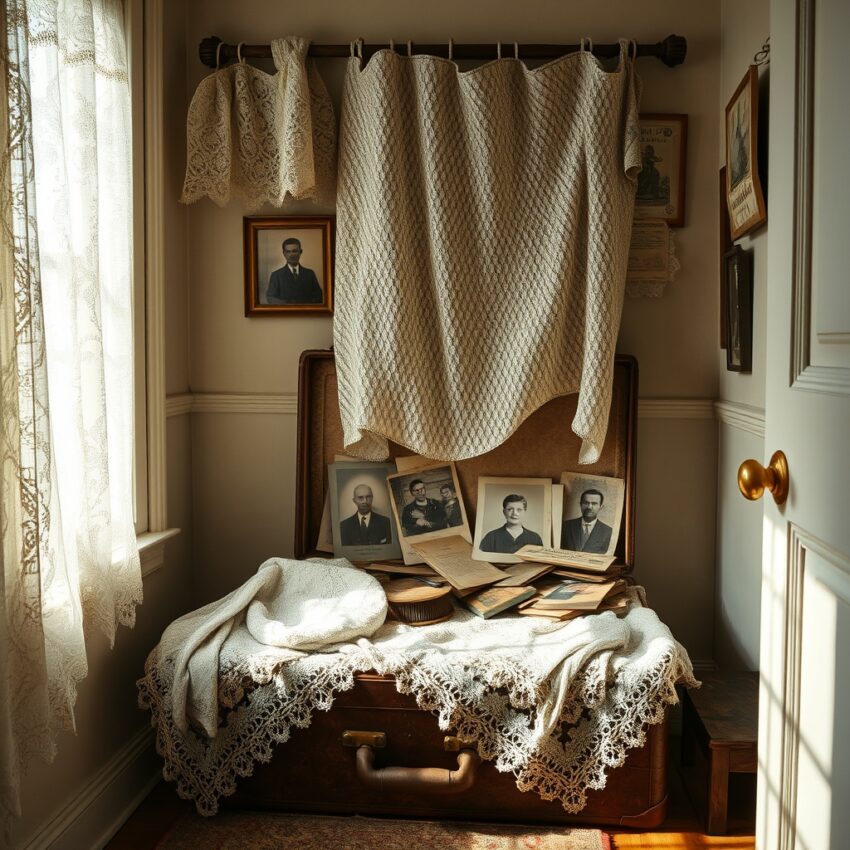
Birçok anneanne evinde eşyaların yeri yalnız kullanışlı olduğu için değil, yıllar boyunca aynı kaldığı için anlam taşırdı. Antrede, yatak odasının kapı yanında ya da misafir odasının duvara en yakın köşesinde duran eski bir bavul, çoğu zaman evin geri kalanından ayrı bir sessizlik taşırdı. Üstünde dantel örtüler, yanında naftalin kokulu yorgan sandıkları, biraz ilerisinde sürekli aynı yerde duran bir sehpa bulunurdu. Çocuk gözüyle bakıldığında o bavul sanki hiç açılmayan, ama her an açılabilir duran bir kapı gibiydi. Üzerindeki çizikler, metal tokalarının matlığı, kulpunun avuca sert gelen dokusu, evin başka hiçbir eşyasında olmayan bir yol hissi taşırdı. Anneanne evinin değişmeyen köşesi tam da bu yüzden hatırada güçlüdür; çünkü orada duran bavul bir eşya olmanın ötesine geçer, ailenin sessizce sakladığı zaman duygusuna dönüşürdü.
Obje Hikayeleri içinde eski bavulun özel bir yeri vardır. Bavul, göçü, ziyareti, düğünü, tayini, yazlık yolculuğu, şehirler arası hasreti ve bazen de geri dönmeyen bir gidişi aynı anda çağırabilen ender nesnelerdendir. Fakat anneanne evindeki bavul çoğu zaman artık yola çıkmak için değil, geçmişi orada tutmak için kalmıştır. Belki içinde sararmış fotoğraflar, kenarları incelmiş mektuplar, dantel parçaları, bayram mendilleri, eski nüfus cüzdanları ya da yıllardır kimsenin giymediği ama atmaya da kıyamadığı kumaşlar vardır. Nesnenin estetik tarafı kadar bekleyiş hali de önemlidir. Çünkü bu bavul kullanılmasa bile hazırmış gibi görünür; sanki aile tarihinin bir parçası hâlâ yol üstündedir. Bu duygu, objeyi dekor olmaktan çıkarıp aile mirasının taşıyıcısına dönüştürür.
Anneanne evlerinin kültürü biraz da tekrar eden düzenlerden kuruluydu. Perdelerin aynı biçimde bağlanması, vitrindeki fincanların hep aynı açıyla dizilmesi, koltuğun üstündeki örtünün yalnız misafir geldiğinde düzeltilmesi ve bavulun yıllarca aynı köşede durması, evin zamanla kurduğu anlaşmanın parçalarıydı. Çocuklar o köşeye bakarak büyür, her ziyarette bavulun hâlâ orada olduğunu görerek aile devamlılığını sezmeden öğrenirdi. Büyükler ise ona çoğu zaman doğrudan bakmaz, ama yerinin değişmemesini isterdi. Çünkü bazı eşyalar kullanılmadığı halde evi tutar. Eski bavul da böyleydi: göze çok batmadan, ama yerinden kımıldasa bütün odanın dengesi bozulacakmış gibi. Hafızada bıraktığı etki biraz da budur. O köşe, aile içindeki sürekliliğin somut şekline dönüşür.
Zaman içinde bir bavulun aile mirasına dönüşmesi, onun maddi değerinden çok taşıdığı hikâyelerin kalıcılığıyla ilgilidir. Yeni nesiller bazen o bavulu açınca şaşırır: beklediklerinden daha az eşya, ama beklediklerinden daha yoğun bir zaman duygusu bulurlar. Bir tren bileti, arkası yazılı bir fotoğraf, eski bir mendilin kenarındaki işleme, aile ağacından daha canlı bir anlatı kurabilir. Bavulun içinde taşınan şeylerin çoğu günlük ve sıradan görünür; ama miras tam da orada oluşur. Büyük tarih kitaplarına girmeyen hayat parçaları, bu tür nesnelerde kendi sessiz arşivini kurar. Anneanne evinin değişmeyen köşesi bu yüzden yalnız nostaljik bir dekor değil; aile hafızasının en alçak sesli, en dayanıklı odalarından biridir.
Bugün birçok ev sadeleşirken, taşınmalar hızlanırken ve eşyaların ömrü kısalırken, eski bavulun bıraktığı etki daha da kıymetli görünüyor. Çünkü o bize mirasın yalnız altın bilezikler, tapular ya da resmî kayıtlar olmadığını hatırlatıyor. Bir köşede yıllarca aynı şekilde duran, herkesin varlığını bildiği ama tam anlamıyla yalnız ihtiyaç olduğunda yaklaşılan bir eşya da aileyi kuşaktan kuşağa bağlayabilir. Anneanne evinin o değişmeyen köşesi, geçmişin eşyayla nasıl yer tuttuğunu anlatır. Ve bazen bir ailenin en güçlü mirası, tam da hiç acele etmeden orada bekleyen eski bir bavuldur.
🇬🇧 English | The Silence of a Suitcase Resting in the Shade of the Wall
In many grandmother’s houses, the place of objects carried meaning not only because it was practical, but because it had remained unchanged for years. An old suitcase standing in the hallway, beside the bedroom door, or in the farthest corner of the guest room often held a silence separate from the rest of the house. There might be lace covers on top of it, mothball-scented bedding chests beside it, and a small table that never stood anywhere else. To a child’s eyes, that suitcase seemed like a door that was never opened and yet could be opened at any moment. Its scratches, the dullness of its metal locks, the hard texture of its handle carried a sense of travel that no other household object possessed. That unchanging corner of grandmother’s house remains powerful in memory for exactly this reason. The suitcase there moved beyond being a simple object and became the quiet shape of the family’s stored time.
Within stories of objects, the old suitcase holds a special place. It is one of the rare things able to call up migration, visits, weddings, transfers, summer journeys, the longing between cities, and sometimes a departure that never returned. Yet the suitcase in grandmother’s house often remained no longer for travel, but to keep the past in place. Perhaps inside lay yellowed photographs, letters worn at the edges, pieces of lace, holiday handkerchiefs, old identity cards, or fabrics no one had worn for years but no one could bear to throw away. Its aesthetic side mattered, but so did its posture of waiting. Even unused, the suitcase still seemed ready. It was as though one piece of family history remained permanently on the road. That feeling lifts the object out of decoration and turns it into a bearer of inheritance.
The culture of grandmother’s houses was built in part through repeated arrangements. Curtains tied in the same way, teacups in the cabinet aligned at the same angle, the cover on the sofa straightened only when guests arrived, and the suitcase standing in the same corner for decades all belonged to the house’s quiet agreement with time. Children grew up looking toward that corner, learning family continuity without realizing it each time they saw the suitcase still there on another visit. Adults often did not stare at it directly, yet they wanted it not to be moved. Some objects hold a house together even when they are no longer used. The old suitcase was like that: never too visible, but if it shifted, the balance of the whole room would seem disturbed. Part of its power in memory lies there. That corner became a concrete form of continuity within the family.
The way a suitcase turns into family heritage over time has less to do with material value than with the lasting force of the stories it carries. When younger generations finally open it, they are often surprised. They find fewer things than expected, yet a denser feeling of time. A train ticket, a photograph with writing on the back, the embroidery on the edge of an old handkerchief, these can build a narrative more alive than a formal family tree. Most of what the suitcase contains looks daily and ordinary; but heritage is formed precisely there. The fragments of life that never enter grand history books build their own quiet archive in such objects. That is why the unchanging corner of grandmother’s house is not only nostalgic decoration, but one of the most durable and soft-spoken rooms of family memory.
Today, as many homes become simpler, as moving becomes faster, and as the life of objects grows shorter, the effect left by the old suitcase feels even more valuable. It reminds us that inheritance is not only bracelets, deeds, or official documents. An object standing in the same corner for years, known by everyone yet approached only when truly needed, can also bind a family across generations. That unchanging corner in grandmother’s house tells how the past can take up space through objects. And sometimes the strongest inheritance a family possesses is simply an old suitcase waiting there without hurry.
🇧🇷 Português (Brasil) | O Silêncio da Mala no Canto ao Pé da Parede
Em muitas casas de avó, o lugar dos objetos tinha importância não apenas por ser prático, mas por permanecer o mesmo durante anos. Uma mala antiga parada no corredor, ao lado da porta do quarto ou no canto mais fixo da sala de visitas carregava quase sempre um silêncio diferente do resto da casa. Sobre ela podia haver uma toalha de renda; ao lado, baús com cheiro de naftalina; um pouco adiante, uma mesinha sempre no mesmo lugar. Para o olhar de uma criança, aquela mala parecia uma porta nunca aberta, mas pronta para se abrir a qualquer instante. Os arranhões, o brilho apagado das travas de metal, a textura rígida da alça traziam uma sensação de viagem que nenhum outro objeto da casa possuía. O canto imutável da casa da avó continua forte na memória justamente por isso. A mala deixa de ser apenas um objeto e se transforma na forma silenciosa do tempo guardado da família.
Dentro das histórias dos objetos, a mala antiga ocupa um lugar especial. Ela é uma das raras coisas capazes de evocar ao mesmo tempo migração, visita, casamento, transferência, viagem de verão, saudade entre cidades e, às vezes, uma partida sem volta. Mas a mala da casa da avó muitas vezes já não ficava ali para viajar, e sim para manter o passado no lugar. Talvez guardasse fotografias amareladas, cartas gastas nas bordas, pedaços de renda, lenços de festa, documentos antigos ou tecidos que ninguém usa há anos, mas ninguém consegue jogar fora. Seu lado estético importa, mas importa também sua postura de espera. Mesmo sem uso, ela parece pronta. Como se uma parte da história da família permanecesse ainda no caminho. Essa sensação faz com que a mala deixe de ser decoração e se torne portadora de um legado.
A cultura das casas de avó era feita, em parte, de repetições. As cortinas presas do mesmo modo, as xícaras no armário sempre no mesmo ângulo, a capa do sofá arrumada apenas quando chegavam visitas e a mala parada no mesmo canto durante décadas pertenciam a um acordo silencioso da casa com o tempo. As crianças cresciam olhando para aquele canto e aprendiam, sem perceber, a continuidade da família sempre que voltavam e encontravam a mala no mesmo lugar. Os adultos nem sempre olhavam diretamente para ela, mas queriam que não fosse mexida. Certos objetos sustentam a casa mesmo quando já não são usados. A mala antiga era assim: discreta, mas se saísse dali parecia que o equilíbrio do cômodo seria quebrado. Parte de sua força na memória está nisso. O canto se transformava numa forma concreta da permanência familiar.
O processo pelo qual uma mala vira legado de família tem menos a ver com valor material do que com a permanência das histórias que ela carrega. Quando as gerações mais novas a abrem, muitas vezes se surpreendem. Encontram menos coisas do que imaginavam, mas um sentimento de tempo muito mais denso. Um bilhete de trem, uma foto escrita no verso, o bordado na ponta de um lenço antigo podem construir uma narrativa mais viva do que uma árvore genealógica formal. A maior parte do que a mala guarda parece comum e cotidiano; mas o legado nasce justamente aí. Os fragmentos de vida que não entram nos grandes livros de história formam, nesses objetos, o seu próprio arquivo silencioso. Por isso o canto imutável da casa da avó não é apenas uma decoração nostálgica, mas um dos espaços mais resistentes e discretos da memória familiar.
Hoje, quando muitas casas se tornam mais enxutas, as mudanças são mais frequentes e a duração dos objetos parece menor, o efeito deixado pela mala antiga se torna ainda mais precioso. Ela lembra que herança não é apenas joias, escrituras ou papéis oficiais. Um objeto parado no mesmo canto por anos, conhecido por todos e tocado apenas quando necessário, também pode ligar uma família através das gerações. O canto imutável da casa da avó mostra como o passado ocupa lugar por meio das coisas. E, às vezes, o legado mais forte de uma família é justamente uma mala antiga esperando ali, sem pressa.