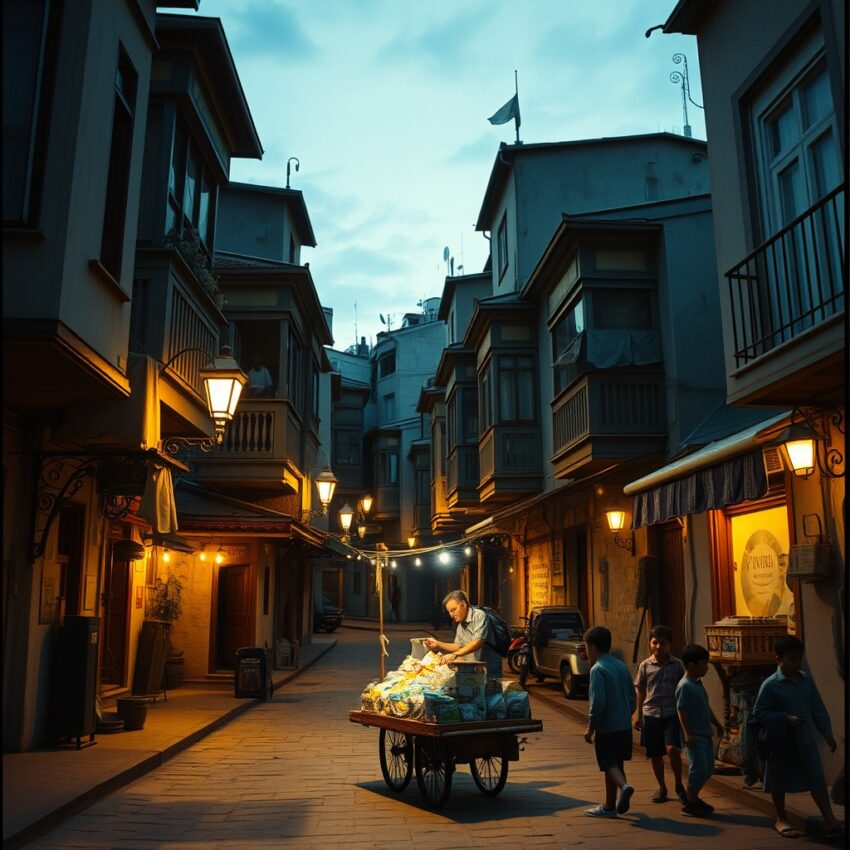
🇹🇷 Türkçe | seyyar satıcının neşeli sesi yaz akşamlarında: komşuluğu neden bu kadar sağlam kıldı
Bir zamanlar yaz akşamları tam kararmadan önce sokakların üstüne hafif bir serinlik çökerken, mahalleye uzaktan bir ses yaklaşırdı. O ses çoğu zaman bir seyyar satıcının neşeli, ezgili ve herkesin kulağına tanıdık gelen çağrısıydı. Karpuzcu, bozacı, dondurmacı, mısırcı ya da macuncu; kim gelirse gelsin önce sesi duyulurdu, sonra sokağın ritmi değişirdi. Balkonlara çıkılır, pencere tülleri aralanır, çocuklar kapıya doğru koşar, anneler mutfaktan seslenir, babalar sandalyesini biraz yana çekerdi. Satıcının sesi mahalleye yalnız bir ürün getirmezdi; insanları aynı anda dışarıya, birbirine ve sokağın ortak hayatına çağırırdı.
Mahalle Kültürü içinde seyyar satıcının yeri bu yüzden çok özeldir. Eski şehir hayatında komşuluk yalnız kapı komşuluğu değil, aynı sesleri paylaşma hâliydi. Bir satıcının akşam vakti sokağa girmesi, apartmanların ve müstakil evlerin kısa süreliğine aynı sahneye dönüşmesi demekti. Eski gazetelerde yaz sıcakları, mahalle esnafı, sokak satıcıları ve mevsimlik yiyeceklerden söz edilirken aslında kentin toplumsal ritmi anlatılırdı. Mahalleli, satıcının ne zaman geleceğini aşağı yukarı bilir, çocuklar o saati bekler, komşular birbirine “geldi galiba” diye seslenirdi. Böylece alışveriş tek başına yapılan bir iş olmaktan çıkar, kısa ama canlı bir topluluk anına dönüşürdü.
Bu neşeli sesin komşuluğu sağlam kılmasının bir nedeni, insanları doğal biçimde yüz yüze getirmesiydi. Biri balkondan diğerine fiyat sorar, biri bozuk para uzatır, biri aşağıdaki komşuya “bana da iki tane al” der, biri çocuğunun eline tabak tutuştururdu. Bu küçük alışveriş trafiği, apartman içinde gün boyu dağılmış hayatları birkaç dakikalığına aynı noktada toplardı. Çocuklar için satıcının gelişi oyunun devamı gibiydi; yetişkinler için ise hem ihtiyaç hem sohbet vesilesi olurdu. Hangi karpuzun tatlı olduğu, bozaya tarçın konup konmadığı, mısırın tuzunun yeterli olup olmadığı konuşulurken aslında mahalle kendi bağını tazeliyordu. Satıcı burada yalnız satıcı değildi; komşuluk dolaşımının hareketli bir düğümüydü.
Yaz akşamlarının bu sahnesinde sesin kendisi de önemliydi. Her seyyar satıcının çağrısı biraz farklı olur, kimi uzatarak söyler, kimi şarkı gibi tekrar eder, kimi mahallenin çocuklarına isim takar, kimi yıllar içinde kendi küçük ezgisini yaratırdı. Bu yüzden insanlar bazen ne satıldığını görmeden de kimin geldiğini anlardı. Mahallenin hafızası yalnız yüzleri değil, sesleri de saklardı. Sokak lambası yeni yanmış, kaldırıma günün sıcaklığı hâlâ sinmiş, balkon demirleri ılıkken o tanıdık sesin gelişi akşamı tamamlayan bir işaret olurdu. Yaz mevsiminin toplu sevinci biraz da bu tekrar eden seslerde kurulurdu. Çünkü herkes bilirdi ki o an yalnız bir alışveriş değil, mahallenin kendini yeniden duyma anıdır.
Bugün bu sağlam komşuluk duygusunu hatırlarken aslında sesle kurulan eski topluluk biçimlerini de anıyoruz. Kapılar daha kapalı, siparişler daha bireysel, sokak daha hızlı akıyor. Ama bir zamanlar seyyar satıcının neşeli sesi insanları hazırlıksız yakalayan güzel bir buluşma sebebiydi. Kimse takvimine yazmaz, kimse özel davet göndermezdi; buna rağmen herkes aynı çağrının etrafında toplanmayı bilirdi. Belki de komşuluğu bu kadar sağlam kılan şey tam olarak buydu: gündelik hayatın içinden çıkan küçük, tekrar eden ve samimi temaslar. Yaz akşamlarında mahalleye yaklaşan o ses, bugün hâlâ yalnız bir satıcının sesi olarak değil, yan yana yaşamanın açık, sıcak ve insanı dışarı çağıran hali olarak hatırlanıyor.
🇬🇧 English | The Cheerful Voice of the Street Vendor on Summer Evenings: Why Did It Make Neighborliness So Strong?
There was a time when, before summer evenings had fully turned dark and a slight coolness settled over the streets, a voice would approach the neighborhood from afar. It was often the cheerful, melodic, instantly familiar call of a street vendor. Whether it was the watermelon seller, the boza seller, the ice cream vendor, the corn seller, or the macun vendor, one heard the voice first and only then felt the rhythm of the street change. People stepped onto balconies, curtain corners were pulled aside, children ran toward the door, mothers called from the kitchen, and fathers shifted their chairs a little closer to the window. The vendor’s voice did not merely bring a product into the neighborhood. It called people outward at the same moment, toward one another and toward the shared life of the street.
That is why the place of the street vendor within neighborhood culture was so special. In old city life, neighborliness did not mean only living beside someone. It meant sharing the same sounds. When a vendor entered the street in the evening, apartment buildings and detached houses alike briefly turned into the same stage. Old newspapers wrote about summer heat, neighborhood tradesmen, street sellers, and seasonal foods, but what they were really describing was the social rhythm of the city. Residents roughly knew when the vendor might arrive, children waited for that hour, and neighbors called to one another, “I think he is here.” In that way, shopping stopped being an individual task and became a short yet vivid collective moment.
One reason this cheerful voice made neighborliness stronger was that it brought people face to face naturally. One person asked the price from balcony to balcony, another handed down small change, another called to the downstairs neighbor, “buy two for me too,” and another placed a plate in a child’s hands. This small traffic of exchange gathered together lives that had been scattered all day through the apartments. For children, the arrival of the vendor felt like an extension of play. For adults, it became both a need and a reason to talk. While people discussed which watermelon was sweeter, whether cinnamon belonged on boza, or whether the corn had enough salt, the neighborhood was quietly renewing its own bond. The vendor was not only a vendor there. He was a moving knot in the circulation of neighborly life.
In this summer-evening scene, the sound itself also mattered. Every vendor had a slightly different call. Some stretched the last syllables, some repeated the words like a tune, some gave nicknames to the neighborhood children, and some created their own little melody over the years. Because of that, people often knew who had arrived without even seeing what was being sold. Neighborhood memory preserved not only faces, but voices. With the streetlamp just lit, the day’s warmth still resting on the pavement, and the balcony rails still warm to the touch, the arrival of that familiar call became a sign that completed the evening. Part of summer’s collective joy was built inside those recurring sounds. Everyone knew that the moment was never only about buying something. It was about the neighborhood hearing itself again.
When we remember this durable feeling of neighborliness today, we are also remembering older forms of community created through sound. Doors are more closed now, orders are more individual, and the street moves more quickly. Yet once, the cheerful voice of the street vendor offered people an unexpected and beautiful reason to meet. No one wrote it into a calendar and no one sent a formal invitation, yet everyone knew how to gather around the same call. Perhaps that is exactly what made neighborliness so strong: small, repeated, intimate contacts rising naturally out of everyday life. The voice approaching the neighborhood on summer evenings is still remembered not simply as the voice of a seller, but as the open, warm, outward-calling form of living side by side.
🇧🇷 Português (Brasil) | A Voz Alegre do Vendedor Ambulante nas Noites de Verão: Por Que Tornou a Vizinhança Tão Forte?
Houve um tempo em que, antes de a noite de verão escurecer por completo e enquanto um leve frescor descia sobre as ruas, uma voz se aproximava do bairro ao longe. Muitas vezes era o chamado alegre, cantado e imediatamente reconhecível de um vendedor ambulante. Fosse o vendedor de melancia, de boza, de sorvete, de milho ou de macun, primeiro se ouvia a voz, e só depois o ritmo da rua mudava. As pessoas saíam para as varandas, afastavam a cortina, as crianças corriam para a porta, as mães chamavam da cozinha e os pais puxavam a cadeira um pouco mais para perto da janela. A voz do ambulante não levava apenas um produto ao bairro. Chamava todos, ao mesmo tempo, para fora, uns em direção aos outros e em direção à vida compartilhada da rua.
É por isso que o lugar do vendedor ambulante dentro da cultura de vizinhança era tão especial. Na antiga vida urbana, vizinhança não significava apenas morar ao lado. Significava compartilhar os mesmos sons. Quando o ambulante entrava na rua ao cair da tarde, prédios e casas térreas se transformavam por alguns minutos num mesmo cenário. Jornais antigos falavam do calor do verão, dos comerciantes do bairro, dos vendedores de rua e dos alimentos da estação, mas o que realmente descreviam era o ritmo social da cidade. Os moradores sabiam mais ou menos a hora em que ele poderia aparecer, as crianças esperavam por esse momento, e os vizinhos gritavam uns para os outros: “acho que ele chegou”. Assim, a compra deixava de ser um ato individual e se tornava um instante curto, porém vivo, de comunidade.
Uma das razões de essa voz alegre fortalecer tanto a vizinhança era o fato de aproximar as pessoas naturalmente. Um perguntava o preço de uma varanda a outra, outro descia moedas trocadas, alguém chamava a vizinha de baixo dizendo “compra dois para mim também”, e outra pessoa entregava um prato à criança. Esse pequeno fluxo de compra e conversa reunia por alguns minutos vidas que tinham passado o dia dispersas pelos apartamentos. Para as crianças, a chegada do vendedor parecia continuação da brincadeira. Para os adultos, era ao mesmo tempo necessidade e motivo para conversa. Enquanto se comentava qual melancia estava mais doce, se a boza levava canela ou se o milho tinha sal suficiente, o bairro renovava discretamente seus próprios laços. Ali, o vendedor não era apenas um vendedor. Era um nó em movimento na circulação da vida entre vizinhos.
Nessa cena de noite de verão, o som em si também importava. Cada ambulante tinha um chamado um pouco diferente. Alguns alongavam as sílabas, outros repetiam as palavras como uma cantiga, alguns davam apelidos às crianças do bairro, e outros criavam, ao longo dos anos, sua própria melodia. Por isso, muitas vezes as pessoas sabiam quem tinha chegado mesmo antes de ver o que estava sendo vendido. A memória do bairro guardava não apenas rostos, mas vozes. Com o poste recém-aceso, o calor do dia ainda preso na calçada e o ferro da varanda ainda morno, a chegada daquele chamado conhecido se tornava um sinal de que a noite estava completa. Parte da alegria coletiva do verão se construía justamente nesses sons repetidos. Todos sabiam que aquele momento nunca era só uma compra. Era o bairro ouvindo a si mesmo outra vez.
Ao recordar hoje esse sentimento sólido de vizinhança, também recordamos antigas formas de comunidade construídas pelo som. As portas estão mais fechadas, os pedidos mais individuais, e a rua corre com mais pressa. Mas houve um tempo em que a voz alegre do vendedor ambulante oferecia às pessoas um motivo bonito e inesperado para se encontrarem. Ninguém marcava isso no calendário e ninguém enviava convite, mas todos sabiam se reunir em torno do mesmo chamado. Talvez seja exatamente isso o que tornava a vizinhança tão forte: contatos pequenos, repetidos e íntimos nascidos da própria vida cotidiana. A voz que se aproximava do bairro nas noites de verão continua lembrada não apenas como a voz de quem vendia, mas como uma forma aberta, calorosa e convidativa de viver lado a lado.