🇹🇷 Türkçe | nakışlı yastık kılıfı ve mutfak raflarında saklı kalan sessiz ihtişamı: nasıl bir aile mirasına dönüştü
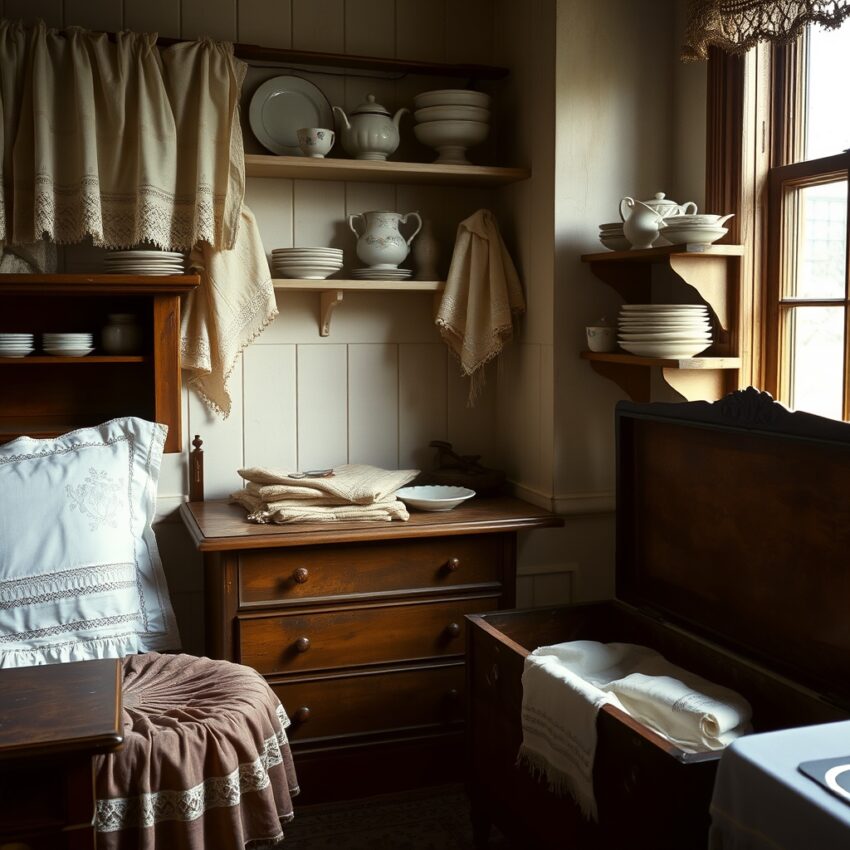
Bir zamanlar evlerin en gösterişli şeyleri her zaman baş köşede durmazdı. Bazı güzellikler vitrine değil, yastık sandığının içine, mutfak rafının arkasına, dantel örtünün altına saklanırdı. Nakışlı yastık kılıfı da onlardan biriydi. Gündelik kullanımın tam ortasında durmaz, ama gerektiğinde özenle çıkarılır, havalandırılır, ütülenir ve misafirli ya da bayramlı günlerin sessiz zarafetine eşlik ederdi. Mutfak raflarında dizili porselenler, oyma tepsiler, işlemeli örtüler ve elde dikilmiş kumaş torbalar da benzer bir ihtişam taşırdı. Bu ihtişam yüksek sesli değildi; daha çok evin düzenine, emeğine ve aile içindeki dikkat duygusuna sinmiş bir parıltıydı.
Obje Hikayeleri açısından bakıldığında nakışlı yastık kılıfı ile raflarda saklanan eşyalar, yalnız kullanışlı nesneler değil, ev içi estetiğin kuşaktan kuşağa taşınan hafıza parçalarıydı. Eski dönemlerde evin içindeki düzen, yalnız temizliğin değil terbiyenin ve itinanın da göstergesi sayılırdı. Bir yastık kılıfının üzerindeki desen, bir genç kızın çeyiz hazırlığını, bir annenin sabrını, bir ninenin el alışkanlığını ve ailenin zevk anlayışını birlikte taşırdı. Mutfak raflarında uzun süre dikkatle saklanan objeler ise gündelik hayatın içinde sessizce bekleyen aile arşivleri gibiydi. Hangi tabak düğünde kullanılmıştı, hangi örtü ilk bayram sofrasında serilmişti, hangi yastık yüzü misafir odasına ayrılmıştı, bütün bunlar sözlü anlatım kadar eşya hafızasıyla da korunurdu.
Bu sessiz ihtişamın aile mirasına dönüşmesinin temel nedeni, nesnelerin yalnız görünüşleriyle değil, etraflarında biriken hikâyelerle değer kazanmasıydı. Bir kılıfın kenarındaki küçük sökük bile bazen “annen bunu seni beklerken işlemişti” cümlesine kapı açardı. Sararmış ama hâlâ diri duran bir kumaş, yıllarca açılmamış dolabın içinden çıktığında sadece eski bir eşya olarak görülmezdi; birlikte yaşanmış zamanın dokunulabilir kanıtı gibi ele alınırdı. Çocuklar önce bu eşyaları “kullanılmayan şeyler” sanır, büyüdükçe neden bu kadar özenle korunduklarını anlamaya başlardı. Çünkü aile içinde bazı nesneler, kullanılmaktan çok hatırlatmak için saklanırdı. Elde işlenen desenler, ütü izleri, sabun kokusu ve rafların serin gölgesi, o eşyalara sözsüz bir saygınlık kazandırırdı.
Mutfak raflarının bu hikâyedeki yeri özellikle önemlidir. Çünkü mutfak, evin hem en gündelik hem de en hatıralı alanlarından biridir. Orada saklanan bir fincan takımı, bir emaye kap, bir işlemeli örtü ya da düğün zamanı alınmış cam şekerlik, yalnız estetik bir tercih değildir; evin nasıl kurulduğunu, hangi dönemin zevkini taşıdığını ve kimlerin emeğiyle bugüne kaldığını anlatır. Nakışlı yastık kılıfı ise odanın daha mahrem tarafına ait olduğu için bu mirasa duygusal bir katman daha ekler. O, evin dışarıya gösterdiği yüz ile içeride koruduğu şefkat arasında duran bir eşyadır. Hem süs hem emek, hem kullanım hem hatıra olarak çift anlam taşır. Bu yüzden aileler onu kolay kolay elden çıkarmaz; eskise bile saklar, yıpransa bile atmaz, bazen yeni kuşağa vererek anlamını sürdürebilir hale getirir.
Bugün bu nesnelere bakarken görülen şey yalnız geçmişe ait dekoratif bir zevk değildir. Asıl görülen, emeğin zamanla nasıl kıymete dönüştüğü ve ev içi estetiğin nasıl bir hafıza dili kurduğudur. Sessiz ihtişam denilen şey belki de tam olarak budur: bağırmadan yer eden, gösteriş istemeden saygı toplayan, evin içinde saklı kaldıkça daha da derinleşen bir değer. Nakışlı yastık kılıfı ile mutfak raflarında korunan eşyalar, bu yüzden bugün aile mirası denildiğinde akla gelen en sahici örnekler arasında durur. Çünkü onlar geçmişi yalnız anlatmaz; kumaşıyla, kokusuyla, izleriyle ve suskun zarafetiyle bugüne kadar taşır.
🇬🇧 English | The Quiet Splendor Hidden in an Embroidered Pillowcase and on Kitchen Shelves: How Did It Turn into a Family Inheritance?
There was a time when the most elegant things in a house did not always stand in the most visible corner. Some forms of beauty were kept not in display cabinets, but inside a pillow chest, behind a kitchen shelf, or beneath a lace cover. The embroidered pillowcase was one of them. It did not sit at the center of daily use, yet when the time came it was brought out with care, aired, ironed, and made to accompany the quiet grace of guest days or holiday visits. Porcelain lined along kitchen shelves, carved trays, embroidered cloths, and hand-sewn fabric bags carried a similar splendor. It was never a loud kind of richness. It was a glow settled into the order of the house, into labor, and into the feeling of attentiveness within the family.
Seen through the lens of object stories, the embroidered pillowcase and the items preserved on shelves were never merely useful objects. They were fragments of memory through which domestic aesthetics moved from one generation to the next. In earlier decades, the order inside a home was understood not only as cleanliness, but also as proof of discipline and care. The pattern on a pillowcase could carry at once the trousseau preparations of a young woman, the patience of a mother, the practiced hand of a grandmother, and the family’s sense of taste. Objects carefully kept on kitchen shelves resembled silent archives inside daily life. Which plate had been used at a wedding, which cloth had first been spread on a holiday table, which pillow face had been reserved for the guest room, all of this was preserved not only in spoken memory but in the memory of things.
The reason this quiet splendor turned into family inheritance is that such objects gained value not only from their appearance, but from the stories gathering around them. Even a small tear on the edge of a pillowcase could open the door to a sentence like, “your mother embroidered this while waiting for you.” A yellowed but still sturdy fabric, when taken from a cupboard unopened for years, was not seen merely as an old item. It was handled like tangible proof of time lived together. Children first assumed these were “unused things,” then, as they grew older, began to understand why they were preserved with such care. Within a family, some objects were kept less for use than for remembrance. Hand-worked patterns, ironing marks, the scent of soap, and the cool shade of the shelves gave them a wordless dignity.
The role of kitchen shelves in this story is especially important, because the kitchen is both one of the most ordinary and one of the most memory-filled spaces of a house. A tea set, an enamel bowl, an embroidered cloth, or a glass candy dish bought around the time of a wedding was never only an aesthetic choice. It told how the home had been built, what the taste of that era looked like, and through whose labor it had reached the present. The embroidered pillowcase adds another emotional layer because it belongs to the more intimate side of the room. It stands between the face a home shows to the outside and the tenderness it protects within. It carries a double meaning: ornament and labor, use and memory. That is why families rarely let it go. Even when it grows old they keep it, even when worn they do not throw it away, and sometimes they pass it on so that its meaning can continue.
What is seen in these objects today is not simply an old decorative taste. What is truly visible is how labor becomes value over time and how domestic aesthetics create their own language of memory. Perhaps this is exactly what quiet splendor means: a worth that settles in without raising its voice, gathers respect without seeking display, and deepens as it remains hidden within the house. For that reason, the embroidered pillowcase and the carefully preserved objects on kitchen shelves stand among the most genuine examples that come to mind when one speaks of family inheritance. They do not merely tell the past. Through their fabric, scent, marks, and silent grace, they carry it into the present.
🇧🇷 Português (Brasil) | O Esplendor Silencioso Guardado numa Fronha Bordada e nas Prateleiras da Cozinha: Como se Transformou em Herança de Família?
Houve um tempo em que as coisas mais elegantes da casa nem sempre ficavam no lugar de maior destaque. Certas belezas não eram expostas na cristaleira, mas guardadas dentro do baú das almofadas, atrás da prateleira da cozinha ou sob uma toalha de renda. A fronha bordada era uma delas. Não permanecia no centro do uso cotidiano, mas, quando chegava a ocasião, era retirada com cuidado, arejada, passada e colocada para acompanhar a elegância silenciosa dos dias de visita ou de festa. As porcelanas alinhadas nas prateleiras da cozinha, as bandejas entalhadas, os panos bordados e os saquinhos costurados à mão carregavam um esplendor parecido. Nunca era uma riqueza barulhenta. Era um brilho assentado na ordem da casa, no trabalho e na atenção compartilhada dentro da família.
Pela perspectiva das histórias dos objetos, a fronha bordada e os itens guardados nas prateleiras nunca foram apenas objetos úteis. Eram fragmentos de memória por meio dos quais a estética doméstica passava de geração em geração. Em décadas antigas, a organização da casa era entendida não só como limpeza, mas também como sinal de cuidado e educação. O desenho sobre uma fronha podia reunir, ao mesmo tempo, o enxoval de uma moça, a paciência de uma mãe, a prática das mãos de uma avó e o gosto da família. Os objetos conservados com cuidado nas prateleiras da cozinha pareciam arquivos silenciosos dentro da vida diária. Qual prato tinha sido usado no casamento, qual pano foi estendido na primeira mesa de festa, qual capa de almofada era reservada ao quarto de visitas, tudo isso se preservava não apenas na fala, mas também na memória das coisas.
A principal razão de esse esplendor silencioso ter se transformado em herança de família é que tais objetos ganhavam valor não apenas pela aparência, mas pelas histórias acumuladas ao redor deles. Até um pequeno rasgo na borda da fronha podia abrir caminho para uma frase como “sua mãe bordou isso enquanto esperava por você”. Um tecido amarelado, porém ainda firme, quando saía de um armário fechado por anos, não era visto simplesmente como uma peça antiga. Era segurado como prova palpável de um tempo vivido em conjunto. As crianças primeiro imaginavam que se tratava de “coisas sem uso”; mais tarde, ao crescer, começavam a entender por que eram guardadas com tanto cuidado. Dentro da família, certos objetos eram preservados menos para servir e mais para lembrar. Os desenhos feitos à mão, as marcas do ferro, o cheiro de sabão e a sombra fresca das prateleiras davam a essas peças uma dignidade sem palavras.
O lugar das prateleiras da cozinha nessa história é especialmente importante, porque a cozinha é ao mesmo tempo um dos espaços mais comuns e mais carregados de memória da casa. Um conjunto de xícaras, uma tigela esmaltada, um pano bordado ou um açucareiro de vidro comprado por ocasião do casamento nunca eram apenas escolhas estéticas. Contavam como a casa havia sido formada, qual era o gosto daquela época e por meio de cujo trabalho tudo aquilo havia chegado até hoje. A fronha bordada acrescenta outra camada afetiva porque pertence ao lado mais íntimo do quarto. Ela fica entre o rosto que a casa mostra ao mundo e a ternura que protege por dentro. Carrega um sentido duplo: enfeite e trabalho, uso e lembrança. Por isso as famílias dificilmente se desfazem dela. Mesmo quando envelhece, é guardada; mesmo quando gasta, não é jogada fora; às vezes é passada aos mais jovens para que seu significado continue.
O que se vê hoje nesses objetos não é apenas um gosto decorativo de outra época. O que realmente aparece é a forma como o trabalho se transforma em valor com o tempo e como a estética doméstica constrói sua própria linguagem de memória. Talvez seja isso, exatamente, o que se chama de esplendor silencioso: um valor que permanece sem levantar a voz, conquista respeito sem pedir exibição e se aprofunda justamente por ficar guardado dentro da casa. Por isso a fronha bordada e os objetos preservados nas prateleiras da cozinha estão entre os exemplos mais verdadeiros quando se fala em herança de família. Eles não apenas contam o passado. Pelo tecido, pelo cheiro, pelas marcas e pela elegância contida, eles o carregam até o presente.