Eski Pano
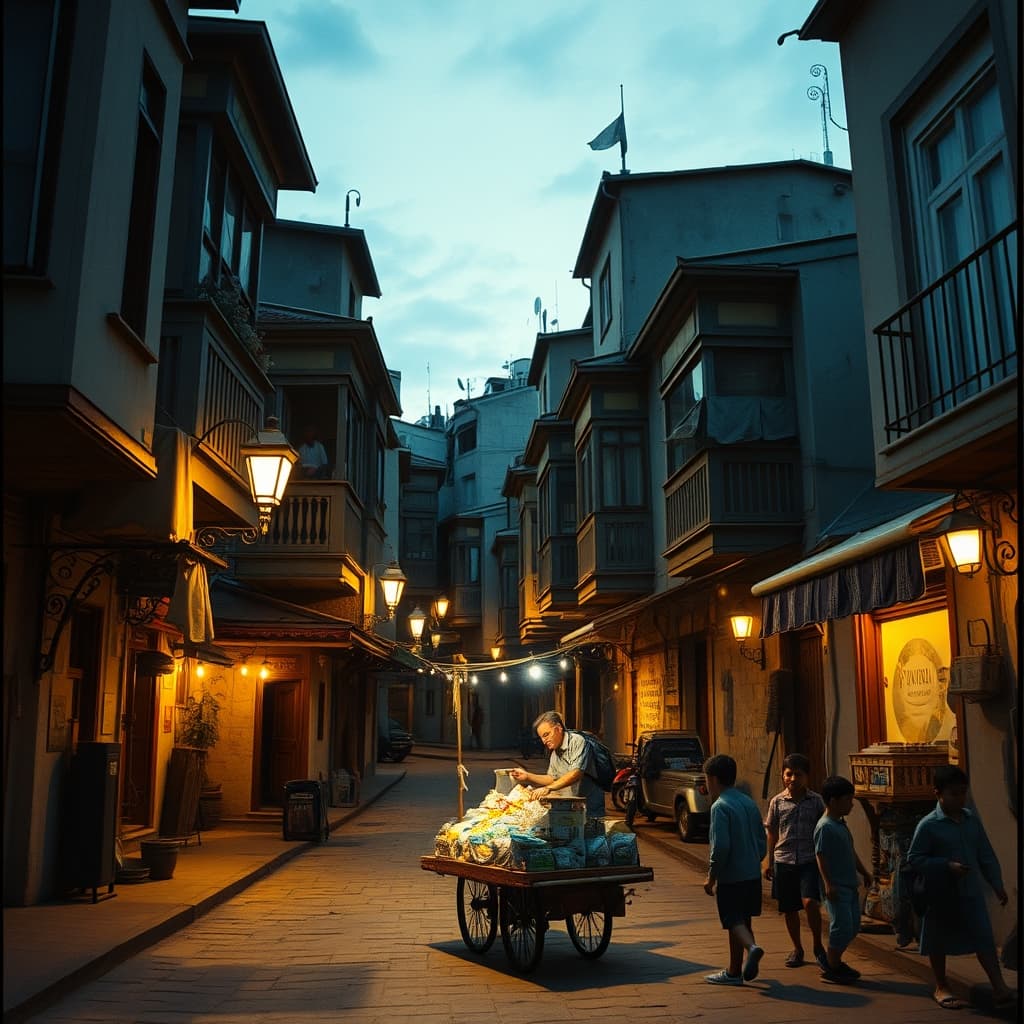
There was a time when, before summer evenings had fully turned dark and a slight coolness settled over the streets, a voice would approach the neighborhood from afar. It was often the cheerful, melodic, instantly familiar call of a street vendor. Whether it was the watermelon seller, the boza seller, the ice cream vendor, the corn seller, or the macun vendor, one heard the voice first and only then felt the rhythm of the street change. People stepped onto balconies, curtain corners were pulled aside, children ran toward the door, mothers called from the kitchen, and fathers shifted their chairs a little closer to the window. The vendor’s voice did not merely bring a product into the neighborhood. It called people outward at the same moment, toward one another and toward the shared life of the street.
That is why the place of the street vendor within neighborhood culture was so special. In old city life, neighborliness did not mean only living beside someone. It meant sharing the same sounds. When a vendor entered the street in the evening, apartment buildings and detached houses alike briefly turned into the same stage. Old newspapers wrote about summer heat, neighborhood tradesmen, street sellers, and seasonal foods, but what they were really describing was the social rhythm of the city. Residents roughly knew when the vendor might arrive, children waited for that hour, and neighbors called to one another, “I think he is here.” In that way, shopping stopped being an individual task and became a short yet vivid collective moment.
One reason this cheerful voice made neighborliness stronger was that it brought people face to face naturally. One person asked the price from balcony to balcony, another handed down small change, another called to the downstairs neighbor, “buy two for me too,” and another placed a plate in a child’s hands. This small traffic of exchange gathered together lives that had been scattered all day through the apartments. For children, the arrival of the vendor felt like an extension of play. For adults, it became both a need and a reason to talk. While people discussed which watermelon was sweeter, whether cinnamon belonged on boza, or whether the corn had enough salt, the neighborhood was quietly renewing its own bond. The vendor was not only a vendor there. He was a moving knot in the circulation of neighborly life.
In this summer-evening scene, the sound itself also mattered. Every vendor had a slightly different call. Some stretched the last syllables, some repeated the words like a tune, some gave nicknames to the neighborhood children, and some created their own little melody over the years. Because of that, people often knew who had arrived without even seeing what was being sold. Neighborhood memory preserved not only faces, but voices. With the streetlamp just lit, the day’s warmth still resting on the pavement, and the balcony rails still warm to the touch, the arrival of that familiar call became a sign that completed the evening. Part of summer’s collective joy was built inside those recurring sounds. Everyone knew that the moment was never only about buying something. It was about the neighborhood hearing itself again.
When we remember this durable feeling of neighborliness today, we are also remembering older forms of community created through sound. Doors are more closed now, orders are more individual, and the street moves more quickly. Yet once, the cheerful voice of the street vendor offered people an unexpected and beautiful reason to meet. No one wrote it into a calendar and no one sent a formal invitation, yet everyone knew how to gather around the same call. Perhaps that is exactly what made neighborliness so strong: small, repeated, intimate contacts rising naturally out of everyday life. The voice approaching the neighborhood on summer evenings is still remembered not simply as the voice of a seller, but as the open, warm, outward-calling form of living side by side.
The Cheerful Voice of the Street Vendor on Summer Evenings: Why Did It Make Neighborliness So Strong?